
Komurasaki of the Miuraya and Shirai Gompachi
- Date:
- Late Edo period, circa 1800
- Medium:
- Ukiyo-e woodblock print in "hashira-e" format; ink and color on paper
- Source:
- Art Institute of Chicago
Description
Komurasaki of the Miuraya and Shirai Gompachi, designed by Kitagawa Utamaro around 1800 and held by the Art Institute of Chicago, dramatizes one of Edo's most enduring love stories. Komurasaki was a high-ranking courtesan of the Miuraya in the Yoshiwara, and Shirai Gompachi the dashing fugitive who became her lover; their tale, ending in his execution and her suicide, was retold in kabuki, joruri, and ukiyo-e for generations. Utamaro stages the pair in a quiet, contained composition that reads simultaneously as Edo bijin-ga portrait and as theatrical scene, the lovers' bodies inclined toward each other in a moment of intimacy that contemporary viewers would recognize as freighted with tragedy. The artist's handling of Komurasaki's elaborate Yoshiwara attire, contrasted with Gompachi's leaner, more vulnerable presence, draws on Utamaro's deep familiarity with the visual codes of the quarter. The design also connects to a longer thread in ukiyo-e in which famous lovers, kabuki couples, and historical romances become subjects for repeated reinterpretation. For collectors of Kitagawa Utamaro and admirers of Yoshiwara prints, this image is both a celebrity portrait of a specific named courtesan and a meditation on the way the floating world transformed real lives into narrative motifs. The Art Institute of Chicago impression preserves the delicate balance Utamaro struck between glamour and pathos in this 1800 design.
More Prints by Kitagawa Utamaro
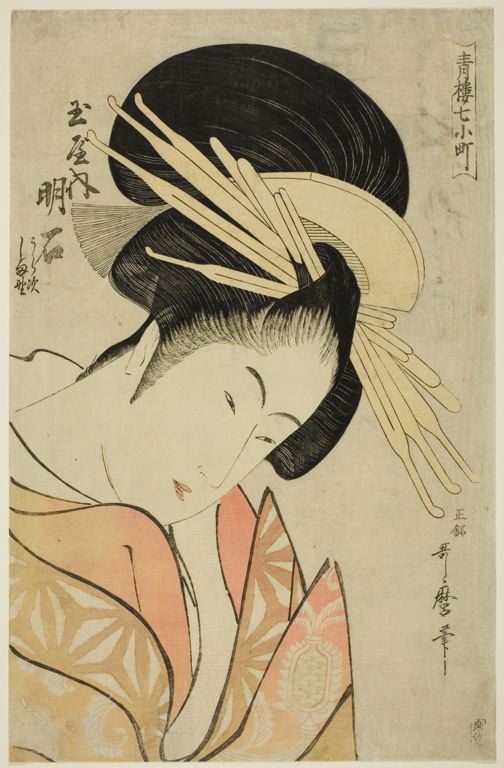
Akashi of the Tamaya, from the series Seven Komachis of Yoshiwara (Seiro nana Komachi) (Tamaya uchi Akashi, Uraji, Shimano)
Woodblock print
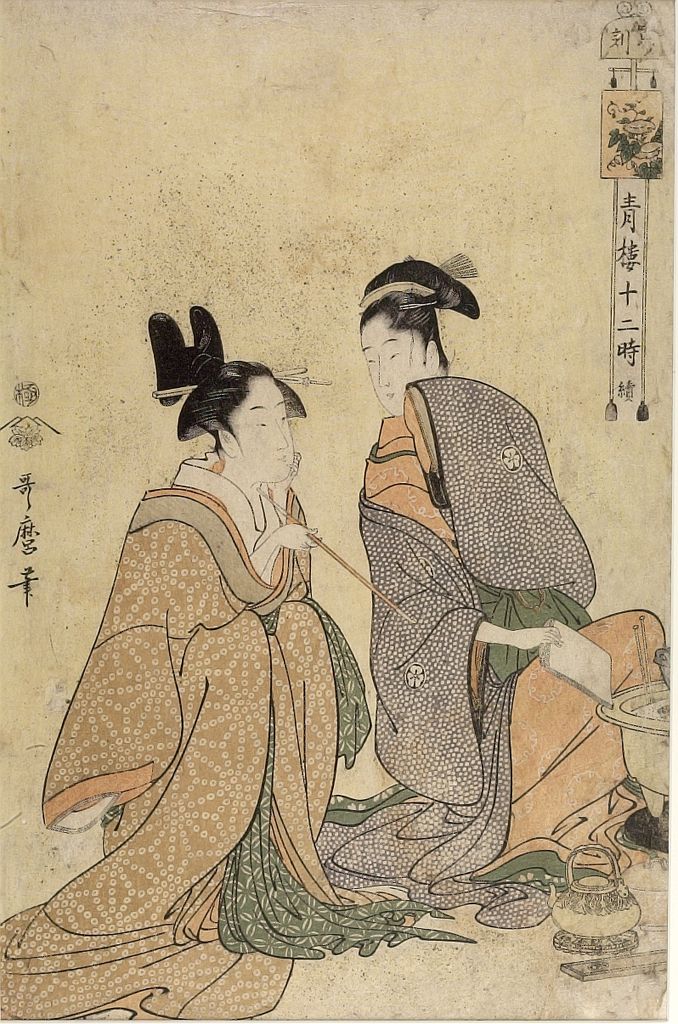
Hour of the Tiger (Tora no koku = 4 AM) from the series Twelve Hours in Yoshiwara (Seirô jûni toki tsuzuki), Late Edo period, circa 1794
Woodblock print
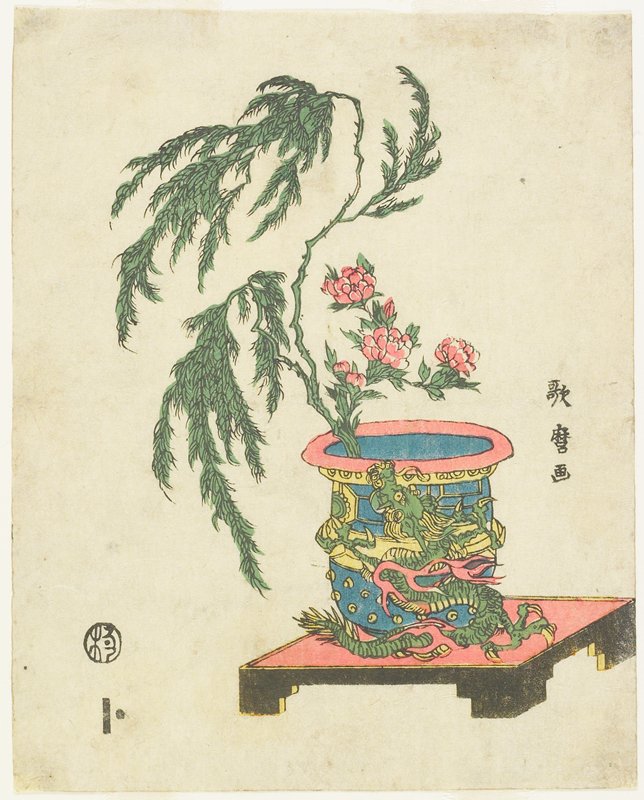
Ikebana arrangement of Peony and Willow in Dragon Pot
1781–1806
Woodblock print (nishiki-e), ink and color on paper
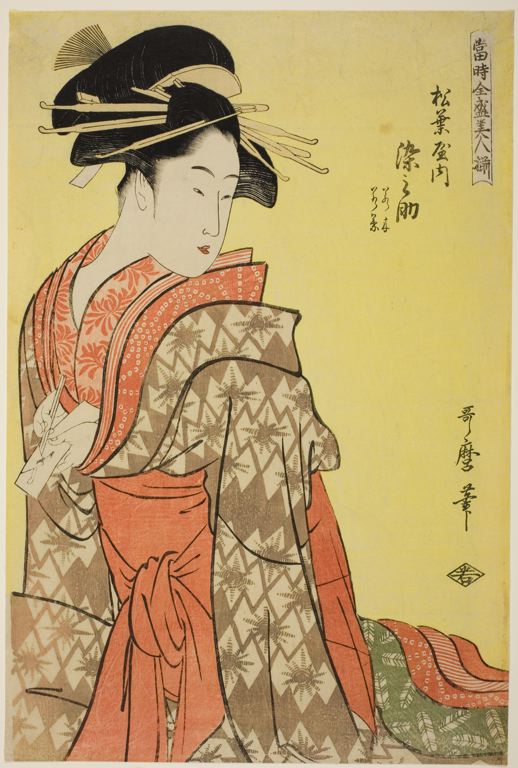
The Greatest Beauties of Our Time (Toji zensei bijin zoroe): Somenosuke of the Matsubaya with Attendants Wakagi and Wakaba
Woodblock print
Frequently Asked Questions
Komurasaki of the Miuraya and Shirai Gompachi was created by Kitagawa Utamaro (喜多川歌麿) in Late Edo period, circa 1800.