Lion and Dragon
- Date:
- 19th century
- Medium:
- Woodblock print; ink on paper
- Source:
- Harvard Art Museums
Description
This ukiyo-e print, Lion and Dragon by Kitagawa Utamaro, departs from the artist's more familiar Edo bijin-ga to explore the powerful animal symbolism that ran through East Asian art. The lion and dragon belong to a shared visual lexicon: the dragon, ruler of water and rain, and the shishi or lion-dog, guardian of sacred precincts, frequently appear together in Buddhist temple decoration and in folding screens of the Kano school. By bringing these auspicious beasts into a single woodblock composition, Utamaro and his publisher gave their audience an affordable echo of motifs they otherwise encountered on temple gates, lacquerware, or grand painted screens. The figures are drawn with the confident calligraphic line that distinguishes Utamaro's mature ukiyo-e, while the contrast between the lion's curling mane and the dragon's coiling body offers the colorist and the carver a virtuoso opportunity to display the medium's capacity for pattern. The Harvard Art Museums preserves this impression (object 208448), where it illustrates that Utamaro's reputation rested not only on his celebrated portraits of Yoshiwara women but also on a willingness to engage classical and religious subjects, broadening the thematic range of ukiyo-e at the close of the eighteenth century.
More Prints by Kitagawa Utamaro
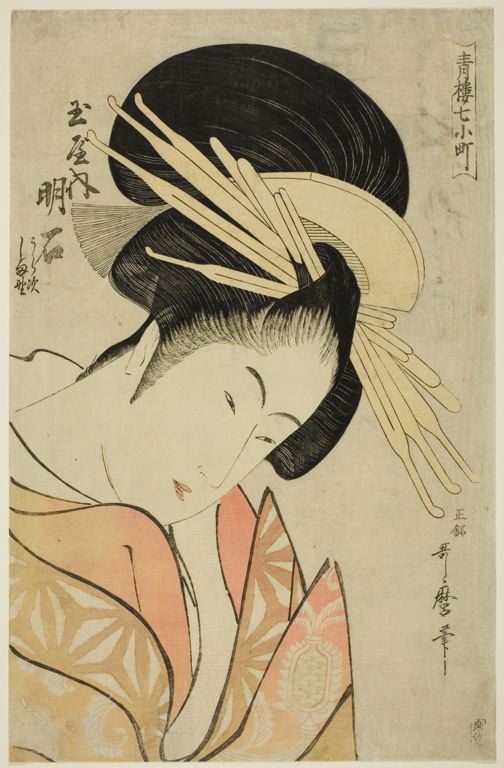
Akashi of the Tamaya, from the series Seven Komachis of Yoshiwara (Seiro nana Komachi) (Tamaya uchi Akashi, Uraji, Shimano)
Woodblock print
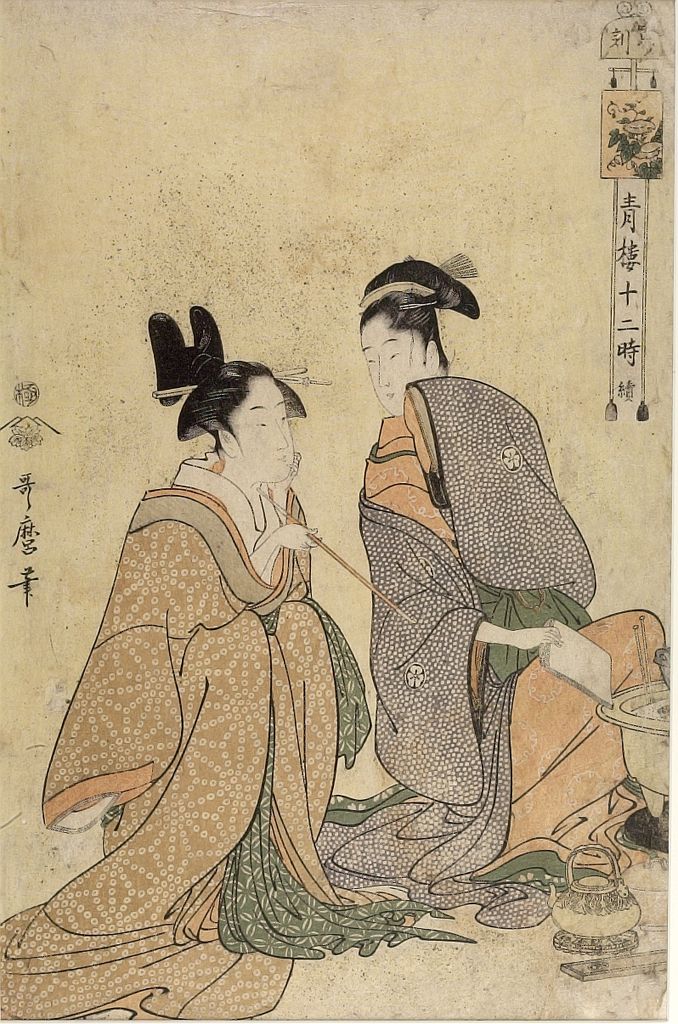
Hour of the Tiger (Tora no koku = 4 AM) from the series Twelve Hours in Yoshiwara (Seirô jûni toki tsuzuki), Late Edo period, circa 1794
Woodblock print
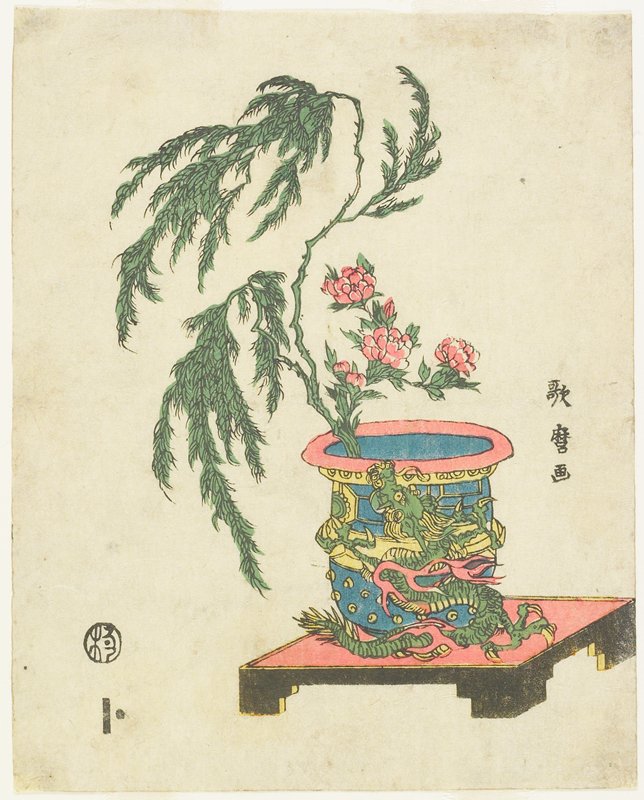
Ikebana arrangement of Peony and Willow in Dragon Pot
1781–1806
Woodblock print (nishiki-e), ink and color on paper
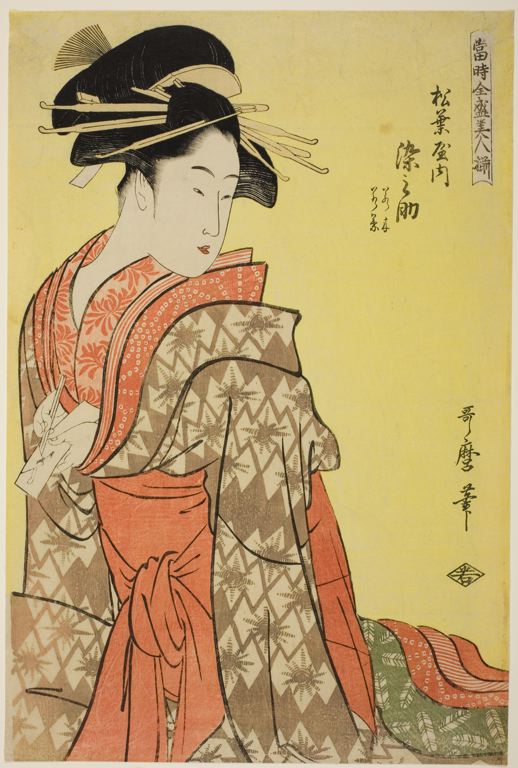
The Greatest Beauties of Our Time (Toji zensei bijin zoroe): Somenosuke of the Matsubaya with Attendants Wakagi and Wakaba
Woodblock print
Frequently Asked Questions
Lion and Dragon was created by Kitagawa Utamaro (喜多川歌麿) in 19th century.