Man & Woman
- Source:
- ukiyo-e.org
Description
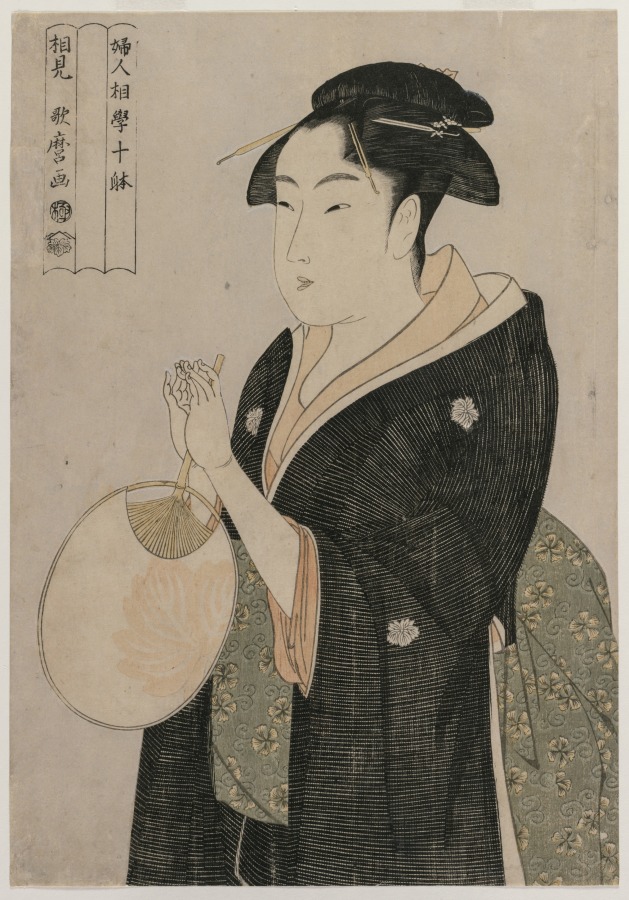
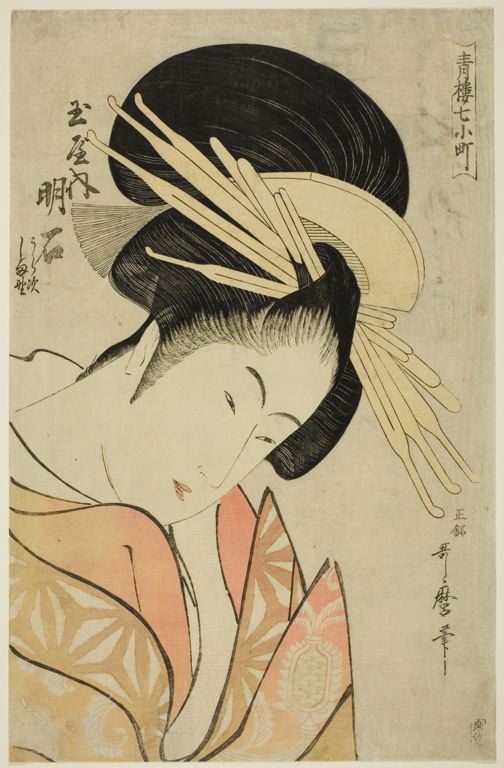
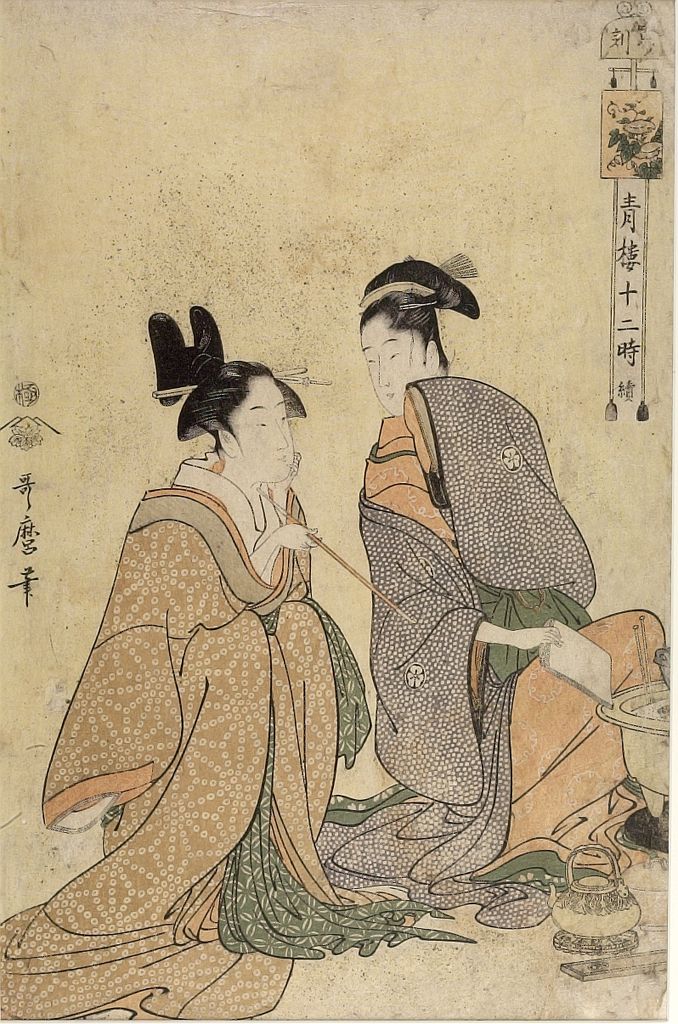
Man & Woman is a woodblock print attributed to Kitagawa Utamaro (c. 1753-1806), the Edo [bijin-ga](/glossary/bijin-ga) master whose intimate portrayals of women, and of men and women together, set the standard for late [ukiyo-e](/glossary/ukiyo-e). The sheet, documented through ukiyo-e.org from the Achenbach Graphic Arts collection at the Fine Arts Museums of San Francisco, places a man and a woman in close proximity within a single composition, allowing Utamaro to explore the charged interval between two figures rather than treat the woman alone. Such pairings appear across his career in scenes of lovers, parents and adult children, household members, and patrons of the pleasure quarters in conversation with courtesans, and they showcase Utamaro's gift for reading body language. In two-figure compositions he typically distinguishes the man by squarer shoulders, a sturdier neck, and a more restrained palette of dark or muted kimono, while the woman carries the design's color and ornament through her sash and outer robe. The space between the figures, often left as background or punctuated by a small object such as a pipe, fan, or letter, becomes its own subject, charting attention, deference, or affection without explicit narrative. Without a documented series title here, the print can be read as one of Utamaro's many studies of social intimacy, akin to his domestic scenes and pleasure-quarter encounters. It demonstrates again why his name became synonymous with bijin-ga: the women remain the visual anchor of his work, but his men, when they appear, are observed with the same patient attention to gesture and presence.
![A Low Class Prostitute (Gun [teppo]), from the series “Five Shades of Ink in the Northern Quarter" ("Hokkoku goshiki-zumi") by Kitagawa Utamaro](https://www.artic.edu/iiif/2/ed82be98-8a83-4163-ccc4-e2f7210cce55/full/843,/0/default.jpg)