
Messenger with a Letter, from the series "Elegant Five-needled Pine (Furyu goyo no matsu)"
- Date:
- c. 1797/98
- Medium:
- Color woodblock print; oban
- Source:
- Art Institute of Chicago
Description
Messenger with a Letter, from the series Elegant Five-needled Pine (Furyū goyō no matsu), is a color woodblock print by Kitagawa Utamaro of about 1792 held by the Art Institute of Chicago. The series uses a refined botanical title, evoking the long-needled pine that signified longevity and aristocratic taste, as a frame for elegantly staged scenes from Edo life. In this sheet, a messenger, female and modestly dressed, is shown carrying a folded letter, a charged object in the courtship culture of the Yoshiwara and the wider city, where written notes mediated assignations, quarrels, and reconciliations between lovers. Utamaro composes the figure to emphasize the gesture of holding the letter: the hands are carefully placed, the body is poised in a slight forward lean, and the head turns with the alertness of an errand in progress. Her clothing is patterned with the kind of refined motifs typical of his Edo bijin-ga, while the framing pushes the figure forward in a way that recalls his half-length courtesan portraits. As often in his ukiyo-e, the implied narrative belongs to the viewer: who has sent the letter, who will receive it, and what feelings have been folded inside. The series title, with its evocation of the elegant pine, also invites the audience to read the messenger as part of a broader tableau of refined contemporary manners. The Art Institute of Chicago's impression is a fine example of how Utamaro could turn a small functional moment into a sustained study in Edo bijin-ga.
More Prints by Kitagawa Utamaro
![A Low Class Prostitute (Gun [teppo]), from the series “Five Shades of Ink in the Northern Quarter" ("Hokkoku goshiki-zumi") by Kitagawa Utamaro](https://www.artic.edu/iiif/2/ed82be98-8a83-4163-ccc4-e2f7210cce55/full/843,/0/default.jpg)
A Low Class Prostitute (Gun [teppo]), from the series “Five Shades of Ink in the Northern Quarter" ("Hokkoku goshiki-zumi")
c. 1794/95
Color woodblock print; oban
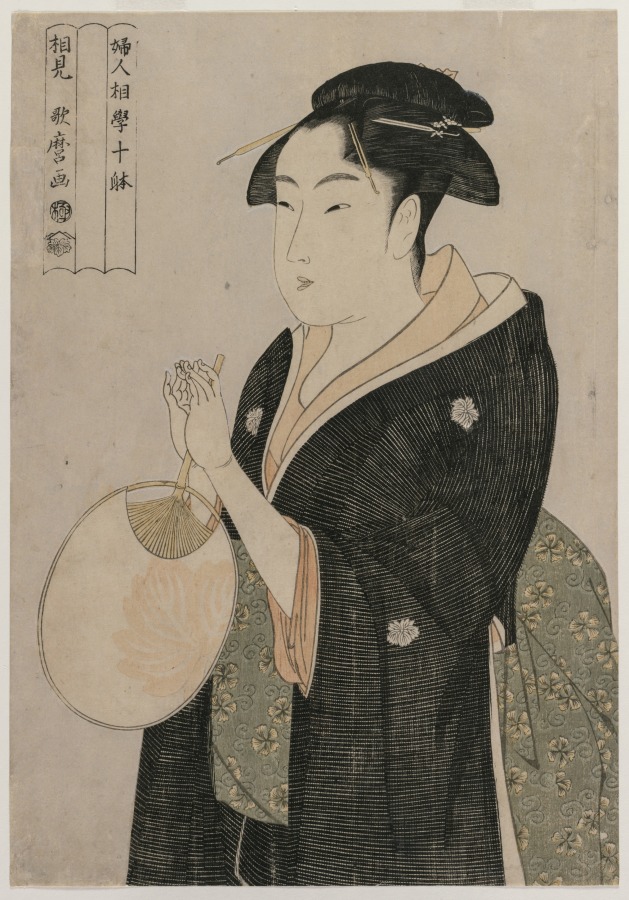
Woman Holding a Fan (from the series Ten Aspects of the Physiognomy of Women)
c. 1793
color woodblock print
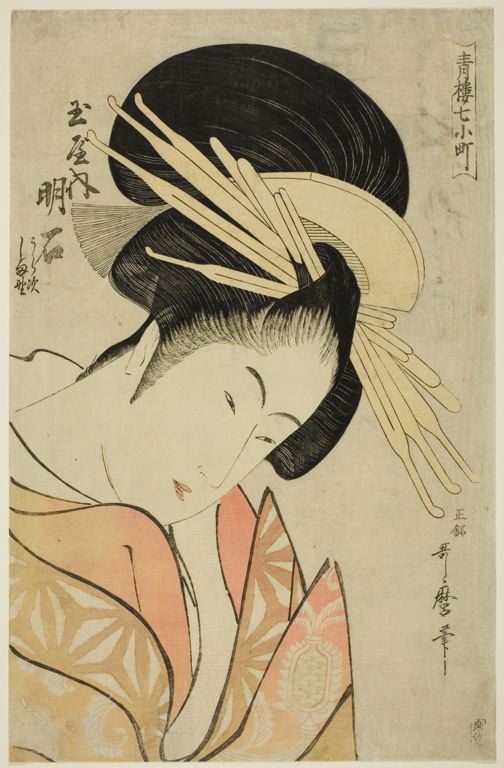
Akashi of the Tamaya, from the series Seven Komachis of Yoshiwara (Seiro nana Komachi) (Tamaya uchi Akashi, Uraji, Shimano)
Woodblock print
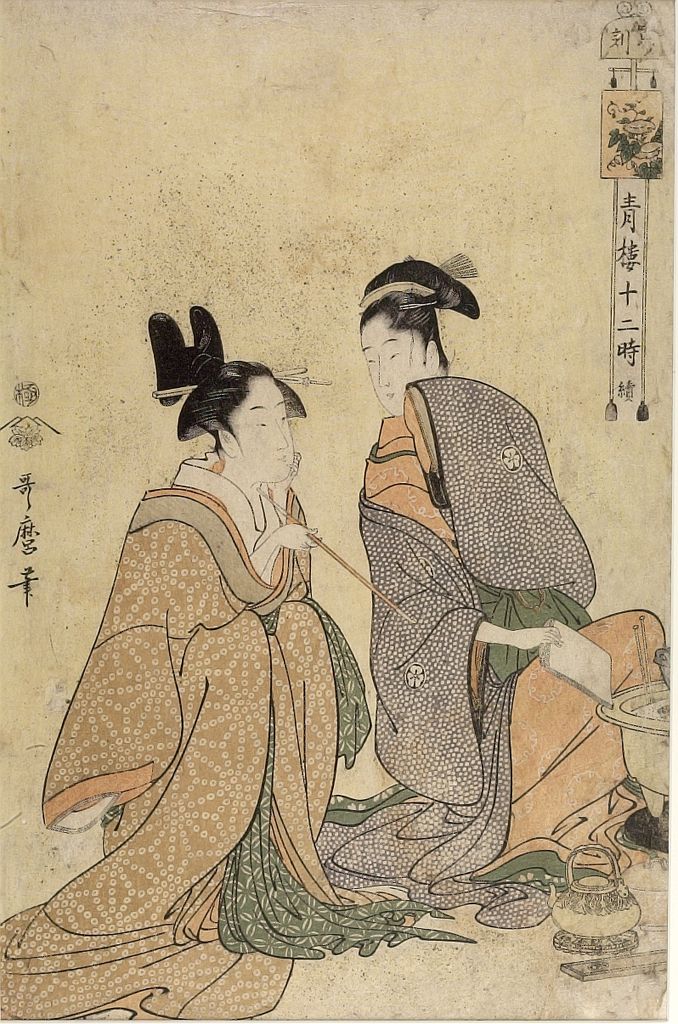
Hour of the Tiger (Tora no koku = 4 AM) from the series Twelve Hours in Yoshiwara (Seirô jûni toki tsuzuki), Late Edo period, circa 1794
Woodblock print
Frequently Asked Questions
Messenger with a Letter, from the series "Elegant Five-needled Pine (Furyu goyo no matsu)" was created by Kitagawa Utamaro (喜多川歌麿) in c. 1797/98.