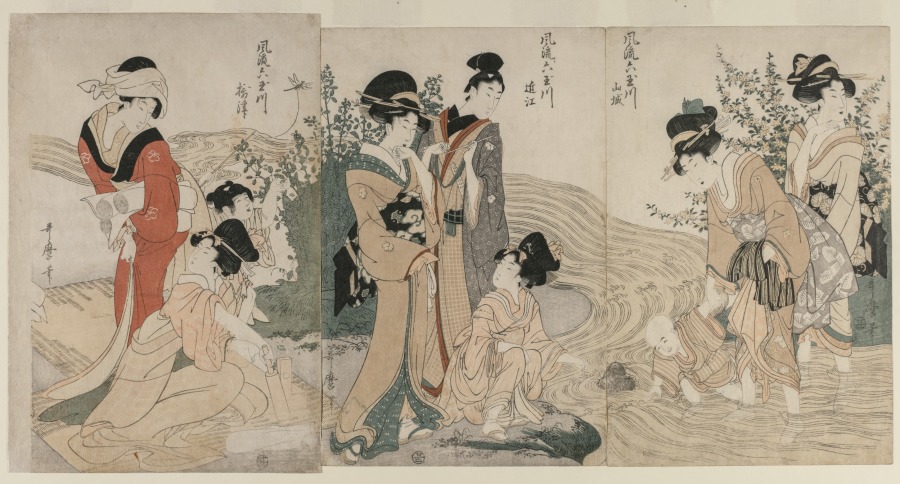
Musashi, Omi, Yamashiro, and Settsu Provinces from the series Fashionable Six Jewel Rivers (Furyu Mu Tamagawa)
- Date:
- c. 1804
- Medium:
- polychrome woodblock print; ink and color on paper
- Source:
- Cleveland Museum of Art
Description
Kitagawa Utamaro's Musashi, Omi, Yamashiro, and Settsu Provinces, from the series Fashionable Six Jewel Rivers (Furyu Mu Tamagawa), is a circa 1795 ukiyo-e woodblock print in the collection of the Cleveland Museum of Art (accession 1916.1104). The Six Jewel Rivers, or Mu Tamagawa, are a classical poetic conceit in Japanese literature: six rivers each called Tamagawa, scattered across the provinces, that became conventional subjects in waka and later painting. Utamaro and his publishers translated this learned theme into Edo bijin-ga by populating each provincial river with fashionable women drawn in his mature manner, blending poetic allusion with the visual pleasures of contemporary dress, coiffure, and accessory. In this design, beauties associated with the Tamagawa of Musashi, Omi, Yamashiro, and Settsu Provinces are brought together so that the viewer may read each figure as a personification of place, season, and verse. The print exemplifies Utamaro's distinctive contribution to ukiyo-e: an elongated yet rounded female type, refined contour drawing, and a calibrated palette of nishiki-e color blocks that suggest brocade kimono without crowding the sheet. Utamaro's deployment of the mitate, or analogical, framework here lets a fashionable Edo audience enjoy classical poetry through the bodies of women whose clothes and hair they could recognize from teahouse and Yoshiwara culture. The Cleveland Museum of Art's holding offers a useful reference for collectors and researchers tracing Utamaro's series-format Edo bijin-ga of the mid-1790s, a period when his published portraits set the standard for the genre across the Edo print industry. The Furyu Mu Tamagawa is also a productive case study in how ukiyo-e publishers paired Utamaro's bijin designs with classical themes to secure both poetic prestige and popular sales.
More Prints by Kitagawa Utamaro
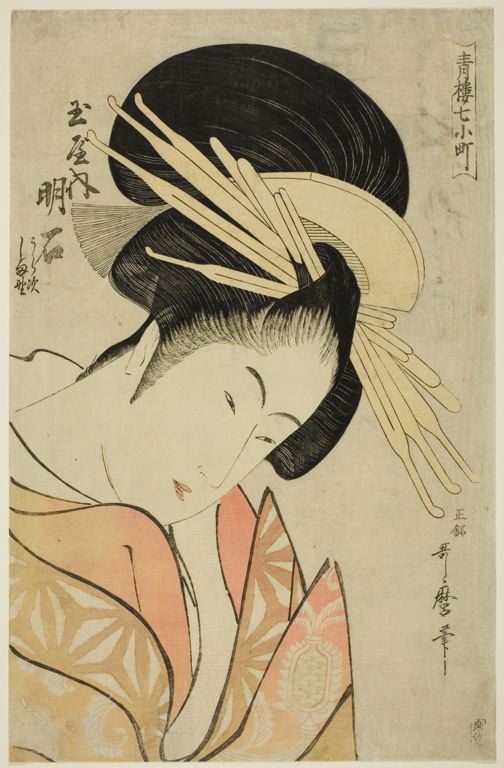
Akashi of the Tamaya, from the series Seven Komachis of Yoshiwara (Seiro nana Komachi) (Tamaya uchi Akashi, Uraji, Shimano)
Woodblock print
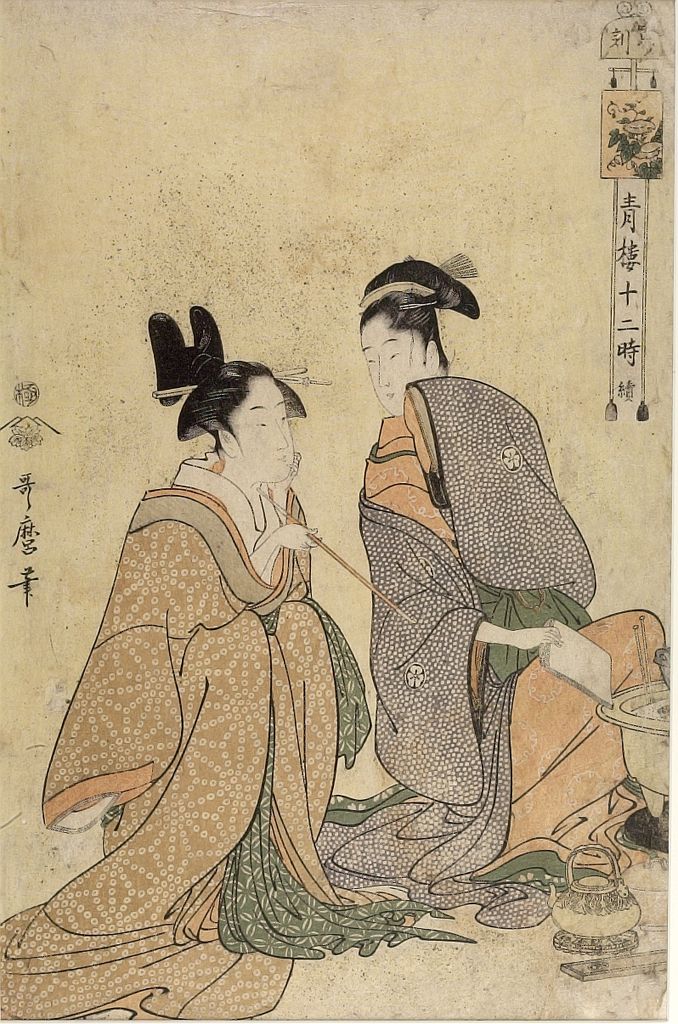
Hour of the Tiger (Tora no koku = 4 AM) from the series Twelve Hours in Yoshiwara (Seirô jûni toki tsuzuki), Late Edo period, circa 1794
Woodblock print
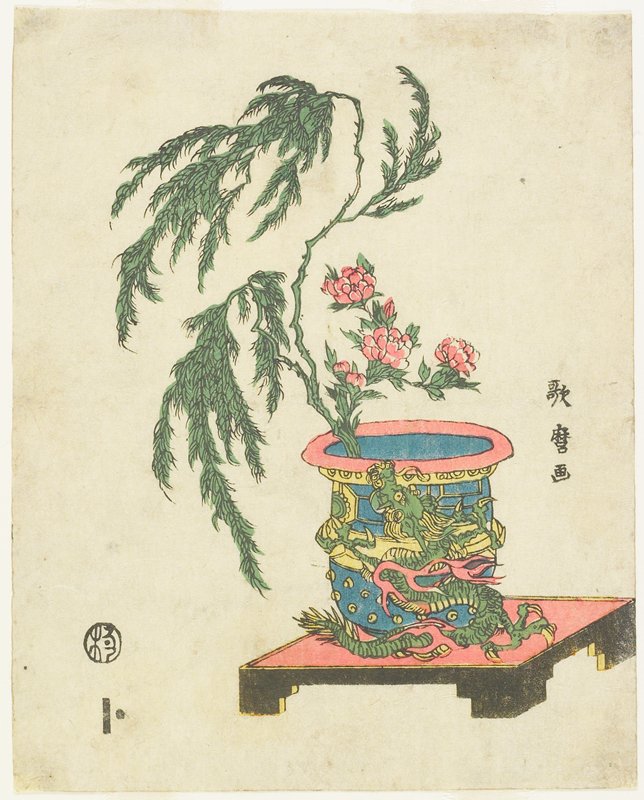
Ikebana arrangement of Peony and Willow in Dragon Pot
1781–1806
Woodblock print (nishiki-e), ink and color on paper
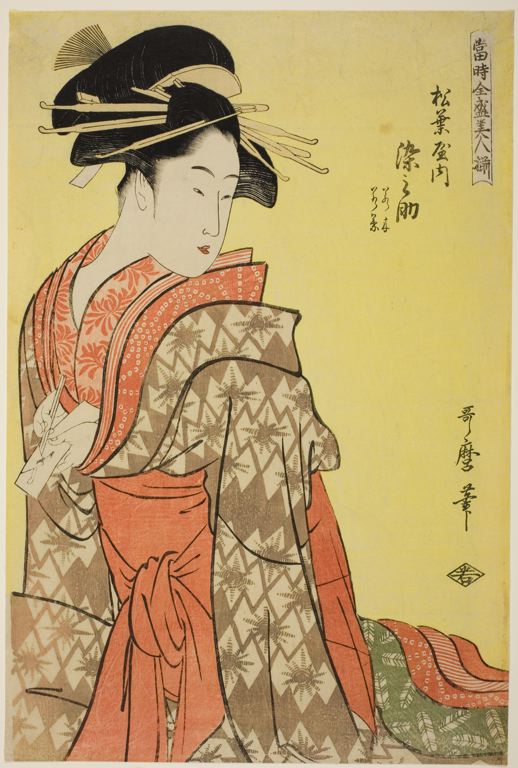
The Greatest Beauties of Our Time (Toji zensei bijin zoroe): Somenosuke of the Matsubaya with Attendants Wakagi and Wakaba
Woodblock print
Frequently Asked Questions
Musashi, Omi, Yamashiro, and Settsu Provinces from the series Fashionable Six Jewel Rivers (Furyu Mu Tamagawa) was created by Kitagawa Utamaro (喜多川歌麿) in c. 1804.