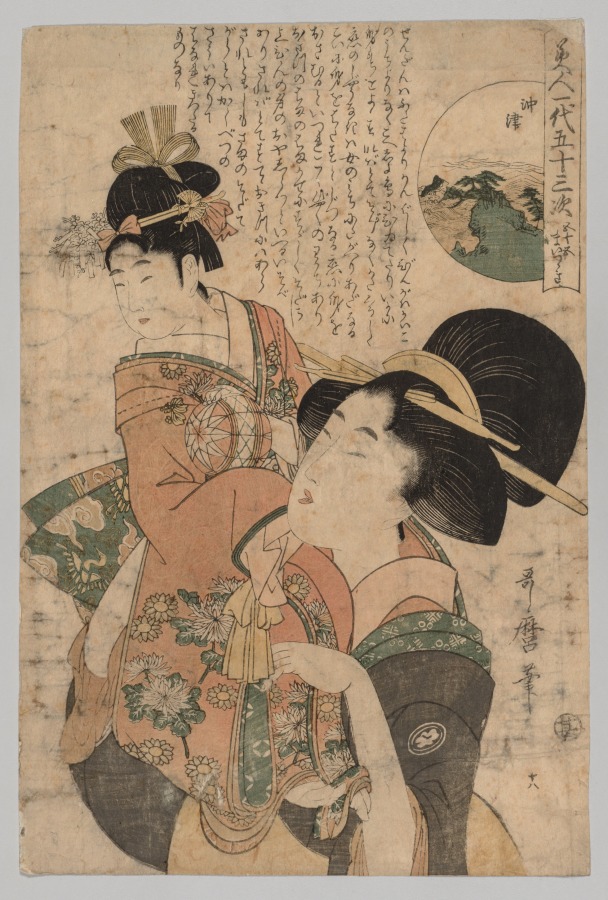
Nakatsu, from the series Fifty-three Stations in the Life of a Beauty
- Date:
- c. 1803
- Medium:
- color woodblock print
- Source:
- Cleveland Museum of Art
Description
Held at the Cleveland Museum of Art and dated 1801, this print from the series "Fifty-three Stations in the Life of a Beauty" (Bijin isshogai isshu) is a witty Kitagawa Utamaro variation on Edo bijin-ga's frequent dialogue with the road. Travel series structured around the fifty-three post stations of the Tokaido were among the most popular thematic frameworks of ukiyo-e, but Utamaro's variant transposes the geography of the highway onto the life stages and milestones of a single beautiful woman, fusing the format of meisho-e (famous-place pictures) with the inward focus of his bijin practice. Nakatsu, a post town on the route, here becomes one biographical episode in the woman's progress through experience. Utamaro's beauty appears with the characteristic elongated neck, soft oval face, and elegant hand gestures of his mature style. Patterned textiles, hairstyles, and accessories signal the social register of the figure, while the title fuses topographical reference with allegory in a way that reflects the literary playfulness of late eighteenth-century Edo culture. By 1801 Utamaro had survived the censorship reforms of the early 1790s and was navigating an increasingly competitive ukiyo-e marketplace, and this kind of conceptual series helped him maintain the inventive edge that distinguished his work from contemporaries such as Eishi and Choki.
More Prints by Kitagawa Utamaro
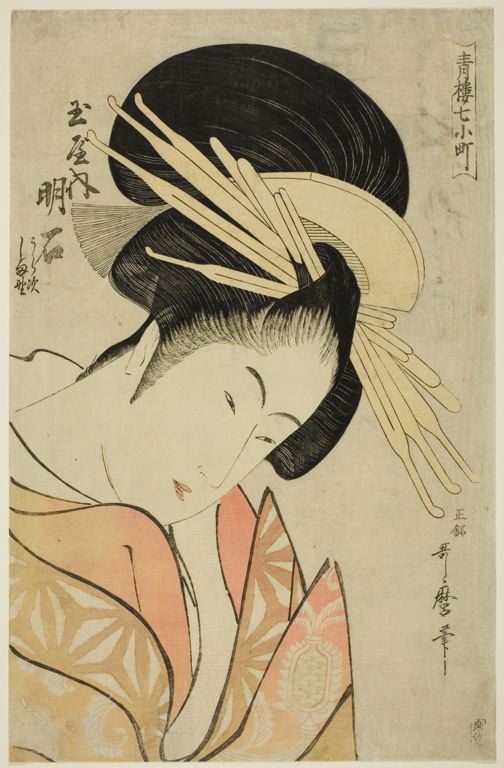
Akashi of the Tamaya, from the series Seven Komachis of Yoshiwara (Seiro nana Komachi) (Tamaya uchi Akashi, Uraji, Shimano)
Woodblock print
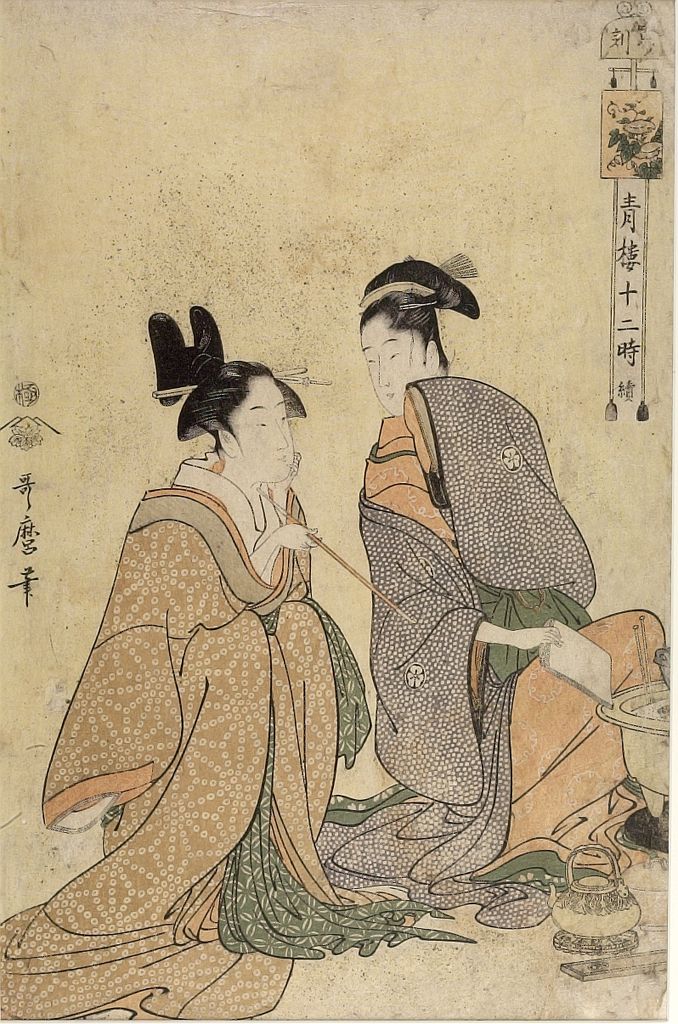
Hour of the Tiger (Tora no koku = 4 AM) from the series Twelve Hours in Yoshiwara (Seirô jûni toki tsuzuki), Late Edo period, circa 1794
Woodblock print
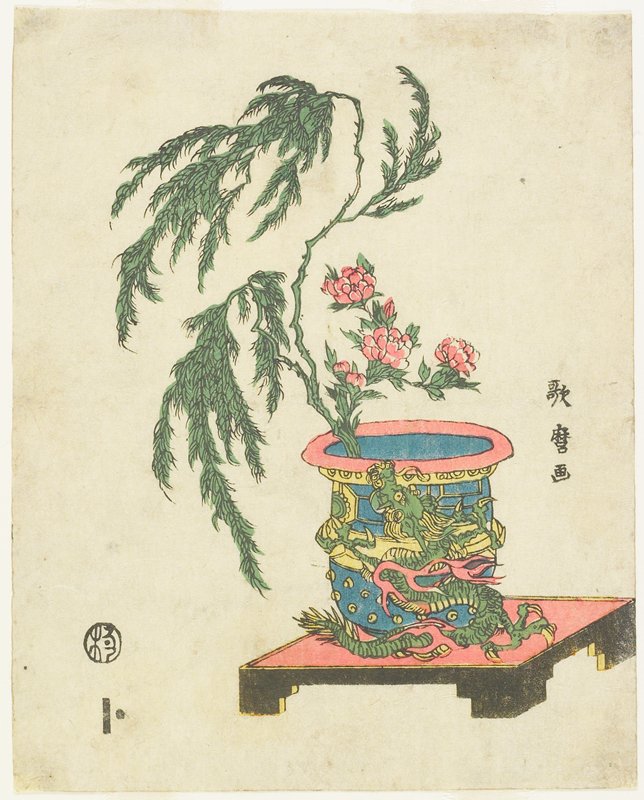
Ikebana arrangement of Peony and Willow in Dragon Pot
1781–1806
Woodblock print (nishiki-e), ink and color on paper
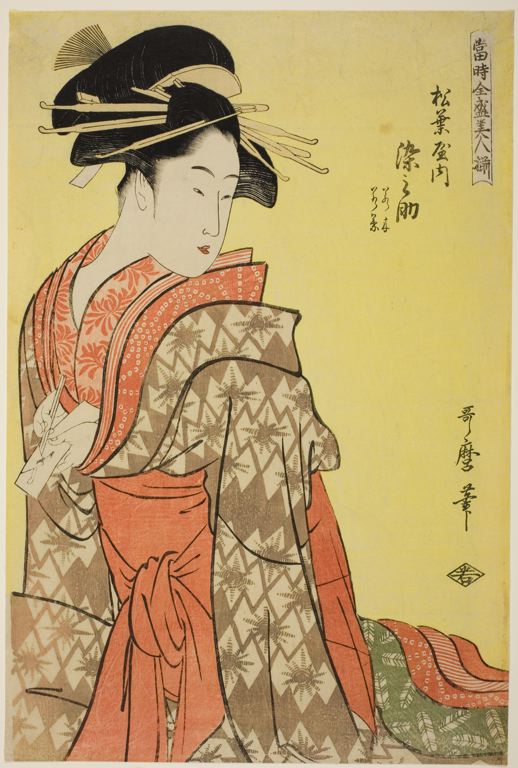
The Greatest Beauties of Our Time (Toji zensei bijin zoroe): Somenosuke of the Matsubaya with Attendants Wakagi and Wakaba
Woodblock print
Frequently Asked Questions
Nakatsu, from the series Fifty-three Stations in the Life of a Beauty was created by Kitagawa Utamaro (喜多川歌麿) in c. 1803.