New Year's: Ebisu Dancing
- Date:
- Late Edo period, circa 1790s
- Medium:
- Ukiyo-e woodblock print in "ōban" format; ink and color on paper, with printed signature reading "Utamaro hitsu"
- Source:
- Harvard Art Museums
Description
New Year's: Ebisu Dancing, a Kitagawa Utamaro print of about 1790 in the Harvard Art Museums, captures one of Edo's familiar early-year street performances. Ebisu, the laughing god of fishermen, merchants, and good fortune, was a regular figure in itinerant New Year entertainments, in which performers in masks and costumes danced from door to door distributing blessings in exchange for coin. Utamaro frames the scene in his characteristic Edo bijin-ga manner, foregrounding the women who watch, host, or accompany the Ebisu performer rather than the dance itself. The result is a print in which a religious-comic ritual becomes the occasion for a fashionable urban tableau, with kimono patterns, hairstyles, and gestures organized into Utamaro's typical figural rhythm. Within ukiyo-e of festivals and seasonal observances, this kind of subject matter rooted bijin-ga in the calendar of the Edo year, anchoring the fashionable women to specific rites and street life. The print's restrained palette and careful registration emphasize the calm, indoor reception of the celebration rather than its outdoor spectacle. For collectors of Kitagawa Utamaro and admirers of New Year ukiyo-e, the Harvard Art Museums impression preserves a graceful example of how he balanced festive subject matter with his ongoing project of celebrating the contemporary Edo woman.
More Prints by Kitagawa Utamaro
![A Low Class Prostitute (Gun [teppo]), from the series “Five Shades of Ink in the Northern Quarter" ("Hokkoku goshiki-zumi") by Kitagawa Utamaro](https://www.artic.edu/iiif/2/ed82be98-8a83-4163-ccc4-e2f7210cce55/full/843,/0/default.jpg)
A Low Class Prostitute (Gun [teppo]), from the series “Five Shades of Ink in the Northern Quarter" ("Hokkoku goshiki-zumi")
c. 1794/95
Color woodblock print; oban
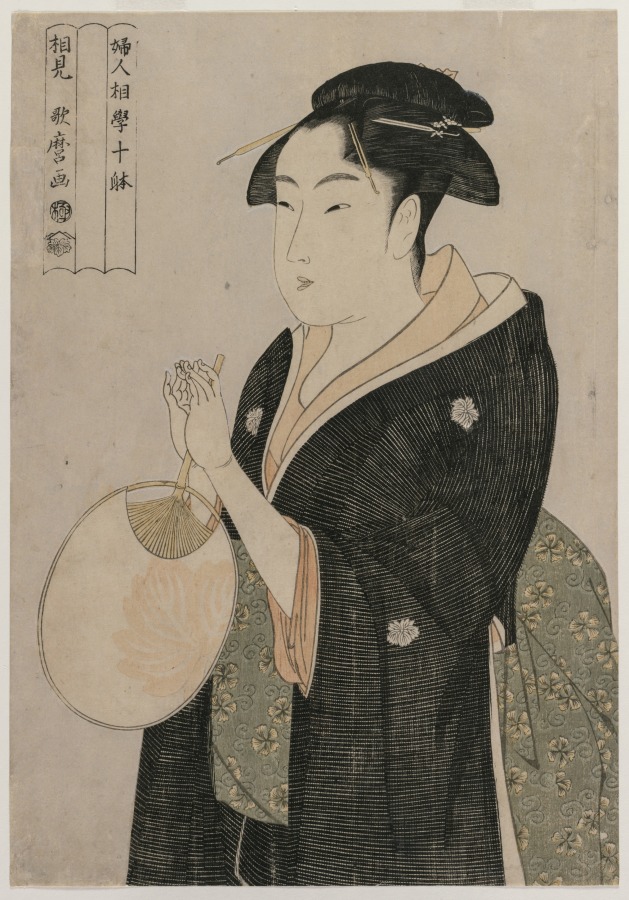
Woman Holding a Fan (from the series Ten Aspects of the Physiognomy of Women)
c. 1793
color woodblock print
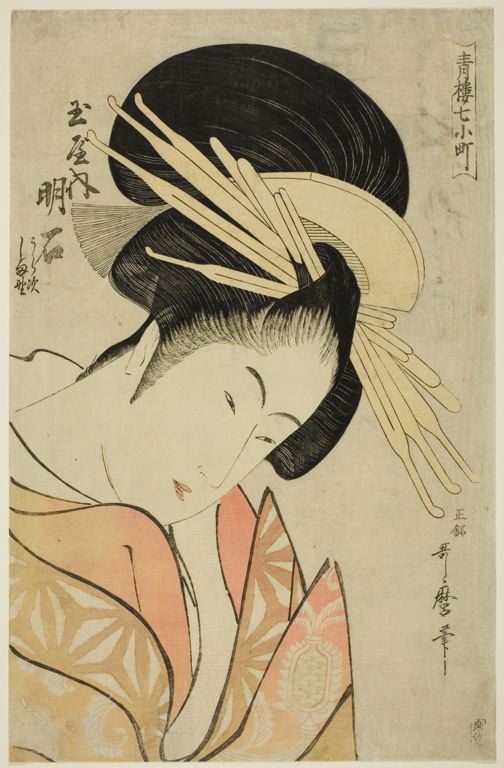
Akashi of the Tamaya, from the series Seven Komachis of Yoshiwara (Seiro nana Komachi) (Tamaya uchi Akashi, Uraji, Shimano)
Woodblock print
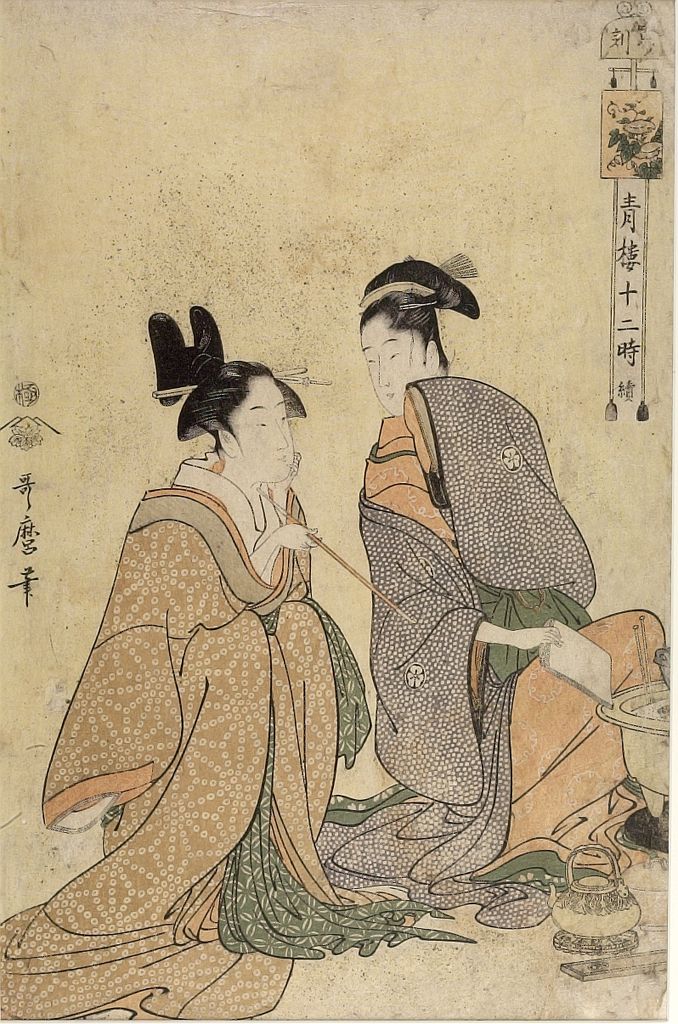
Hour of the Tiger (Tora no koku = 4 AM) from the series Twelve Hours in Yoshiwara (Seirô jûni toki tsuzuki), Late Edo period, circa 1794
Woodblock print
Frequently Asked Questions
New Year's: Ebisu Dancing was created by Kitagawa Utamaro (喜多川歌麿) in Late Edo period, circa 1790s.