
No. 4 (shi), from the series "Women Engaged in the Sericulture Industry (Joshoku kaiko tewaza-gusa)"
- Date:
- c. 1798/1800
- Medium:
- Color woodblock print; oban
- Source:
- Art Institute of Chicago
Description
Kitagawa Utamaro's No. 4 (shi), from the 1793 series Women Engaged in the Sericulture Industry (Joshoku kaiko tewaza-gusa), forms part of a twelve-sheet sequence devoted to the female labor of silk production from egg to finished cloth. The series is unusual within Edo bijin-ga for its sustained documentary attention to a working process, and Utamaro brings to it the same care for posture, hand gesture, and concentrated facial expression that he lavished on courtesans of the Yoshiwara. In this fourth design the women attend to a particular stage of silkworm husbandry, their hands and gaze converging on the trays, mulberry leaves, or reeling apparatus that organize the composition. By placing rural and household producers within the format usually reserved for celebrated beauties, Utamaro extended the ukiyo-e tradition into a register that anticipates later genre studies while still honoring the elegance of pose and pattern expected by his Edo audience. The publisher Tsuruya Kiemon issued the set, and the Art Institute of Chicago preserves the present impression among its holdings of Utamaro's printed work. The series stands today as both a tribute to women's craft labor in late eighteenth-century Japan and a demonstration of how Utamaro could redirect the conventions of bijin-ga from idealized leisure toward observed practice without losing the lyric refinement that defined his style.
More Prints by Kitagawa Utamaro
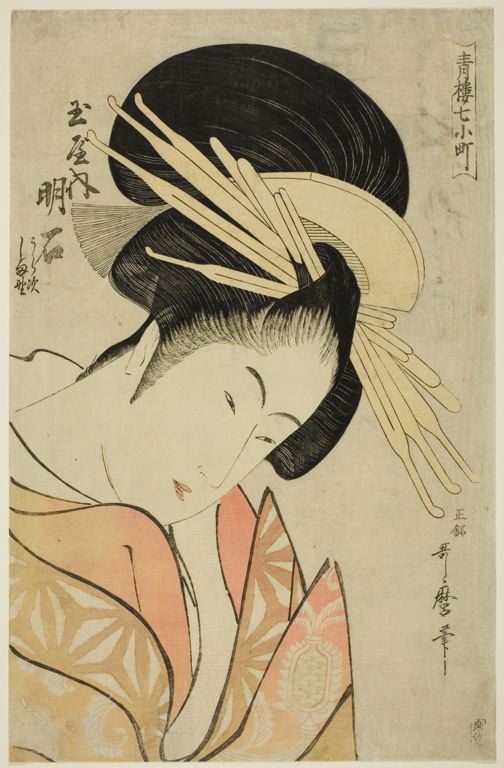
Akashi of the Tamaya, from the series Seven Komachis of Yoshiwara (Seiro nana Komachi) (Tamaya uchi Akashi, Uraji, Shimano)
Woodblock print
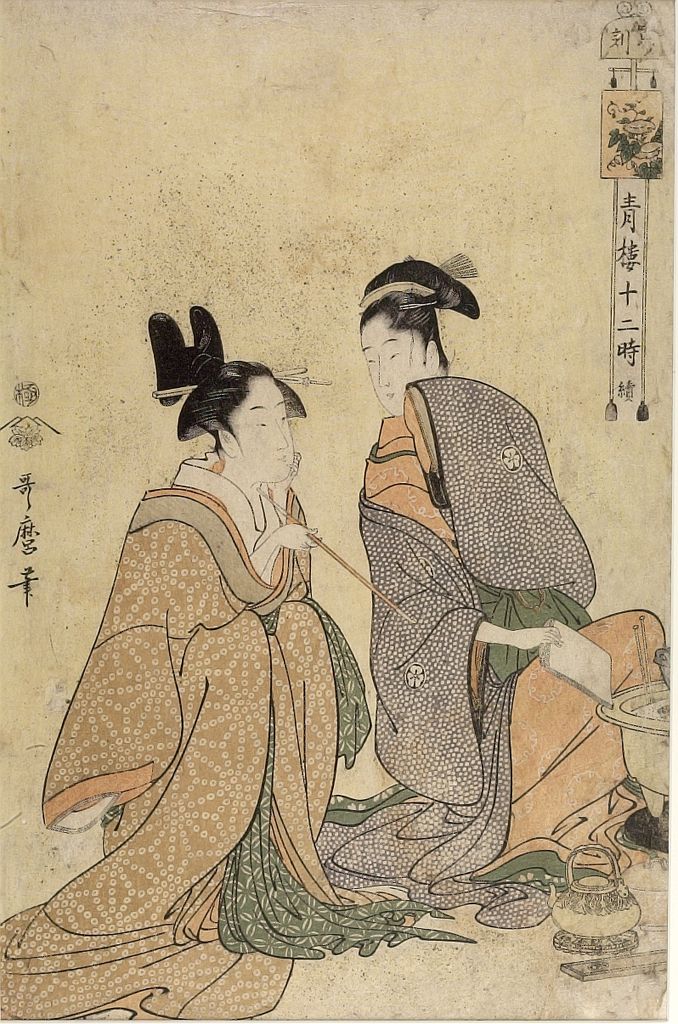
Hour of the Tiger (Tora no koku = 4 AM) from the series Twelve Hours in Yoshiwara (Seirô jûni toki tsuzuki), Late Edo period, circa 1794
Woodblock print
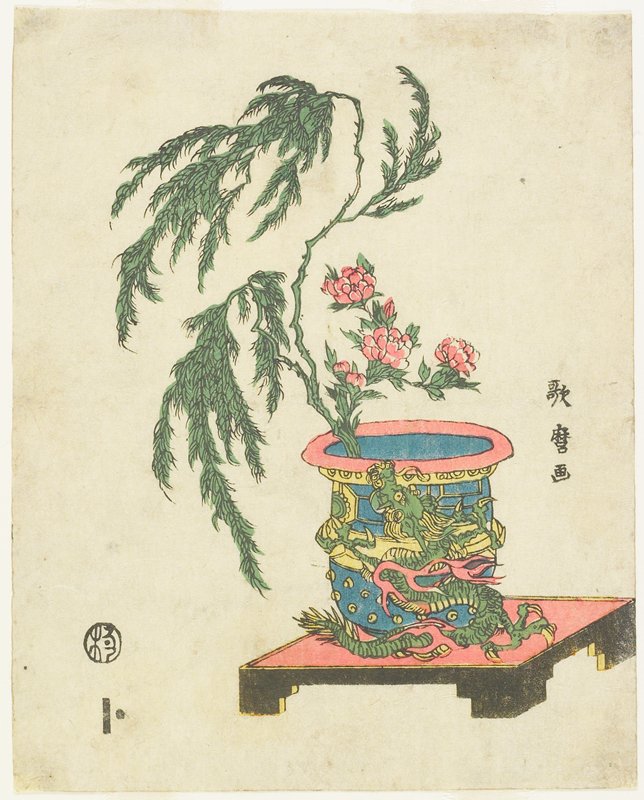
Ikebana arrangement of Peony and Willow in Dragon Pot
1781–1806
Woodblock print (nishiki-e), ink and color on paper
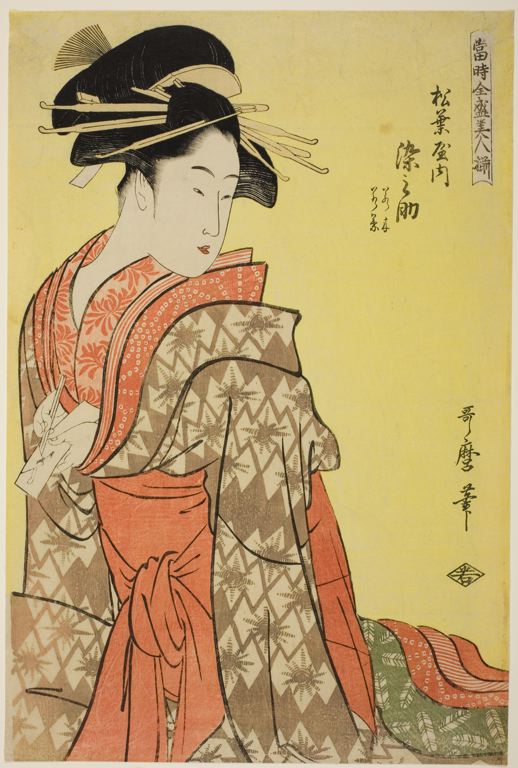
The Greatest Beauties of Our Time (Toji zensei bijin zoroe): Somenosuke of the Matsubaya with Attendants Wakagi and Wakaba
Woodblock print
Frequently Asked Questions
No. 4 (shi), from the series "Women Engaged in the Sericulture Industry (Joshoku kaiko tewaza-gusa)" was created by Kitagawa Utamaro (喜多川歌麿) in c. 1798/1800.