
Northern Quarter (Hokkoku), from the series "Three Amusements of Contemporary Beauties (Tosei bijin sanyu)"
- Date:
- c. 1800
- Medium:
- Color woodblock print; naga-oban
- Source:
- Art Institute of Chicago
Description
Northern Quarter (Hokkoku), from Kitagawa Utamaro's series Three Amusements of Contemporary Beauties (Tosei bijin sanyu), c. 1795, represents the woman who embodied the Yoshiwara pleasure district, conventionally called the Hokkoku or 'Northern Quarter' because of its location relative to the city center of Edo. The series sorts contemporary feminine ideals into three social registers (typically the high-ranking courtesan, the geisha, and the respectable townswoman), and this sheet stakes out the most luxurious of the three. Held in the Art Institute of Chicago, the print is characteristic mature Edo bijin-ga: Utamaro presents a half-length or three-quarter figure, isolating face and upper body so that hair ornaments, kimono pattern, and hand gesture become the primary expressive vehicles. The series belongs to the same ukiyo-e current as his Komei bijin and tosei fuzoku designs, in which categories of women, drawn from real urban experience rather than legend, are catalogued for connoisseurial comparison and quiet erotic appreciation by a sophisticated Edo audience.
More Prints by Kitagawa Utamaro
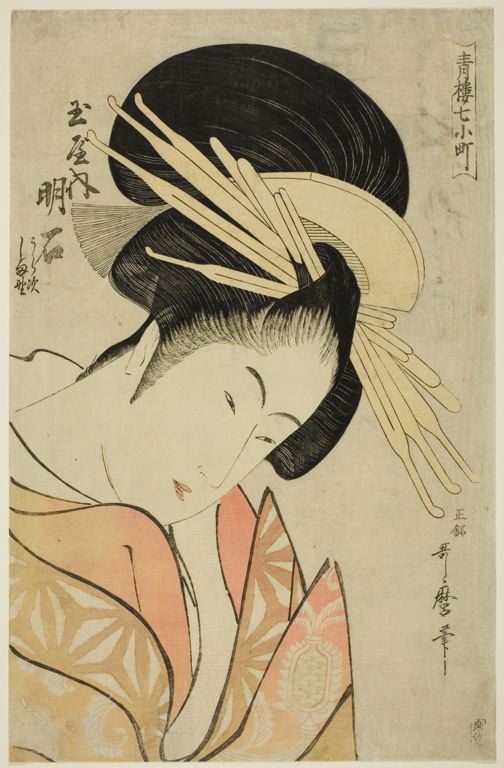
Akashi of the Tamaya, from the series Seven Komachis of Yoshiwara (Seiro nana Komachi) (Tamaya uchi Akashi, Uraji, Shimano)
Woodblock print
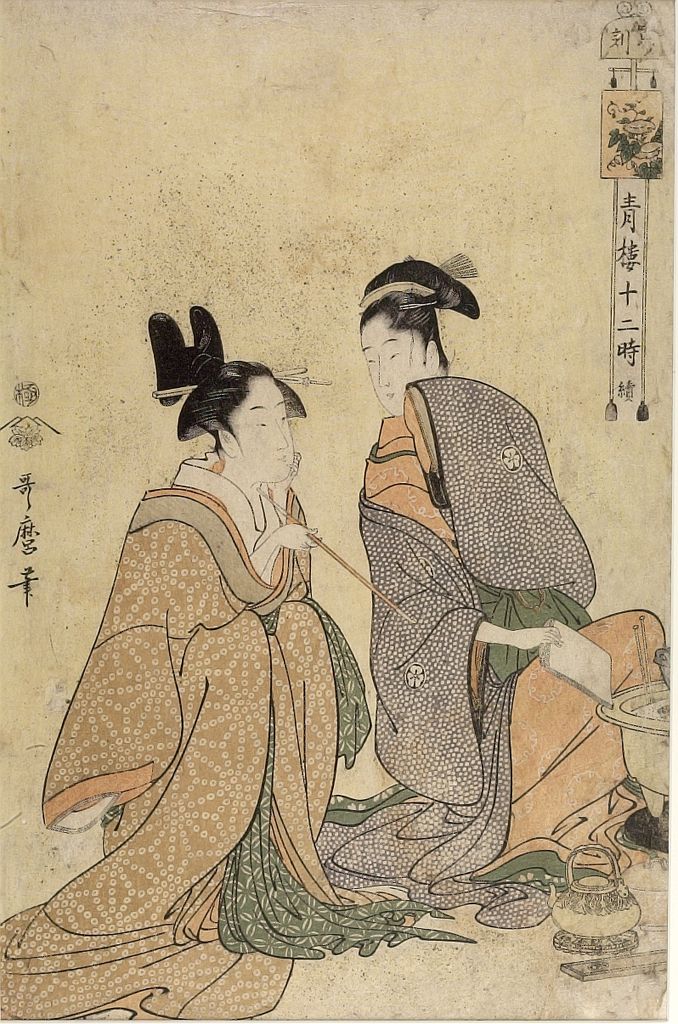
Hour of the Tiger (Tora no koku = 4 AM) from the series Twelve Hours in Yoshiwara (Seirô jûni toki tsuzuki), Late Edo period, circa 1794
Woodblock print
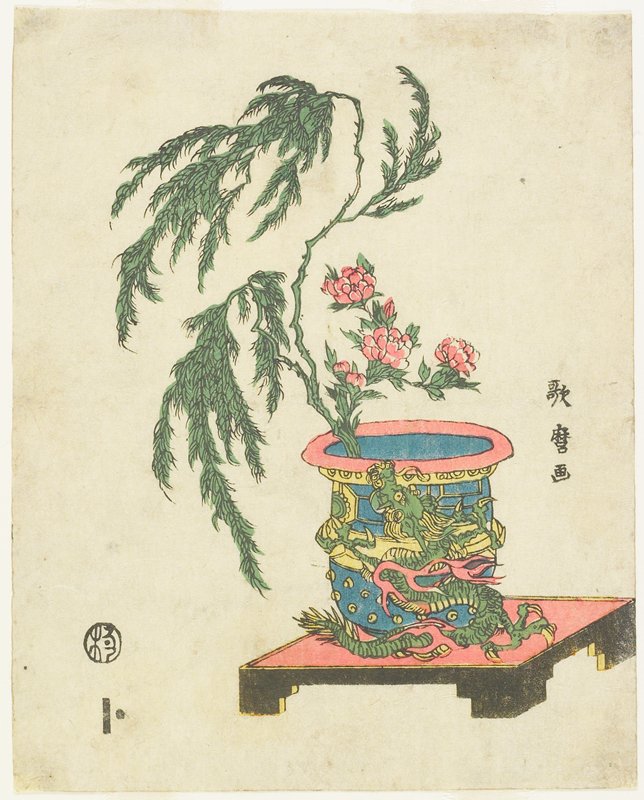
Ikebana arrangement of Peony and Willow in Dragon Pot
1781–1806
Woodblock print (nishiki-e), ink and color on paper
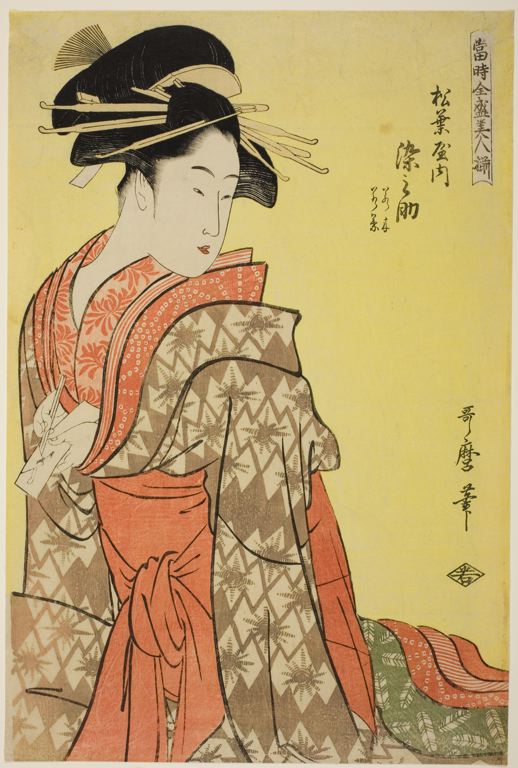
The Greatest Beauties of Our Time (Toji zensei bijin zoroe): Somenosuke of the Matsubaya with Attendants Wakagi and Wakaba
Woodblock print
Frequently Asked Questions
Northern Quarter (Hokkoku), from the series "Three Amusements of Contemporary Beauties (Tosei bijin sanyu)" was created by Kitagawa Utamaro (喜多川歌麿) in c. 1800.