
Ohatsu and Tokubei, from the series "Fashionable Patterns in Utamaro Style (Ryuko moyo Utamaro-gata)"
- Date:
- c. 1798/99
- Medium:
- Color woodblock print; oban
- Source:
- Art Institute of Chicago
Description
Ohatsu and Tokubei, from the series Fashionable Patterns in Utamaro Style (Ryūkō moyō Utamaro-gata), is a color woodblock print of about 1793 by Kitagawa Utamaro in the Art Institute of Chicago. The lovers Ohatsu, a Sonezaki teahouse waitress, and Tokubei, a young merchant, were the central figures of Chikamatsu Monzaemon's groundbreaking play The Love Suicides at Sonezaki, the first work of its kind in the Japanese theater. Utamaro represents them in his characteristic half-length paired composition, the format that defined so many of his ukiyo-e portraits of theatrical and Yoshiwara figures. Ohatsu's hair is dressed in an elaborate style suited to her position, her patterned kimono carefully ordered at the collar; Tokubei is drawn with a more sober color sense and the masculine bearing of a townsman. The closeness of their heads and the slight inclination of their bodies communicate intimacy without overt drama, allowing Edo viewers to recall the play's famous ending, a love suicide at the Sonezaki shrine, while still treating the lovers as an elegant compositional pair. The series title's emphasis on fashionable patterns underlines Utamaro's status as a brand: his Edo bijin-ga had become a known visual idiom that other designs could be measured against. The Art Institute of Chicago's impression is a strong example of how Kitagawa Utamaro and his publishers used famous lovers to anchor a series of fashion-driven ukiyo-e that doubled as records of theatrical legend.
More Prints by Kitagawa Utamaro
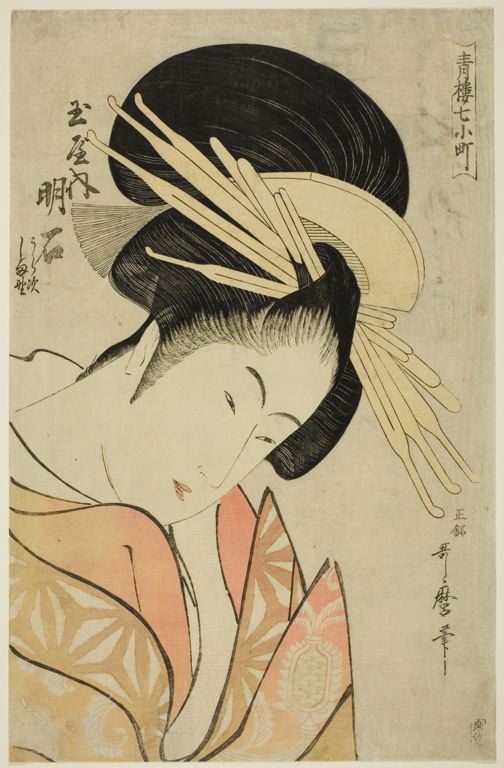
Akashi of the Tamaya, from the series Seven Komachis of Yoshiwara (Seiro nana Komachi) (Tamaya uchi Akashi, Uraji, Shimano)
Woodblock print
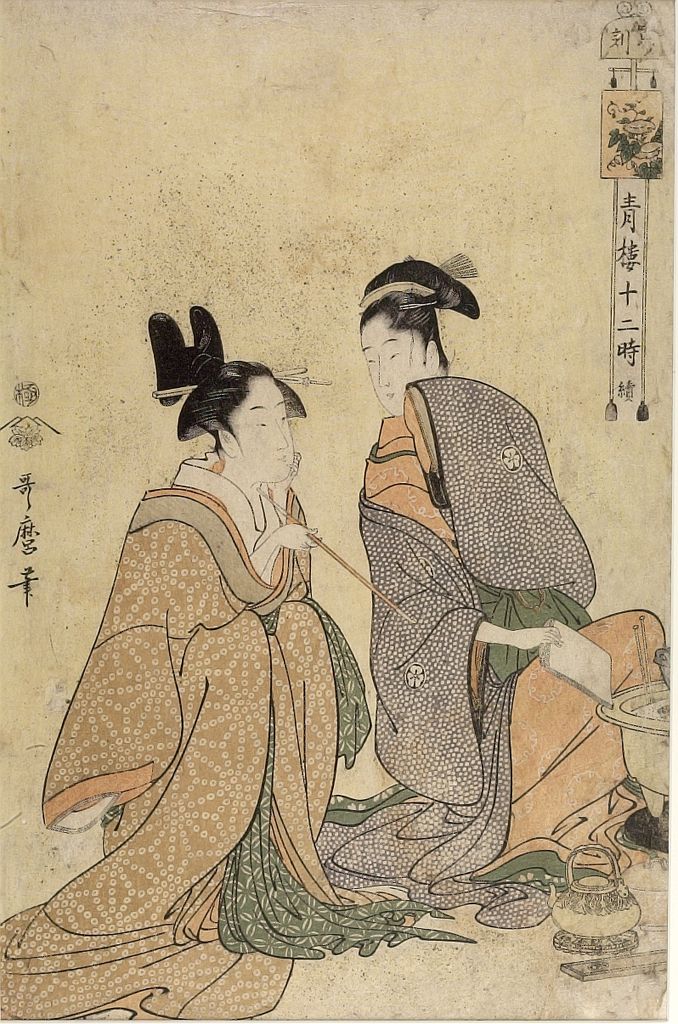
Hour of the Tiger (Tora no koku = 4 AM) from the series Twelve Hours in Yoshiwara (Seirô jûni toki tsuzuki), Late Edo period, circa 1794
Woodblock print
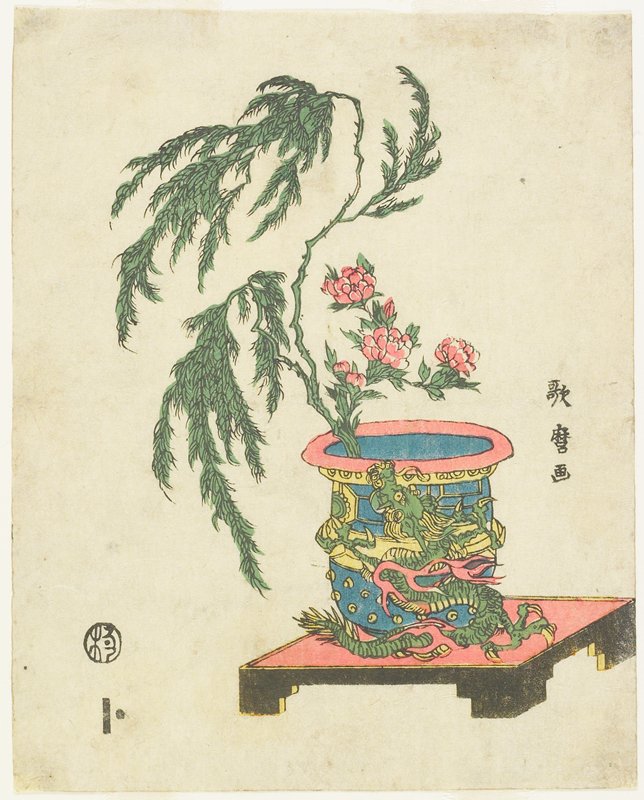
Ikebana arrangement of Peony and Willow in Dragon Pot
1781–1806
Woodblock print (nishiki-e), ink and color on paper
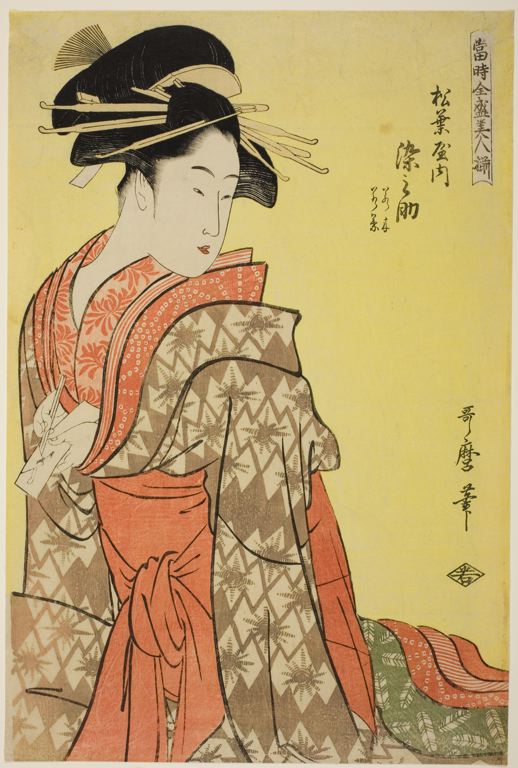
The Greatest Beauties of Our Time (Toji zensei bijin zoroe): Somenosuke of the Matsubaya with Attendants Wakagi and Wakaba
Woodblock print
Frequently Asked Questions
Ohatsu and Tokubei, from the series "Fashionable Patterns in Utamaro Style (Ryuko moyo Utamaro-gata)" was created by Kitagawa Utamaro (喜多川歌麿) in c. 1798/99.
Yes — Ohatsu and Tokubei, from the series "Fashionable Patterns in Utamaro Style (Ryuko moyo Utamaro-gata)" is part of the Fashionable Patterns in Utamaro Style series by Kitagawa Utamaro.