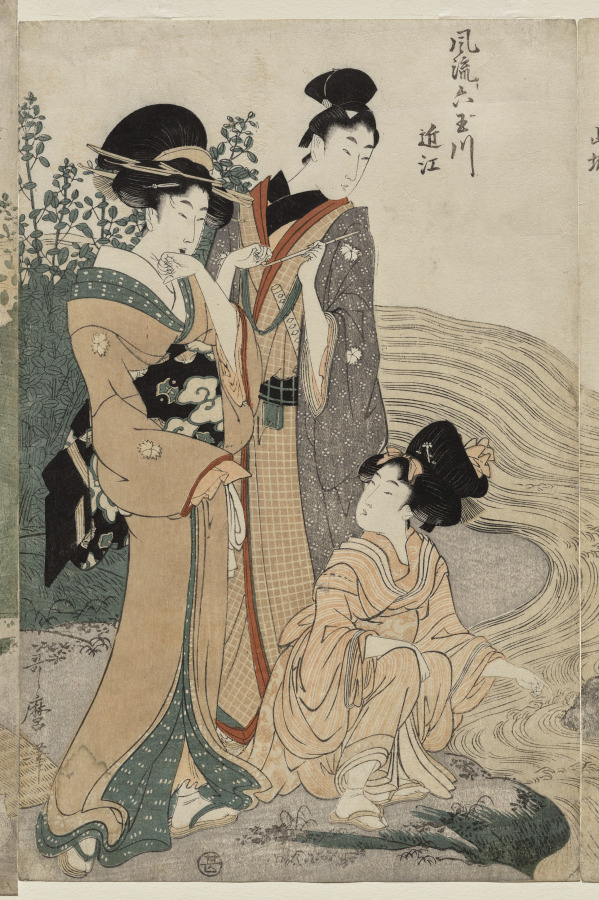
Omi Province from the series Fashionable Six Jewel Rivers (Furyu Mu Tamagawa)
- Date:
- c. 1804
- Medium:
- polychrome woodblock print; ink and color on paper
- Source:
- Cleveland Museum of Art
Description
Omi Province from the series Fashionable Six Jewel Rivers (Furyu Mu Tamagawa), designed by Kitagawa Utamaro around 1795 and held by the Cleveland Museum of Art, takes one of the six classical Tamagawa rivers and recasts it through Edo bijin-ga. The Tamagawa of Omi Province, often associated in poetry with reflections and clear flowing water, becomes here a setting for fashionable contemporary women whose presence updates the classical reference for an Edo audience. Utamaro arranges the figures along a diagonal that suggests the riverbank, using printed gradations in indigo to imply the water's movement and depth without indulging in literal landscape detail. The mitate logic of the series asks viewers to bring poetic associations to the encounter with each scene, layering classical waka allusion onto an ukiyo-e print of contemporary beauties. The drawing is characteristic of Utamaro at his refined mid-1790s peak: long, almost reedlike necks, faces with small, expressive features, and robes that carry just enough pattern to convey fashion without overpowering the figures. Within Kitagawa Utamaro's body of work, the Furyu Mu Tamagawa cycle stands as one of the most fully realized literary-figural cycles in late eighteenth-century ukiyo-e. The Cleveland Museum of Art's impression of the Omi sheet allows collectors and scholars to compare it directly with the other provinces in the cycle, observing how Utamaro varied the figural rhythm and color from province to province within a single concept.
More Prints by Kitagawa Utamaro
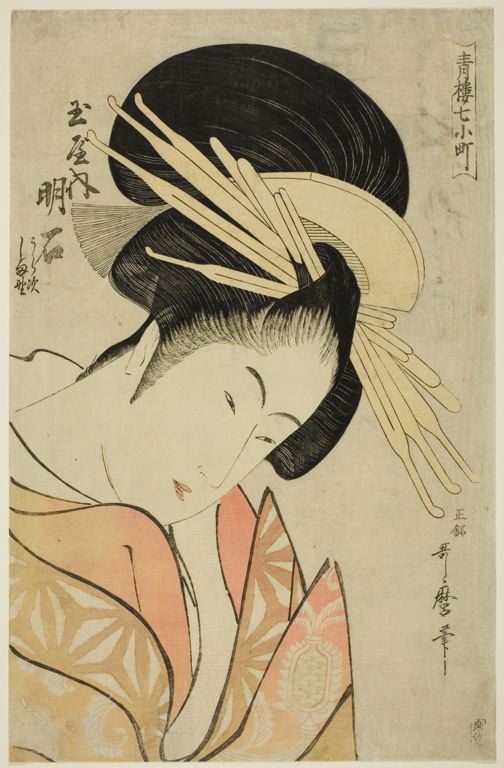
Akashi of the Tamaya, from the series Seven Komachis of Yoshiwara (Seiro nana Komachi) (Tamaya uchi Akashi, Uraji, Shimano)
Woodblock print
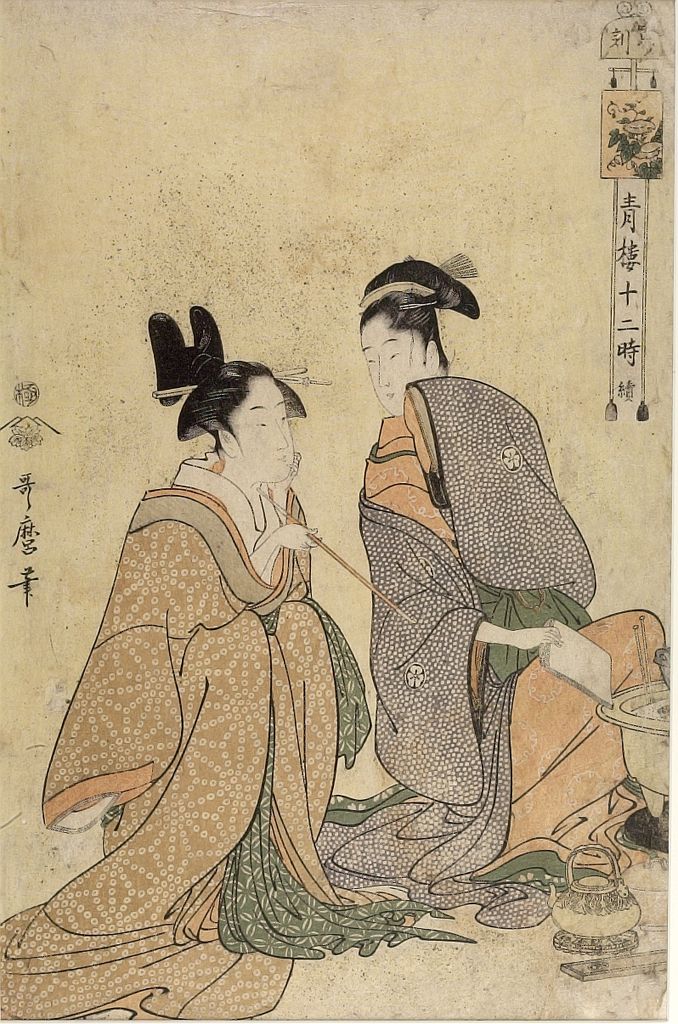
Hour of the Tiger (Tora no koku = 4 AM) from the series Twelve Hours in Yoshiwara (Seirô jûni toki tsuzuki), Late Edo period, circa 1794
Woodblock print
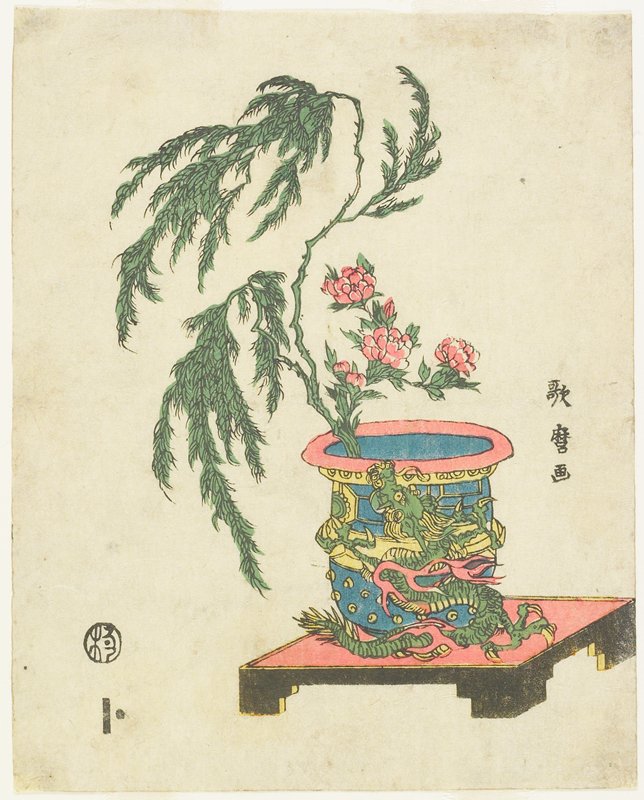
Ikebana arrangement of Peony and Willow in Dragon Pot
1781–1806
Woodblock print (nishiki-e), ink and color on paper
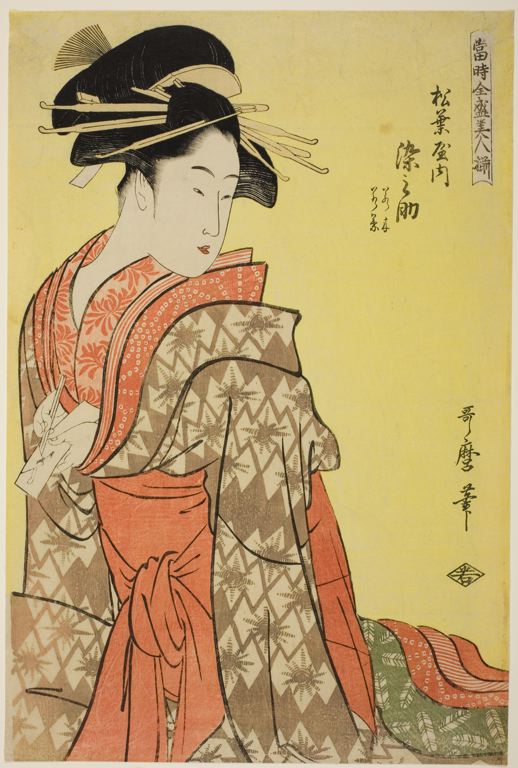
The Greatest Beauties of Our Time (Toji zensei bijin zoroe): Somenosuke of the Matsubaya with Attendants Wakagi and Wakaba
Woodblock print
Frequently Asked Questions
Omi Province from the series Fashionable Six Jewel Rivers (Furyu Mu Tamagawa) was created by Kitagawa Utamaro (喜多川歌麿) in c. 1804.