Osan and Mohei, from the series "True Feelings Compared: The Founts of Love" (Jitsu kurabe iro no minakami)
- Date:
- Late Edo period, circa 1798-1799
- Medium:
- Ukiyo-e woodblock print in "ōban" format; ink and color on paper, with printed signature reading "Utamaro hitsu"
- Source:
- Harvard Art Museums
Description
Osan and Mohei, from the series True Feelings Compared: The Founts of Love (Jitsu kurabe iro no minakami), is a Kitagawa Utamaro design of about 1798 at the Harvard Art Museums. The series translates famous tragic lovers from kabuki and jouri drama into the visual idiom of Edo bijin-ga. Osan and Mohei, the central figures of Chikamatsu Monzaemon's play Daikyoji mukashi-goyomi (The Almanac Maker's Tale), are among the most affecting of these couples: the wife of a calendar publisher and his apprentice, whose accidental adulterous involvement led to flight and execution under Tokugawa law. Utamaro presents the pair in the close, half-length format that he had pioneered, their faces drawn with the elongated elegance characteristic of his mature okubi-e. The composition emphasises tactile intimacy - the lovers' hands, the angles of their necks and the patterning of robes - while a small cartouche identifies the series and the lovers' names. The result is a poignant fusion of ukiyo-e portraiture with the literary subject of doomed love, in which the visual language of the Yoshiwara is borrowed to lend pathos to figures from outside it. As preserved at Harvard, the sheet exemplifies the late-1790s flowering of Utamaro's narrative bijin-ga and the porous boundary between theatre, fiction and woodblock print culture in late Edo.
More Prints by Kitagawa Utamaro
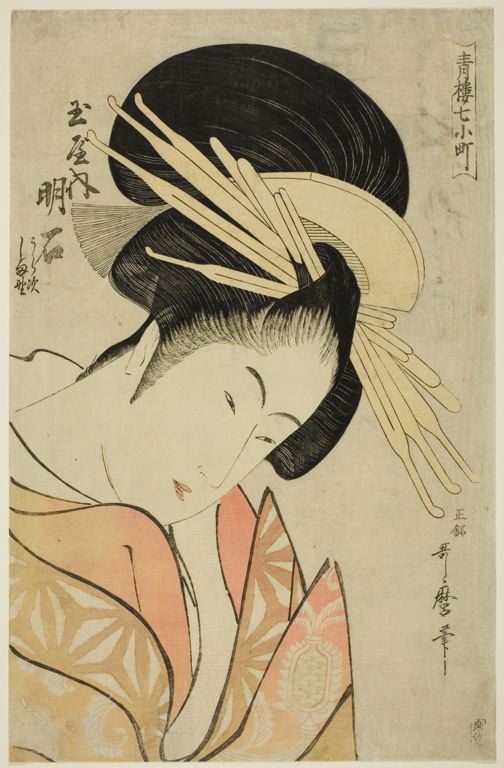
Akashi of the Tamaya, from the series Seven Komachis of Yoshiwara (Seiro nana Komachi) (Tamaya uchi Akashi, Uraji, Shimano)
Woodblock print
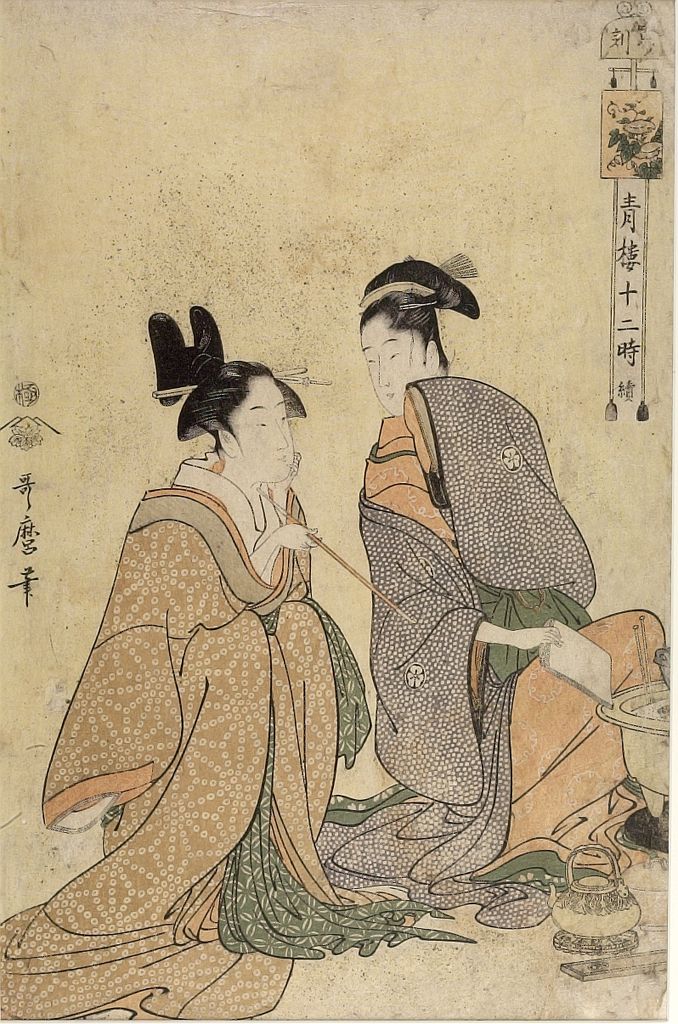
Hour of the Tiger (Tora no koku = 4 AM) from the series Twelve Hours in Yoshiwara (Seirô jûni toki tsuzuki), Late Edo period, circa 1794
Woodblock print
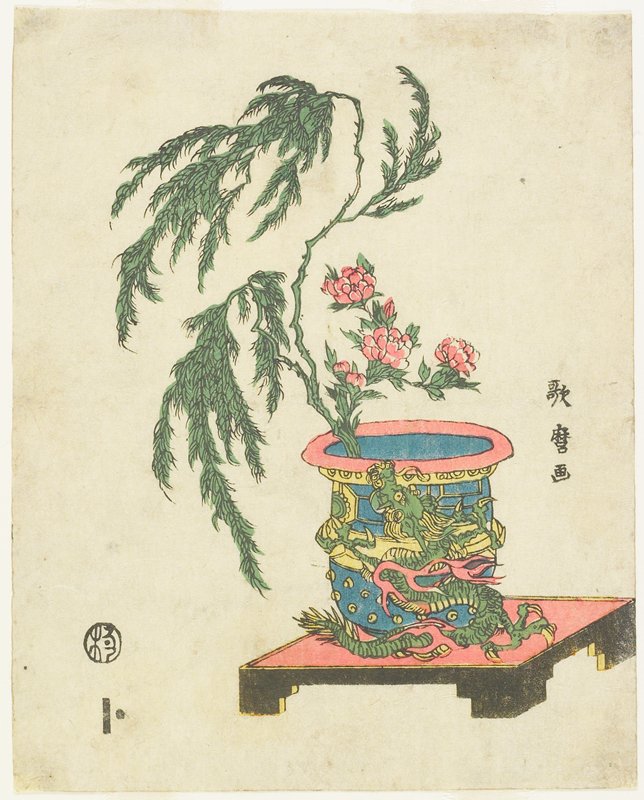
Ikebana arrangement of Peony and Willow in Dragon Pot
1781–1806
Woodblock print (nishiki-e), ink and color on paper
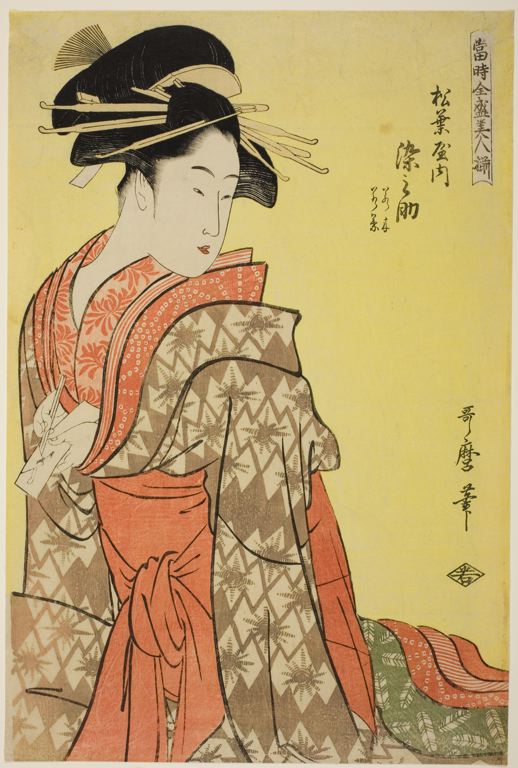
The Greatest Beauties of Our Time (Toji zensei bijin zoroe): Somenosuke of the Matsubaya with Attendants Wakagi and Wakaba
Woodblock print
Frequently Asked Questions
Osan and Mohei, from the series "True Feelings Compared: The Founts of Love" (Jitsu kurabe iro no minakami) was created by Kitagawa Utamaro (喜多川歌麿) in Late Edo period, circa 1798-1799.