
Ōtomo no Kuronushi, from the series Modern Children as the Six Poetic Immortals (Tōsei kodomo rokkasen)
- Date:
- c. 1804
- Medium:
- Woodblock print; ink and color on paper
- Source:
- Art Institute of Chicago
Description
Kitagawa Utamaro's Otomo no Kuronushi, from the series Modern Children as the Six Poetic Immortals (Tosei kodomo rokkasen), is a charming late-career ukiyo-e print held by the Art Institute of Chicago and dated to circa 1799. The series is a witty conceit characteristic of Utamaro's published work for the great Edo bijin-ga and entertainment trade: it transplants the rokkasen, the canonical Six Immortal Poets of Heian-period waka, into the bodies of contemporary children, dressing recognizable poetic figures in everyday Edo costume. Otomo no Kuronushi, traditionally portrayed as the elder, rustic figure among the six, is reimagined here in a juvenile guise, allowing Utamaro to play on the gap between literary archetype and modern childhood. The print is part of Utamaro's broader engagement with classical themes that he sustained alongside his celebrated bijin-ga of Yoshiwara courtesans and teahouse beauties. Designed in nishiki-e color woodblock and printed from multiple keyblocks, the composition relies on Utamaro's hallmark control of contour line and his sensitive handling of patterned textiles. The Art Institute of Chicago's record (artwork 89376) documents this impression as a representative example of Utamaro's late 1790s production for the Edo print market, when his name signature alone could sell a sheet. For collectors and students of ukiyo-e, the series illustrates how Utamaro's Edo bijin-ga sensibility expanded beyond strict portraiture of beauties to include literary parody, kyoka culture, and the playful mitate, or analogical, mode that publishers loved. Modern Children as the Six Poetic Immortals is also valuable as evidence of how classical Japanese poetry remained current in late eighteenth-century popular culture, repackaged by Utamaro for the same urban audience that bought his portraits of Yoshiwara stars. The print rewards close looking at Utamaro's drawing of the child's face and at the publisher's color choices that distinguish a Modern Children sheet from an adult bijin design.
More Prints by Kitagawa Utamaro
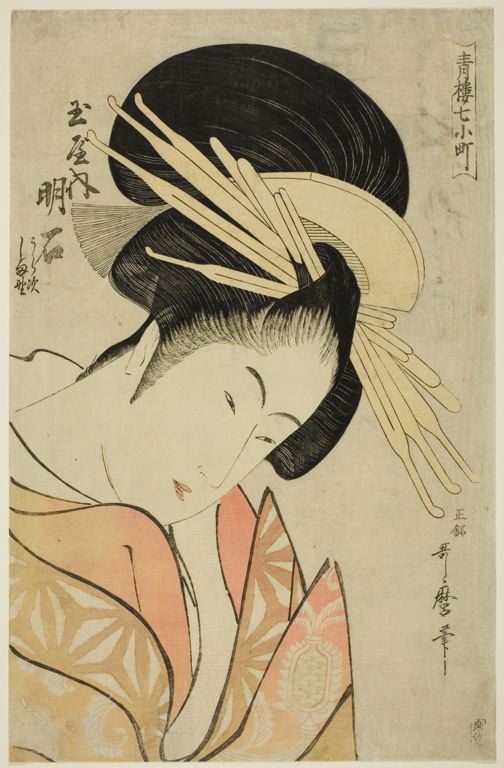
Akashi of the Tamaya, from the series Seven Komachis of Yoshiwara (Seiro nana Komachi) (Tamaya uchi Akashi, Uraji, Shimano)
Woodblock print
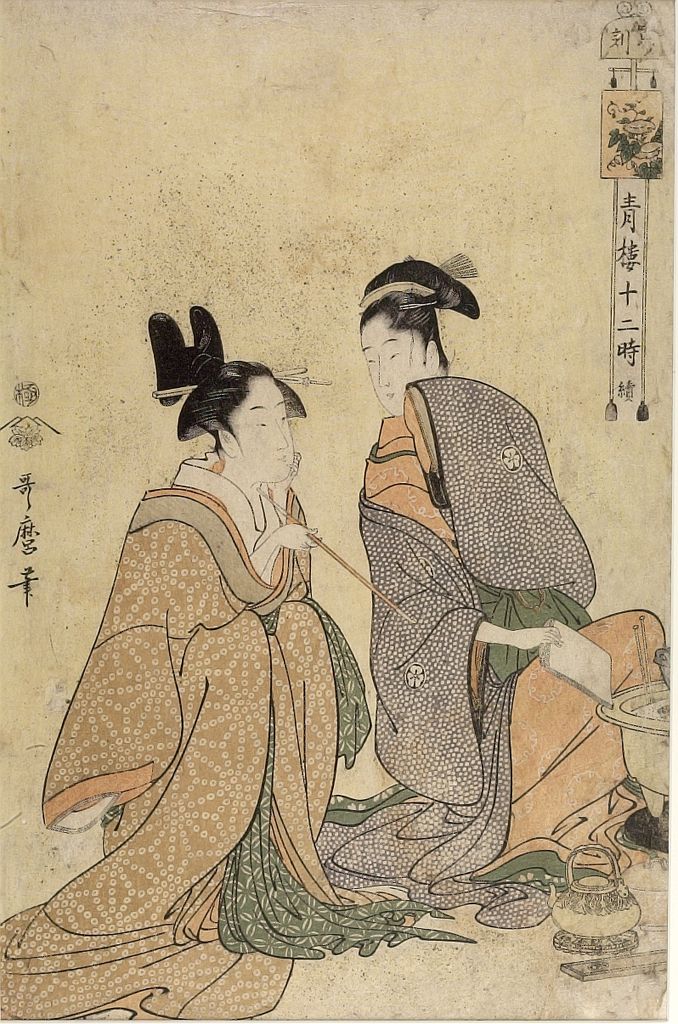
Hour of the Tiger (Tora no koku = 4 AM) from the series Twelve Hours in Yoshiwara (Seirô jûni toki tsuzuki), Late Edo period, circa 1794
Woodblock print
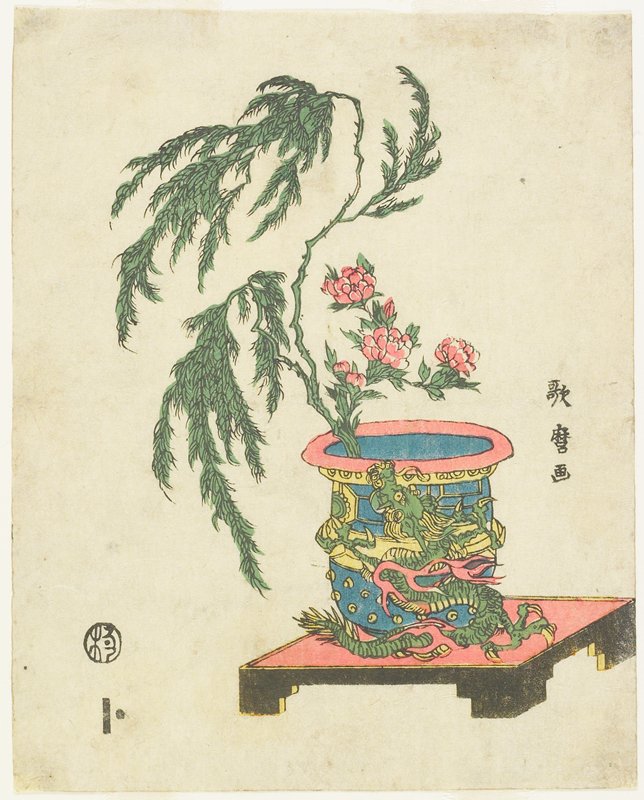
Ikebana arrangement of Peony and Willow in Dragon Pot
1781–1806
Woodblock print (nishiki-e), ink and color on paper
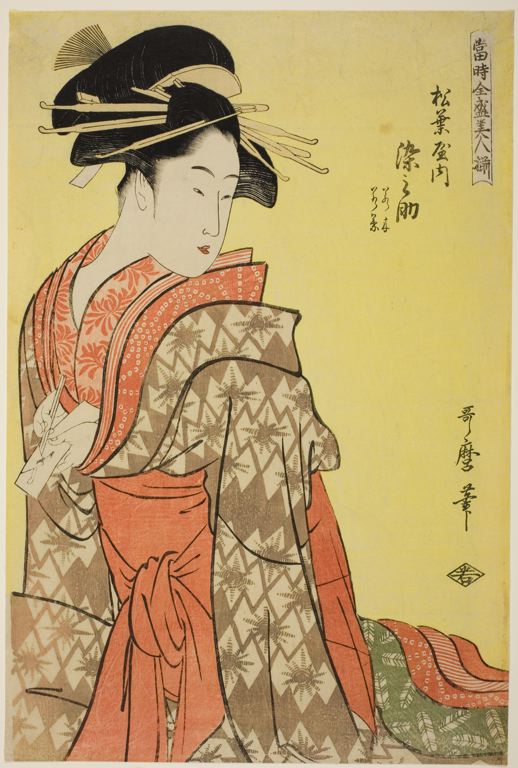
The Greatest Beauties of Our Time (Toji zensei bijin zoroe): Somenosuke of the Matsubaya with Attendants Wakagi and Wakaba
Woodblock print
More Children Prints
Frequently Asked Questions
Ōtomo no Kuronushi, from the series Modern Children as the Six Poetic Immortals (Tōsei kodomo rokkasen) was created by Kitagawa Utamaro (喜多川歌麿) in c. 1804.
Ōtomo no Kuronushi, from the series Modern Children as the Six Poetic Immortals (Tōsei kodomo rokkasen) depicts children.