Oume and Kumenosuke
- Date:
- c. 1800 (Kansei 12)
- Medium:
- Woodblock print (nishiki-e); ink and color on paper
- Source:
- Harvard Art Museums
Description
Dated 1795 and held by the Harvard Art Museums, this Kitagawa Utamaro print depicts Oume and Kumenosuke, characters drawn from one of the popular shinju-mono (love-suicide stories) that captivated the Edo theatrical and publishing worlds. Lovers driven to double suicide by social impossibility recurred in joruri and kabuki throughout the eighteenth century, and ukiyo-e artists translated their stories into images that combined the iconography of celebrity portraiture with the pathos of doomed romance. Utamaro's image, produced during the most fertile half-decade of his career, plays to his strengths: an intimate two-figure composition, exquisitely calibrated postures of lovers leaning into one another, and patterned kimono whose textile design becomes a vehicle for the meaning of the scene. By the mid-1790s, Utamaro had refined his characteristic elongated proportions and elegantly tilted heads, and lovers' compositions like this one gave him room to deploy them at their most expressive. The print sits within his broader fascination with the lives of women whose desires placed them at odds with the order of Edo society, alongside his Yoshiwara portraits and his images of ordinary mothers and daughters. It contributes meaningfully to Harvard's holdings of Edo bijin-ga and to the larger picture of Utamaro as a sensitive chronicler of romantic feeling within ukiyo-e.
More Prints by Kitagawa Utamaro
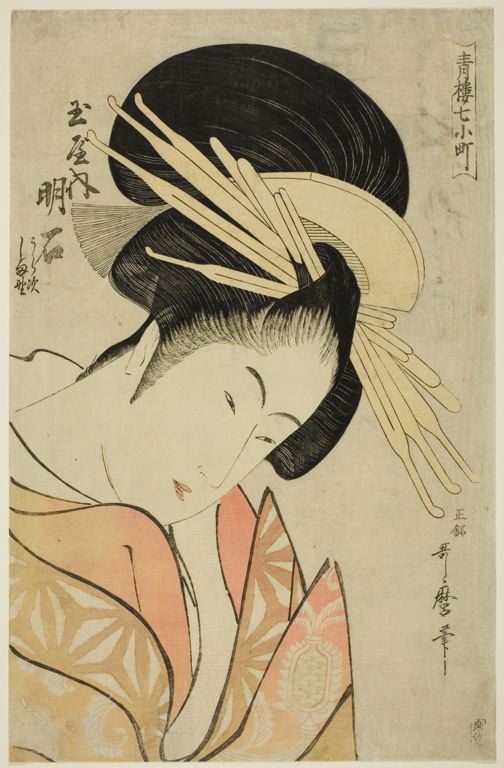
Akashi of the Tamaya, from the series Seven Komachis of Yoshiwara (Seiro nana Komachi) (Tamaya uchi Akashi, Uraji, Shimano)
Woodblock print
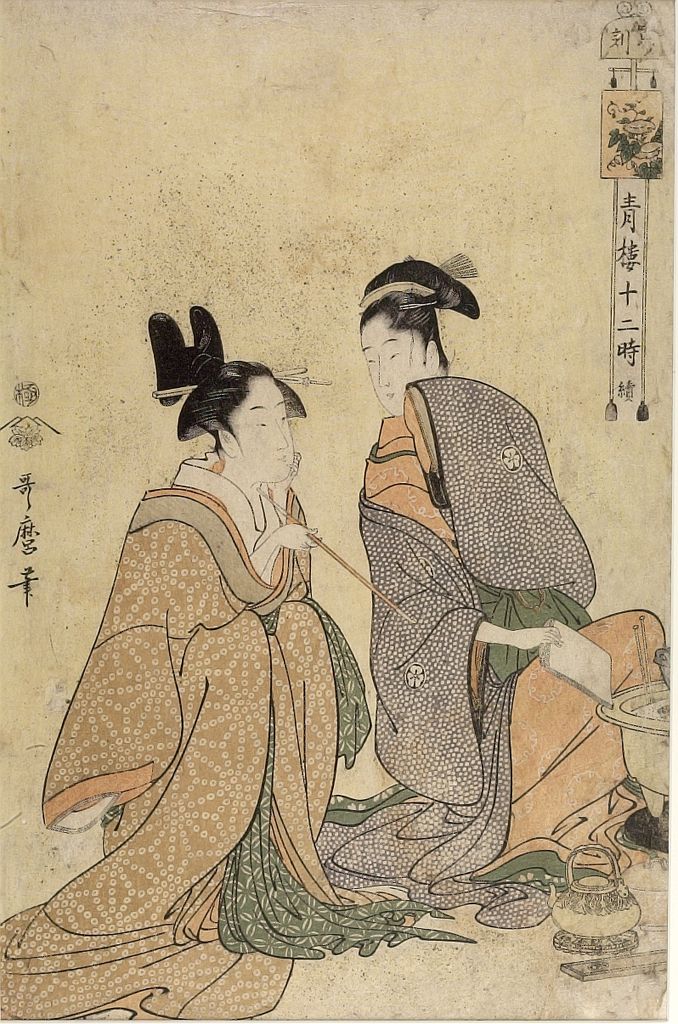
Hour of the Tiger (Tora no koku = 4 AM) from the series Twelve Hours in Yoshiwara (Seirô jûni toki tsuzuki), Late Edo period, circa 1794
Woodblock print
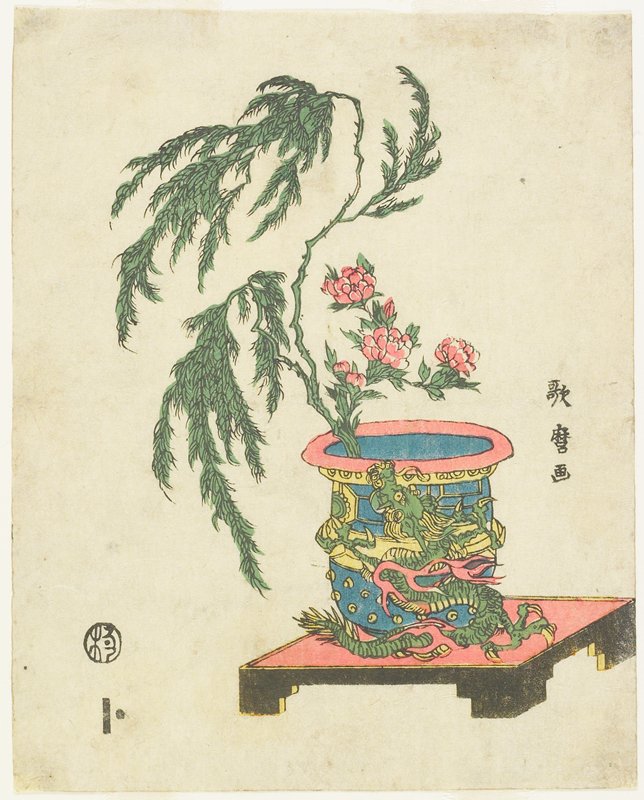
Ikebana arrangement of Peony and Willow in Dragon Pot
1781–1806
Woodblock print (nishiki-e), ink and color on paper
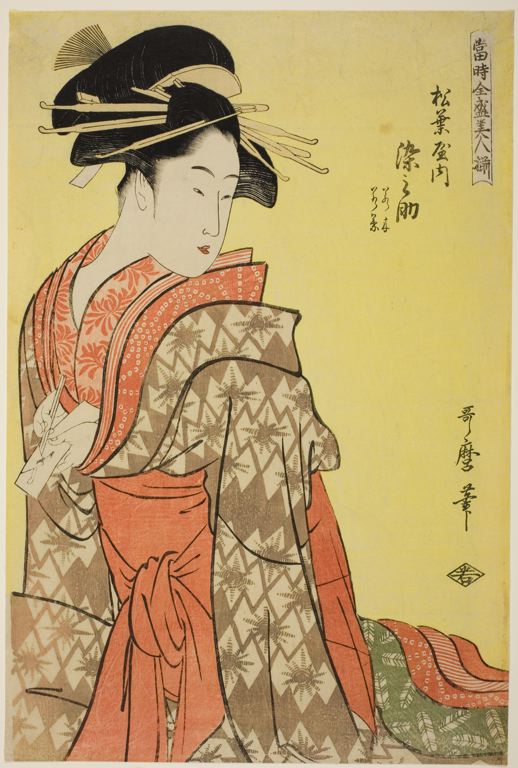
The Greatest Beauties of Our Time (Toji zensei bijin zoroe): Somenosuke of the Matsubaya with Attendants Wakagi and Wakaba
Woodblock print
Frequently Asked Questions
Oume and Kumenosuke was created by Kitagawa Utamaro (喜多川歌麿) in c. 1800 (Kansei 12).