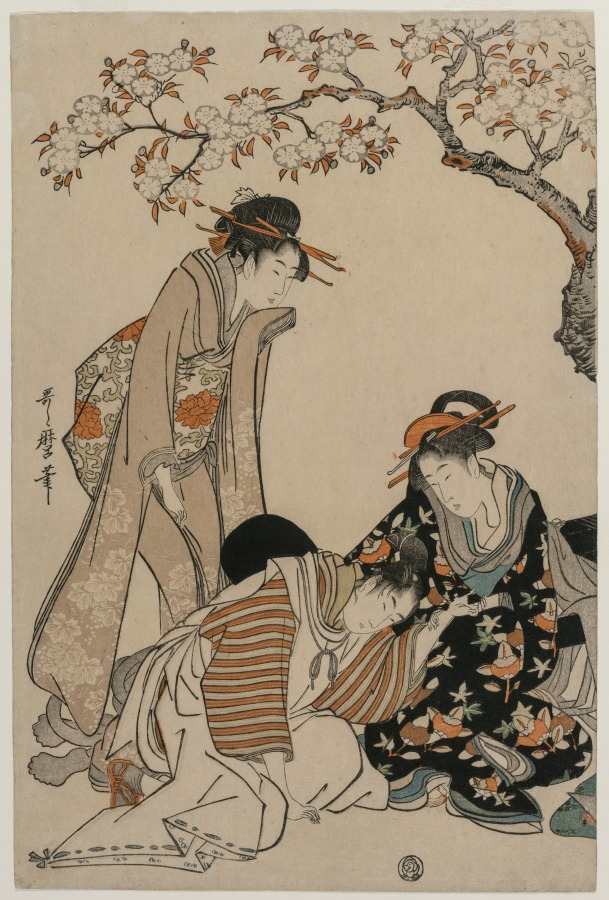
Parody of an Imperial Carriage Scene
- Date:
- c. 1798
- Medium:
- color woodblock print
- Source:
- Cleveland Museum of Art
Description
Parody of an Imperial Carriage Scene, dated 1793 and now in the Cleveland Museum of Art, is a quintessential mitate-e by Kitagawa Utamaro, in which classical imagery is rewritten as a scene of contemporary Edo women. The starting point is the gosho-guruma, the ox-drawn carriage of Heian court life that figures in poetry, the Tale of Genji, and the Tales of Ise. In Utamaro's redesign, the figures who surround or occupy the carriage are not Heian aristocrats but townswomen and geisha of his own day, in fashionable late-eighteenth-century coiffures and kimono. The juxtaposition allows him to flatter his audience's classical literacy while elevating contemporary Edo bijin-ga subjects to the dignity of court characters. Stylistically, the print exhibits his mature ukiyo-e vocabulary: confident, supple line; flattened spatial planes; restrained color punctuated by patterned silk; and an emphasis on small psychological gestures. As a parody print, it reflects the broader Kansei taste for sophisticated wit shared between artist, publisher, kyoka poets, and the knowing viewers who collected such designs.
More Prints by Kitagawa Utamaro
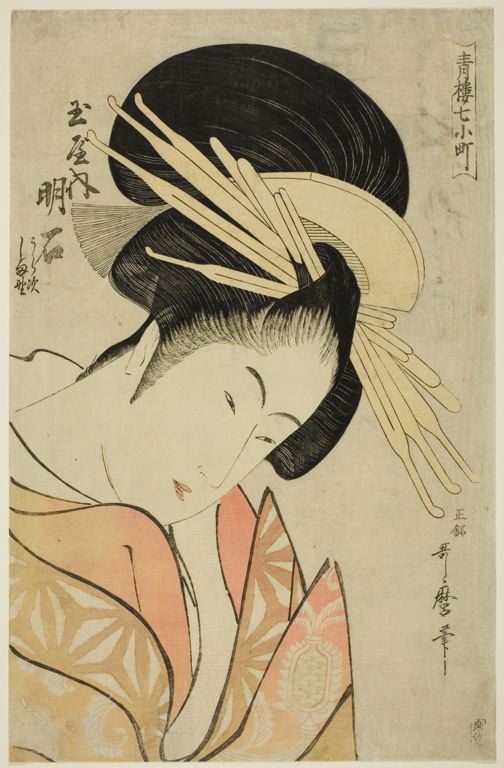
Akashi of the Tamaya, from the series Seven Komachis of Yoshiwara (Seiro nana Komachi) (Tamaya uchi Akashi, Uraji, Shimano)
Woodblock print
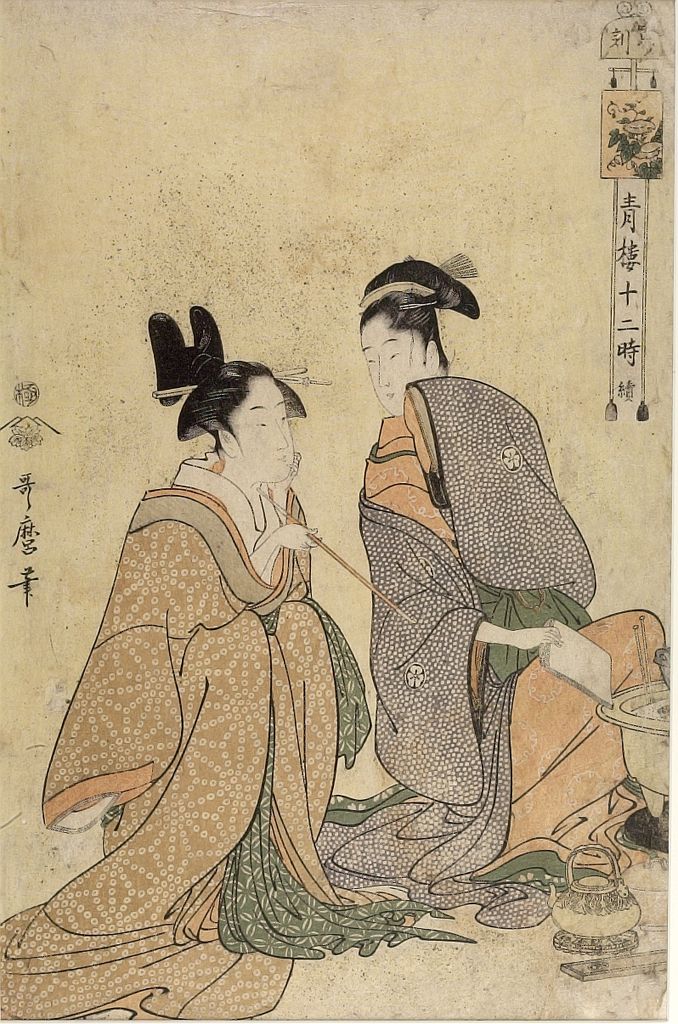
Hour of the Tiger (Tora no koku = 4 AM) from the series Twelve Hours in Yoshiwara (Seirô jûni toki tsuzuki), Late Edo period, circa 1794
Woodblock print
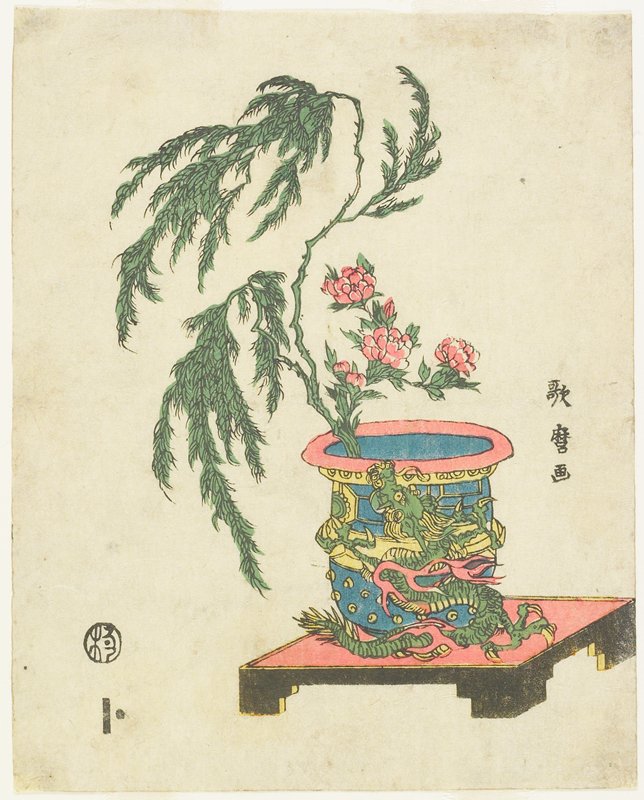
Ikebana arrangement of Peony and Willow in Dragon Pot
1781–1806
Woodblock print (nishiki-e), ink and color on paper
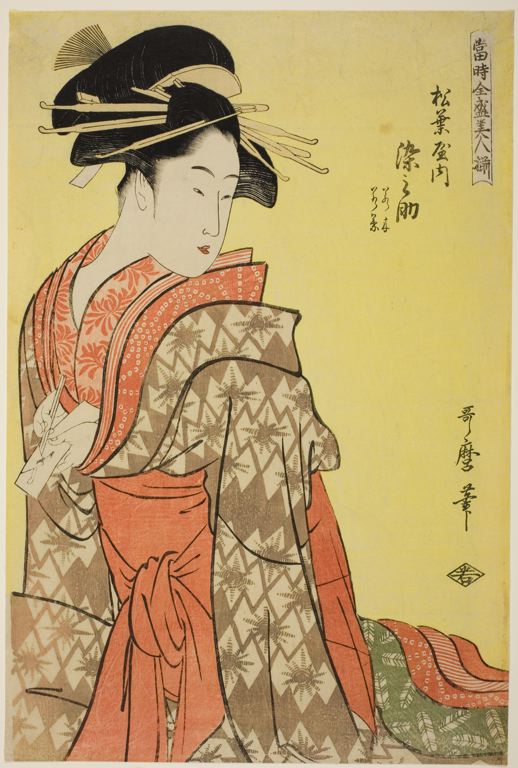
The Greatest Beauties of Our Time (Toji zensei bijin zoroe): Somenosuke of the Matsubaya with Attendants Wakagi and Wakaba
Woodblock print
Frequently Asked Questions
Parody of an Imperial Carriage Scene was created by Kitagawa Utamaro (喜多川歌麿) in c. 1798.