Parody of Yamauba and Kintarō, from the series Picture Siblings (E-kyodai)
- Date:
- c. 1795-6
- Medium:
- Woodblock print; ink and color on paper
- Source:
- Harvard Art Museums
Description
Parody of Yamauba and Kintaro, from the series Picture Siblings (E-kyodai), is dated by the Harvard Art Museums to about 1790 and exemplifies Kitagawa Utamaro's distinctive treatment of one of his favorite themes. Yamauba, the mountain woman of legend, and Kintaro, the boy of superhuman strength she raised, were popular subjects in painting and prints, often depicted in fantastical mountain settings. Utamaro returned to the pair repeatedly across his career, gradually converting them from straightforward legend into an intimate study of motherhood and play. In this earlier instance, the parody mode (mitate) reframes the mythic duo within a recognizable Edo aesthetic, where Yamauba takes on the visual codes of a beautiful woman from the floating world. As Edo bijin-ga, the design lavishes attention on her robes, hair and physical engagement with the rambunctious child, treating their interaction as a study in maternal absorption. Kintaro, with his red skin and chubby vitality, supplies an animated counterweight to Yamauba's composure, and the two together generate the visual energy of the sheet. As ukiyo-e, the print participates in the genre's long fascination with figures who straddle myth and everyday life, allowing the floating-world artist to indulge in fantasy while still grounding the imagery in observable behavior. The series E-kyodai expanded the conceit to other pairs of figures, but Yamauba and Kintaro remained Utamaro's most enduring contribution to the theme.
More Prints by Kitagawa Utamaro
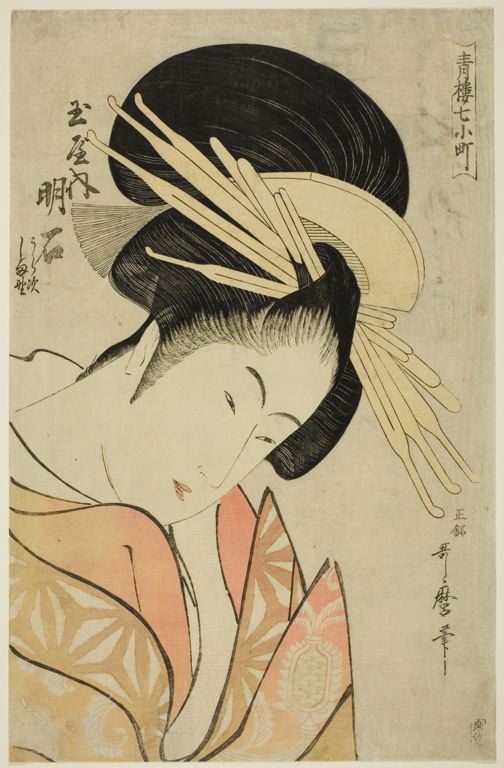
Akashi of the Tamaya, from the series Seven Komachis of Yoshiwara (Seiro nana Komachi) (Tamaya uchi Akashi, Uraji, Shimano)
Woodblock print
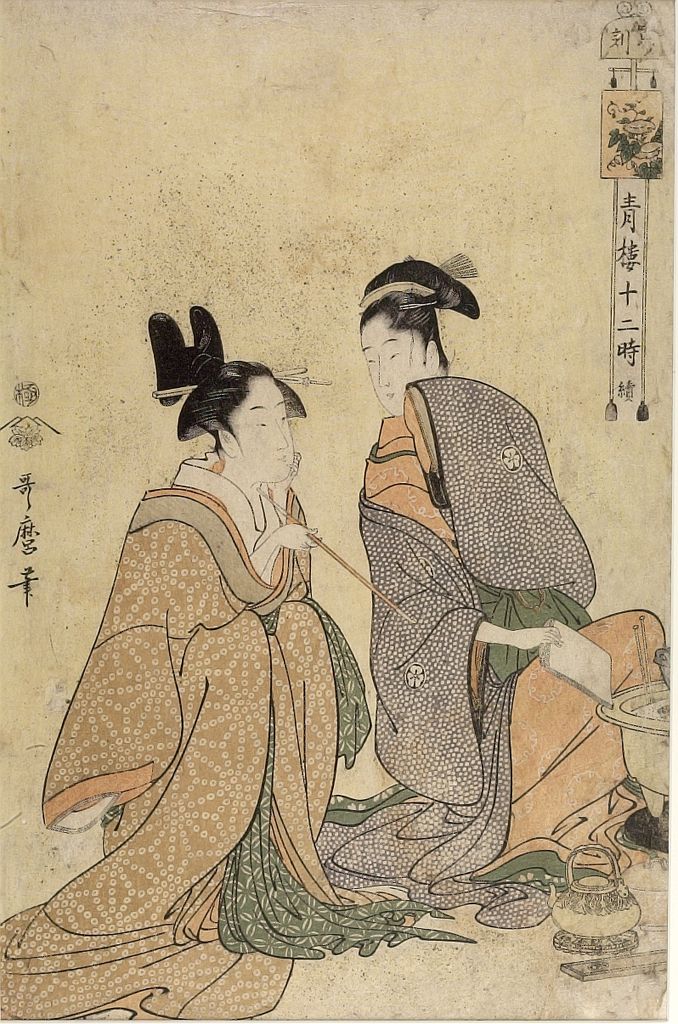
Hour of the Tiger (Tora no koku = 4 AM) from the series Twelve Hours in Yoshiwara (Seirô jûni toki tsuzuki), Late Edo period, circa 1794
Woodblock print
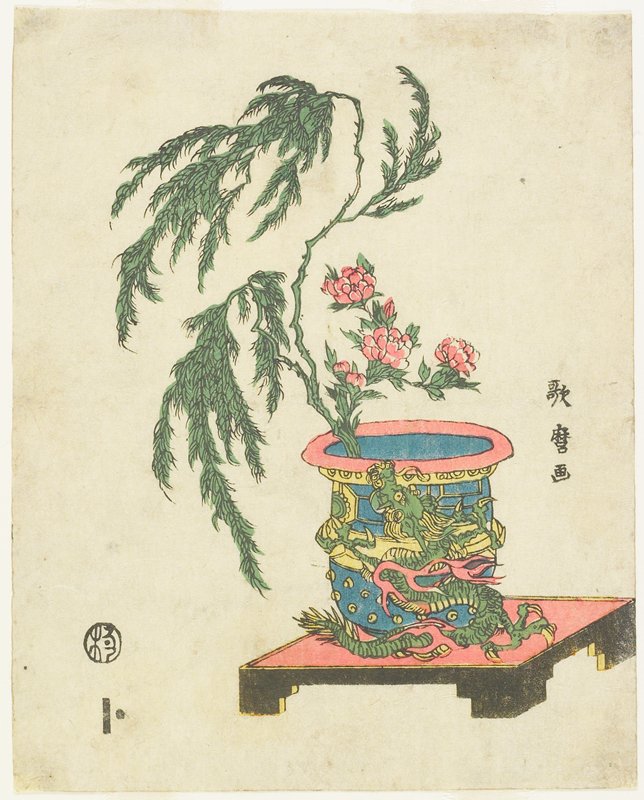
Ikebana arrangement of Peony and Willow in Dragon Pot
1781–1806
Woodblock print (nishiki-e), ink and color on paper
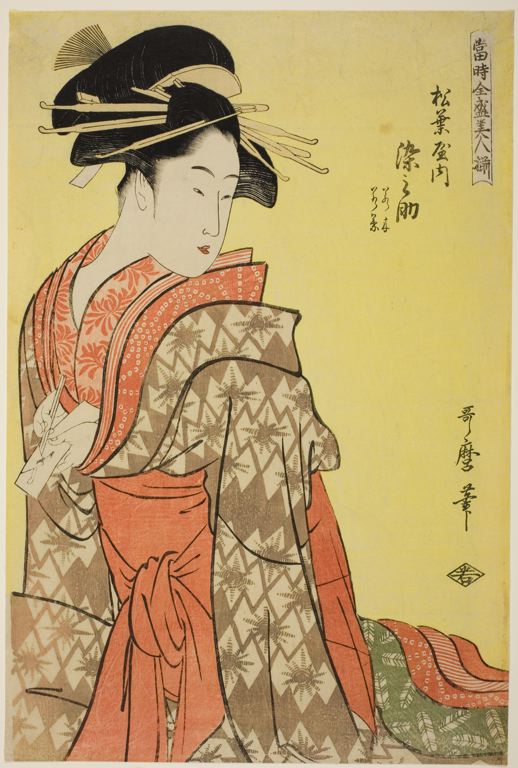
The Greatest Beauties of Our Time (Toji zensei bijin zoroe): Somenosuke of the Matsubaya with Attendants Wakagi and Wakaba
Woodblock print
Frequently Asked Questions
Parody of Yamauba and Kintarō, from the series Picture Siblings (E-kyodai) was created by Kitagawa Utamaro (喜多川歌麿) in c. 1795-6.