Pheasant (Kiji) and Swallows (Tsubame), detached page from the book Myriad Birds: A Kyōka Competition (Momo chidori kyōka awase)
- Date:
- c. 1790 (Kansei 2)
- Medium:
- Detached page from woodblock-printed book; ink and color on paper
- Source:
- Harvard Art Museums
Description
Held by the Harvard Art Museums and recorded as a detached page from "Momo chidori kyoka awase" (Myriad Birds: A Kyoka Competition), this Kitagawa Utamaro composition pairs a pheasant (kiji) with swallows (tsubame). The parent book, published in 1785 with poems by leading kyoka poets of the Temmei era, is widely admired as one of the most refined illustrated albums of the Edo period and a critical document of Utamaro's relationship with the publisher Tsutaya Juzaburo. Although Utamaro became famous chiefly as the master of Edo bijin-ga, the kyoka albums of his early career demonstrate the technical training and naturalist observation that would underwrite his later figure work. The pheasant's iridescent plumage and the swallows' crisp aerial silhouettes show how multiple color blocks, careful registration, and gauffrage could approach the texture of feather and the suggestion of flight. The detachment of single leaves from such books for collecting purposes is common, and Harvard's holding represents the kind of orphaned but distinguished sheet through which European and American collectors first encountered Utamaro's natural-history work. Within ukiyo-e generally, such bird-and-flower compositions sit alongside his beauties as evidence of his stylistic range and his place in the wider tradition of Japanese woodblock prints.
More Prints by Kitagawa Utamaro
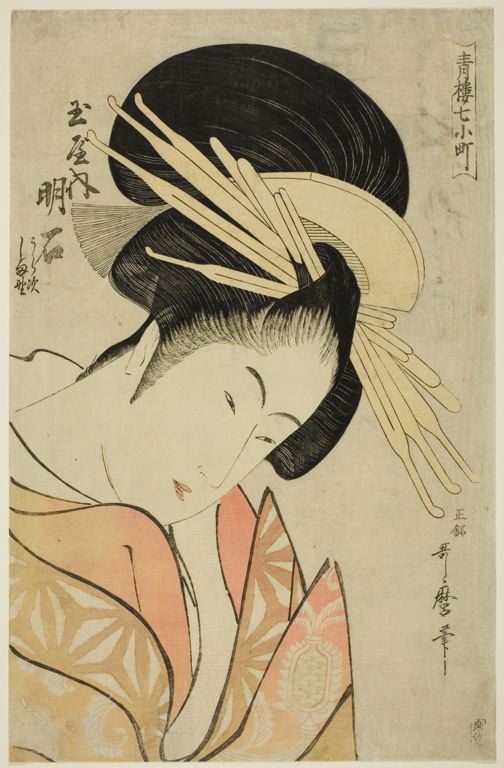
Akashi of the Tamaya, from the series Seven Komachis of Yoshiwara (Seiro nana Komachi) (Tamaya uchi Akashi, Uraji, Shimano)
Woodblock print
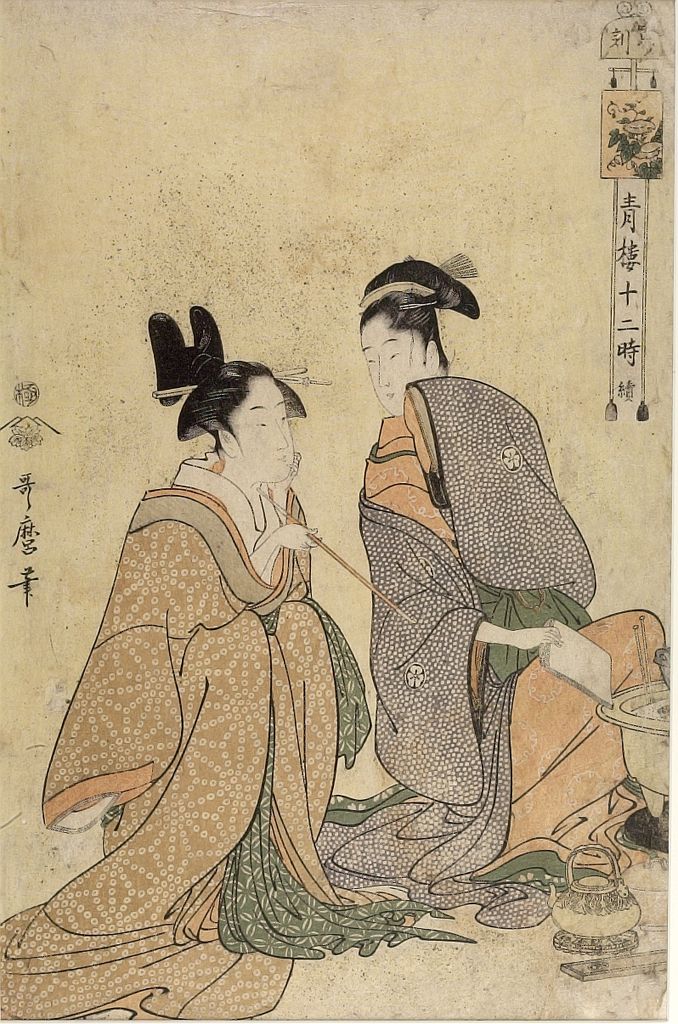
Hour of the Tiger (Tora no koku = 4 AM) from the series Twelve Hours in Yoshiwara (Seirô jûni toki tsuzuki), Late Edo period, circa 1794
Woodblock print
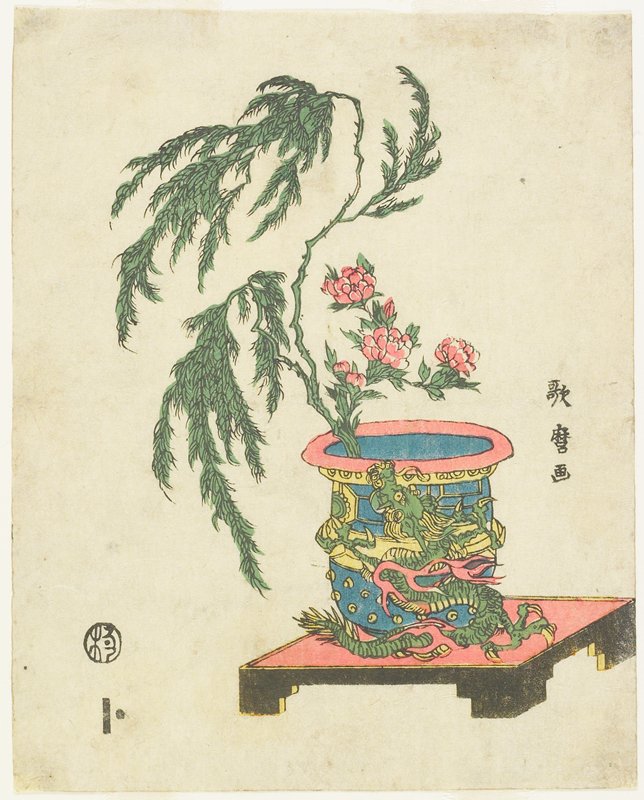
Ikebana arrangement of Peony and Willow in Dragon Pot
1781–1806
Woodblock print (nishiki-e), ink and color on paper
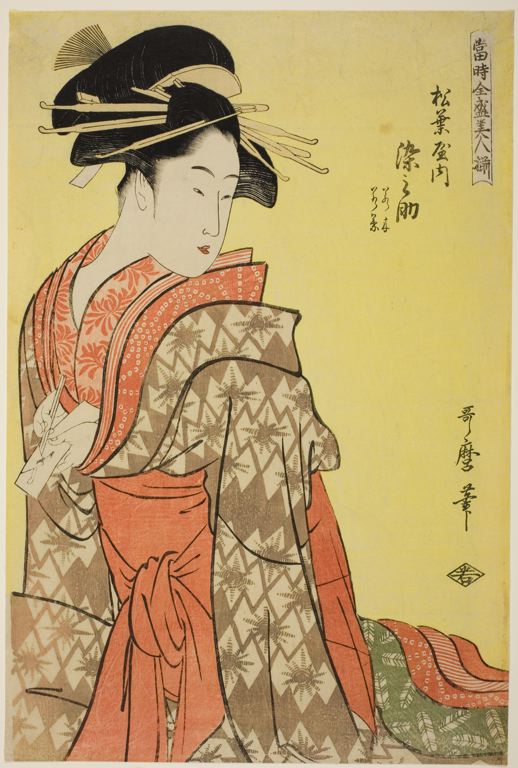
The Greatest Beauties of Our Time (Toji zensei bijin zoroe): Somenosuke of the Matsubaya with Attendants Wakagi and Wakaba
Woodblock print
More Birds & Flowers Prints
Frequently Asked Questions
Pheasant (Kiji) and Swallows (Tsubame), detached page from the book Myriad Birds: A Kyōka Competition (Momo chidori kyōka awase) was created by Kitagawa Utamaro (喜多川歌麿) in c. 1790 (Kansei 2).
Pheasant (Kiji) and Swallows (Tsubame), detached page from the book Myriad Birds: A Kyōka Competition (Momo chidori kyōka awase) depicts birds & flowers.