Pink Octopus and Three Dancing Women from the series Glorious Amusements of the Brothel Niwaka Festival (Seiro Niwaka zensei asobi)
- Date:
- Late Edo period, circa 1800-1806
- Medium:
- Ukiyo-e woodblock print in "aiban" format; ink and color on paper
- Source:
- Harvard Art Museums
Description
A grayscale reproduction shows a large octopus looming in the upper background, its bulbous head and curling, suckered tentacles spreading behind three young women dressed in patterned kimono with striped underrobes and wide obi. The women stand in animated postures—one raises both hands, another lifts a bare foot while holding her hem—their hair arranged in elaborate coiffures with pins, sandals shown at their feet, and vertical text cartouches flanking the scene at upper right and left. Signed by Kitagawa Utamaro, 1800, this is an ukiyo-e woodblock print in aiban format, ink and color on paper, titled Pink Octopus and Three Dancing Women from the series Glorious Amusements of the Brothel Niwaka Festival (Seiro Niwaka zensei asobi).
More Prints by Kitagawa Utamaro
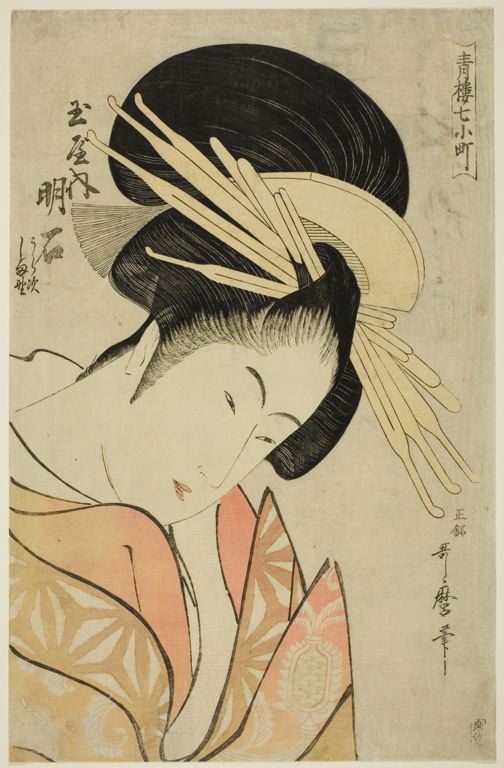
Akashi of the Tamaya, from the series Seven Komachis of Yoshiwara (Seiro nana Komachi) (Tamaya uchi Akashi, Uraji, Shimano)
Woodblock print
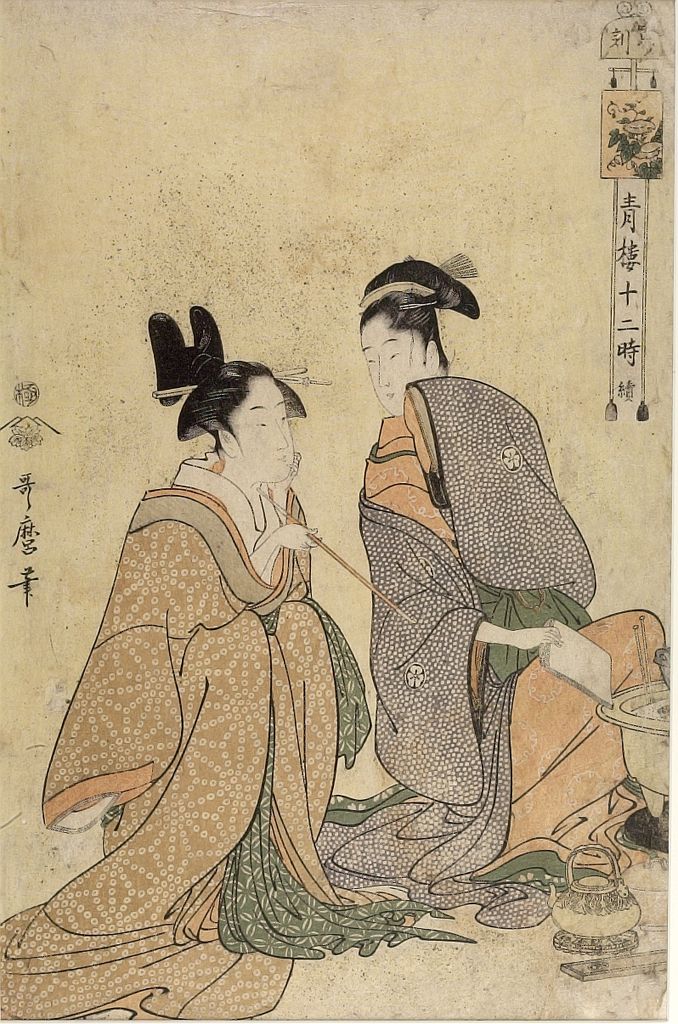
Hour of the Tiger (Tora no koku = 4 AM) from the series Twelve Hours in Yoshiwara (Seirô jûni toki tsuzuki), Late Edo period, circa 1794
Woodblock print
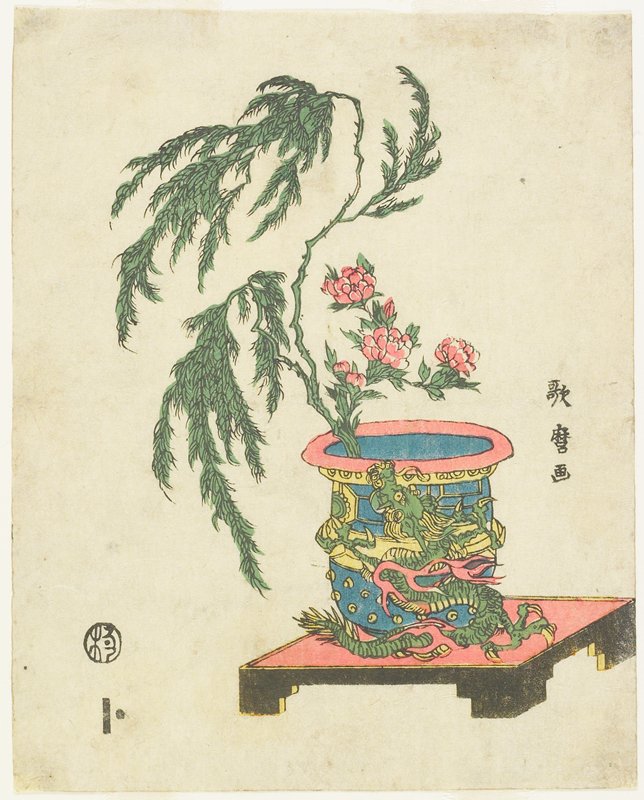
Ikebana arrangement of Peony and Willow in Dragon Pot
1781–1806
Woodblock print (nishiki-e), ink and color on paper
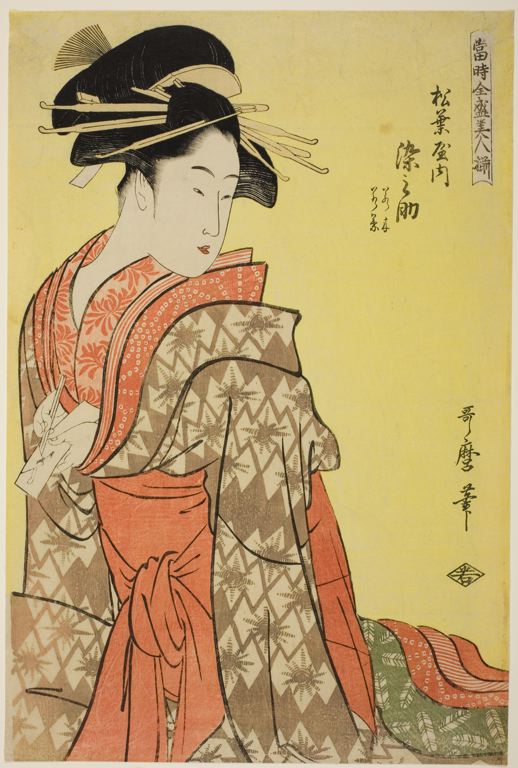
The Greatest Beauties of Our Time (Toji zensei bijin zoroe): Somenosuke of the Matsubaya with Attendants Wakagi and Wakaba
Woodblock print
Frequently Asked Questions
Pink Octopus and Three Dancing Women from the series Glorious Amusements of the Brothel Niwaka Festival (Seiro Niwaka zensei asobi) was created by Kitagawa Utamaro (喜多川歌麿) in Late Edo period, circa 1800-1806.