
Preparing Food for a Nightingale, from the illustrated kyoka anthology "Men's Stamping Dance (Otoko toka)"
- Date:
- 1798
- Medium:
- Color woodblock print; double-page illustration from book
- Source:
- Art Institute of Chicago
Description
Interior scene with five women on a wooden veranda/room bordered by sliding paper doors, one of which is painted with a black-framed panel showing Mount Fuji over water. A woman in a mustard-yellow kimono kneels centrally, bent over a round covered basket or vessel, while a kneeling figure beside her in a purple floral robe faces her; behind them a standing woman in a purple-and-red floral kimono looks on. At left, a woman in a brown kimono reclines on the floor near a yellow lacquer box, propped on one elbow, with a flowering plum branch stretching across the foreground. The palette is muted—browns, mustard, purple, black, and touches of red—against pale grey and cream architectural surfaces, giving the scene a quiet, domestic mood.
More Prints by Kitagawa Utamaro
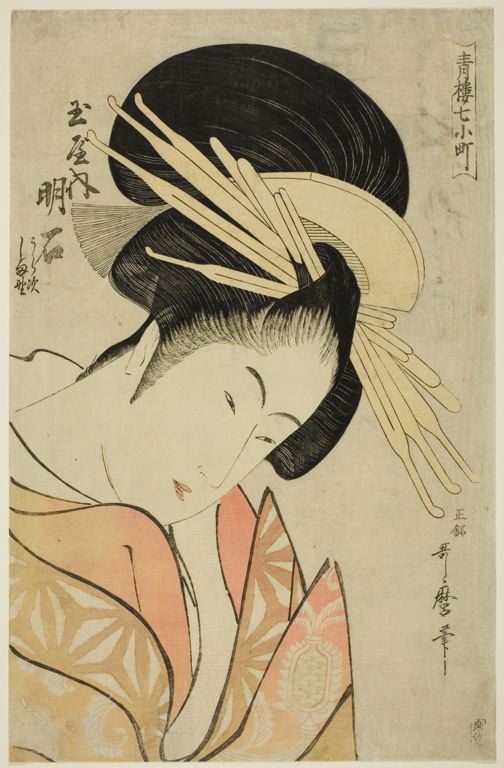
Akashi of the Tamaya, from the series Seven Komachis of Yoshiwara (Seiro nana Komachi) (Tamaya uchi Akashi, Uraji, Shimano)
Woodblock print
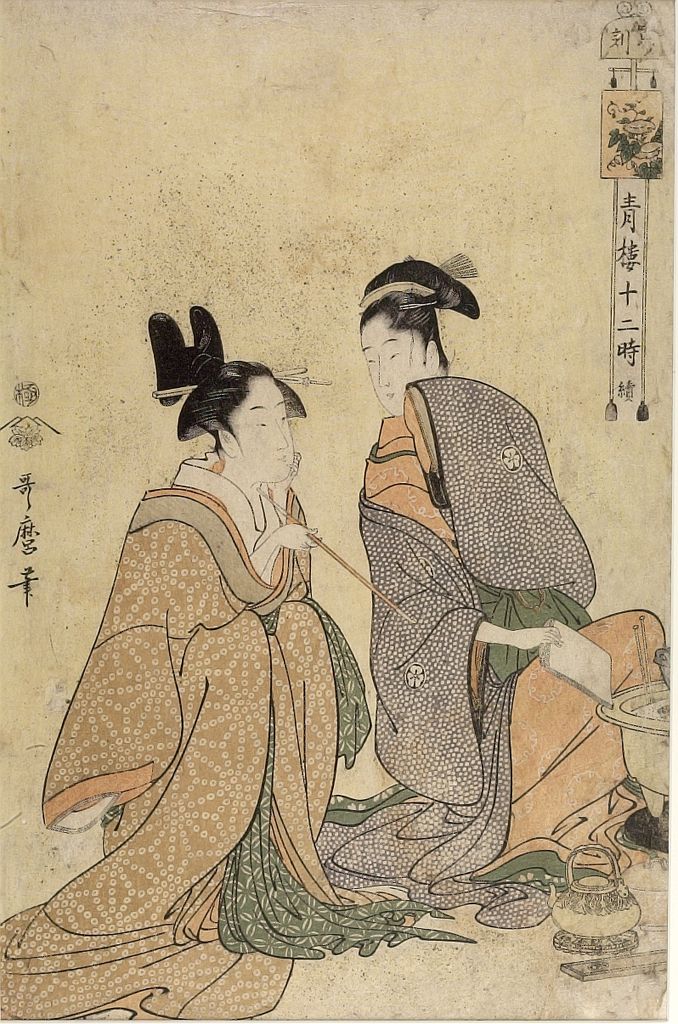
Hour of the Tiger (Tora no koku = 4 AM) from the series Twelve Hours in Yoshiwara (Seirô jûni toki tsuzuki), Late Edo period, circa 1794
Woodblock print
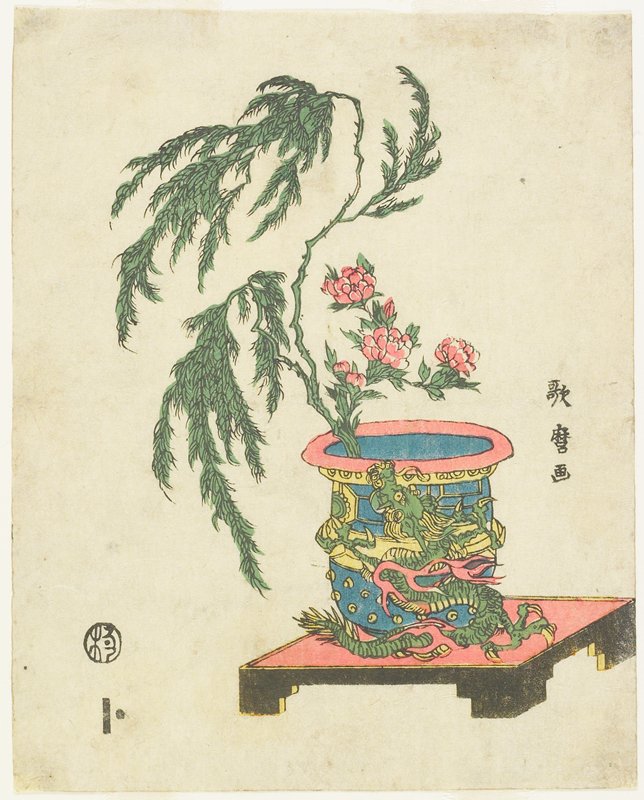
Ikebana arrangement of Peony and Willow in Dragon Pot
1781–1806
Woodblock print (nishiki-e), ink and color on paper
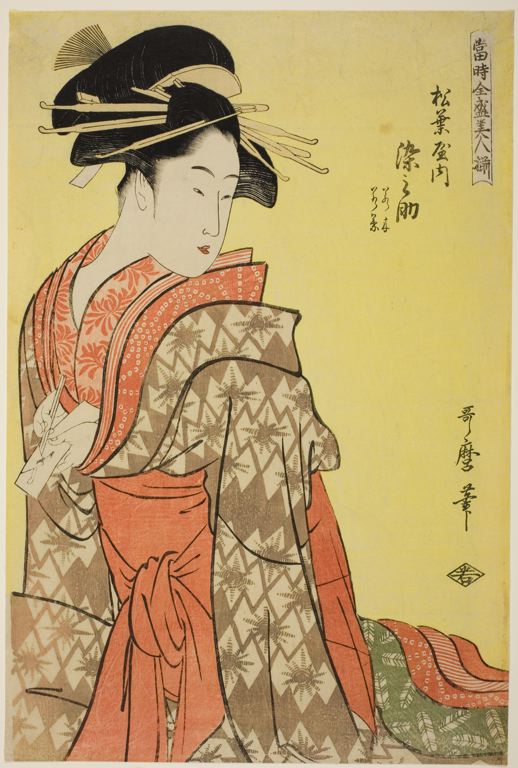
The Greatest Beauties of Our Time (Toji zensei bijin zoroe): Somenosuke of the Matsubaya with Attendants Wakagi and Wakaba
Woodblock print
Frequently Asked Questions
Preparing Food for a Nightingale, from the illustrated kyoka anthology "Men's Stamping Dance (Otoko toka)" was created by Kitagawa Utamaro (喜多川歌麿) in 1798.