Scoop-net (Sumida River)
- Date:
- Late Edo period, circa 1800-1801
- Medium:
- Center panel from an "oban" triptych: Ukiyo-e woodblock print; ink and color on paper
- Source:
- Harvard Art Museums
Description
Scoop-net (Sumida River) is a Kitagawa Utamaro design of about 1800 at the Harvard Art Museums. The Sumida River, the broad waterway that defined the northern edge of central Edo, was a constant subject of ukiyo-e through every generation of the genre, providing scenes of seasonal pleasure boating, fireworks, ferry crossings and fishing. Here Utamaro turns his attention to the small-scale fishery that operated along the river's banks: figures handle a scoop-net used to draw whitebait and other small fish from the current, the action of the net and the river surface integrated into a quiet riverside composition. The figures are rendered in the elongated proportions of his mature Edo bijin-ga, even when the subject sits outside the conventional beauty-print idiom. Patterned summer robes, gestures of arms and shoulders, and the open horizon of the Sumida combine to convey the heat and ease of a riverside afternoon. The print exemplifies how Utamaro extended ukiyo-e into observational scenes of Edo working life, treating fishermen and small tradesmen with the same care he gave to courtesans. As preserved at Harvard, the sheet contributes to a broader corpus of Sumida River subjects in ukiyo-e and shows the artist's interest in the social geography of his city.
More Prints by Kitagawa Utamaro
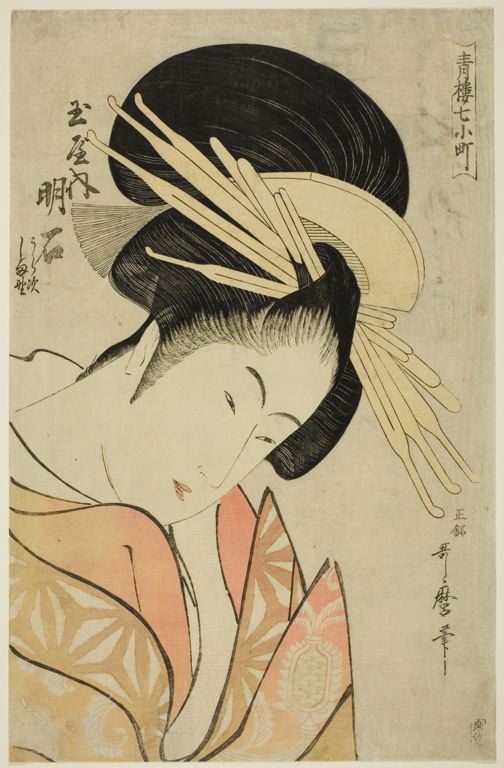
Akashi of the Tamaya, from the series Seven Komachis of Yoshiwara (Seiro nana Komachi) (Tamaya uchi Akashi, Uraji, Shimano)
Woodblock print
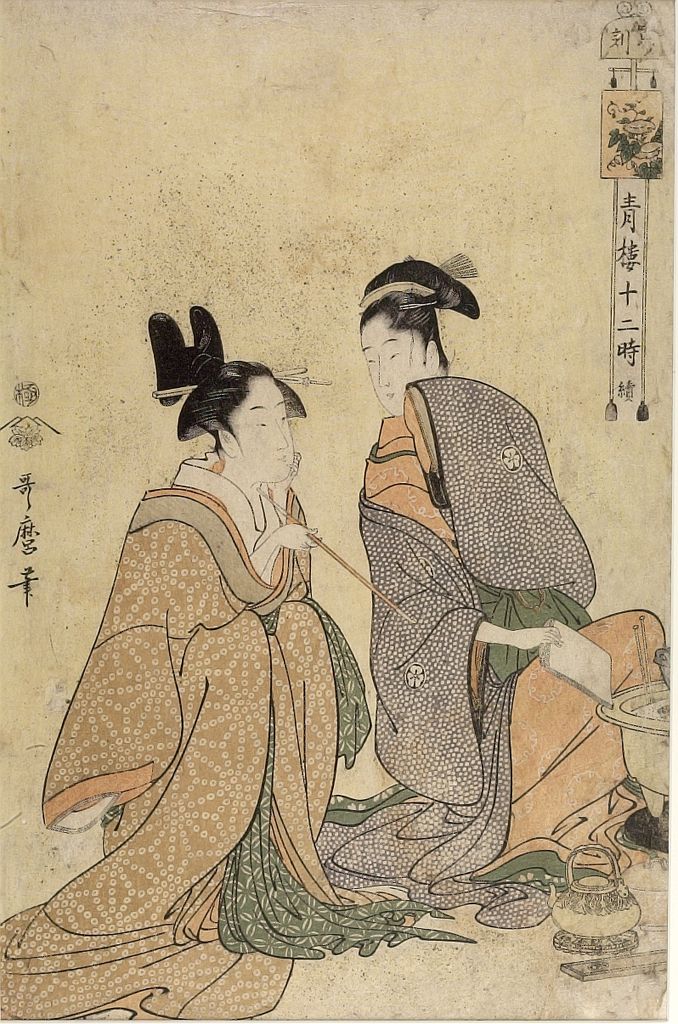
Hour of the Tiger (Tora no koku = 4 AM) from the series Twelve Hours in Yoshiwara (Seirô jûni toki tsuzuki), Late Edo period, circa 1794
Woodblock print
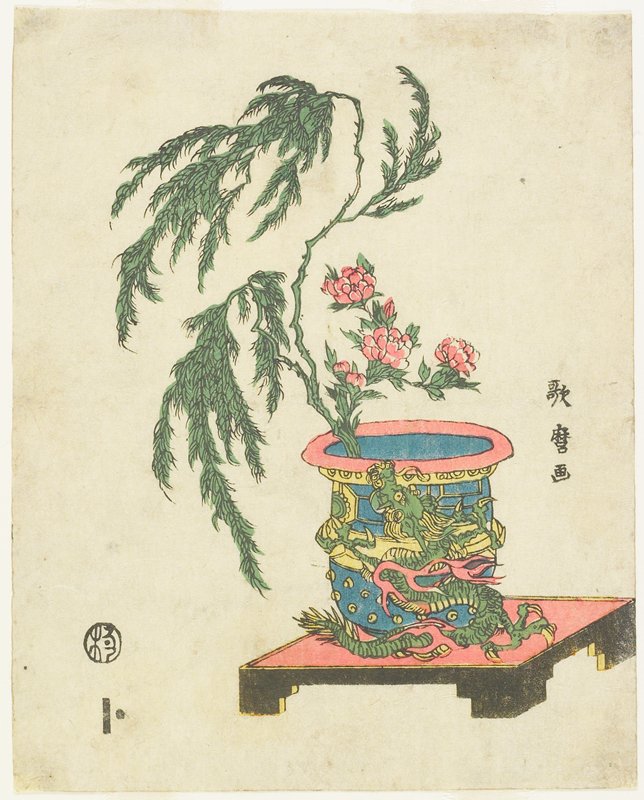
Ikebana arrangement of Peony and Willow in Dragon Pot
1781–1806
Woodblock print (nishiki-e), ink and color on paper
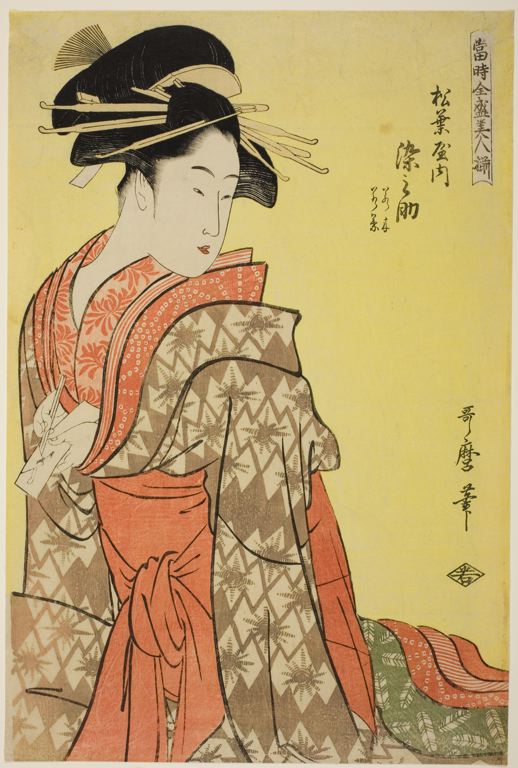
The Greatest Beauties of Our Time (Toji zensei bijin zoroe): Somenosuke of the Matsubaya with Attendants Wakagi and Wakaba
Woodblock print
Frequently Asked Questions
Scoop-net (Sumida River) was created by Kitagawa Utamaro (喜多川歌麿) in Late Edo period, circa 1800-1801.