Seven Gods of Good Fortune and Otafuku Celebrating New Year's from the series Prosperous and Harmonious Month (Fukutoku mutsumashi tsuki)
- Date:
- 18th century
- Medium:
- Woodblock print (nishiki-e) right sheet of triptych; ink and color on paper
- Source:
- Harvard Art Museums
Description
Kitagawa Utamaro designed this ukiyo-e print, Seven Gods of Good Fortune and Otafuku Celebrating New Year's, as part of the series Prosperous and Harmonious Month (Fukutoku mutsumashi tsuki). Edo households welcomed the new year by hanging images of the shichifukujin and other auspicious deities, and Utamaro's series capitalized on that tradition by inviting the seven gods into a domestic scene of conviviality. Adding Otafuku, the round-cheeked figure of feminine good cheer popular in folk imagery, complicates the religious cast with a current of comic intimacy. The artist arranges the gods around a shared celebration so that hierarchies dissolve into easy fellowship: Hotei's belly, Daikoku's mallet, Ebisu's fish, Benten's biwa, Fukurokuju's high forehead, Bishamonten's armor and Jurojin's staff are recognizable but folded into a lively domestic tableau. Stylistically the print bridges Utamaro's Edo bijin-ga and the broader world of popular ukiyo-e, with crisp outlines, controlled color, and a humorous attention to gesture that distinguishes his prints from more solemn religious imagery. The Harvard Art Museums preserves this impression (object 199891), where it illustrates how Utamaro extended his pictorial wit beyond the Yoshiwara to encompass the auspicious calendar of Edo townspeople.
More Prints by Kitagawa Utamaro
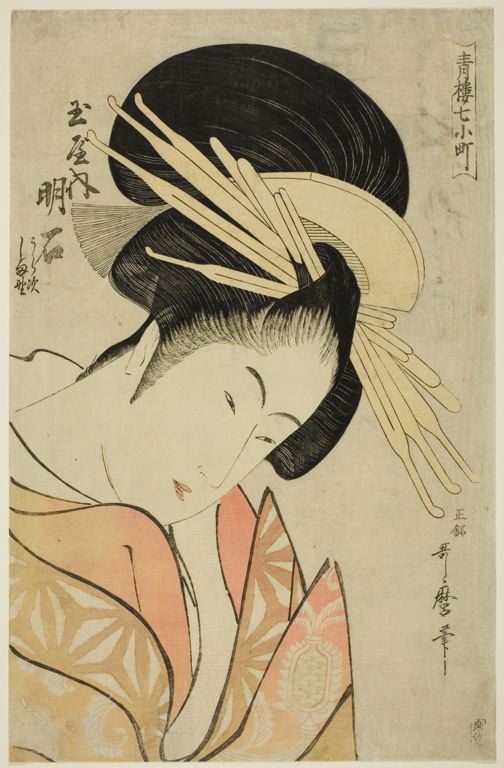
Akashi of the Tamaya, from the series Seven Komachis of Yoshiwara (Seiro nana Komachi) (Tamaya uchi Akashi, Uraji, Shimano)
Woodblock print
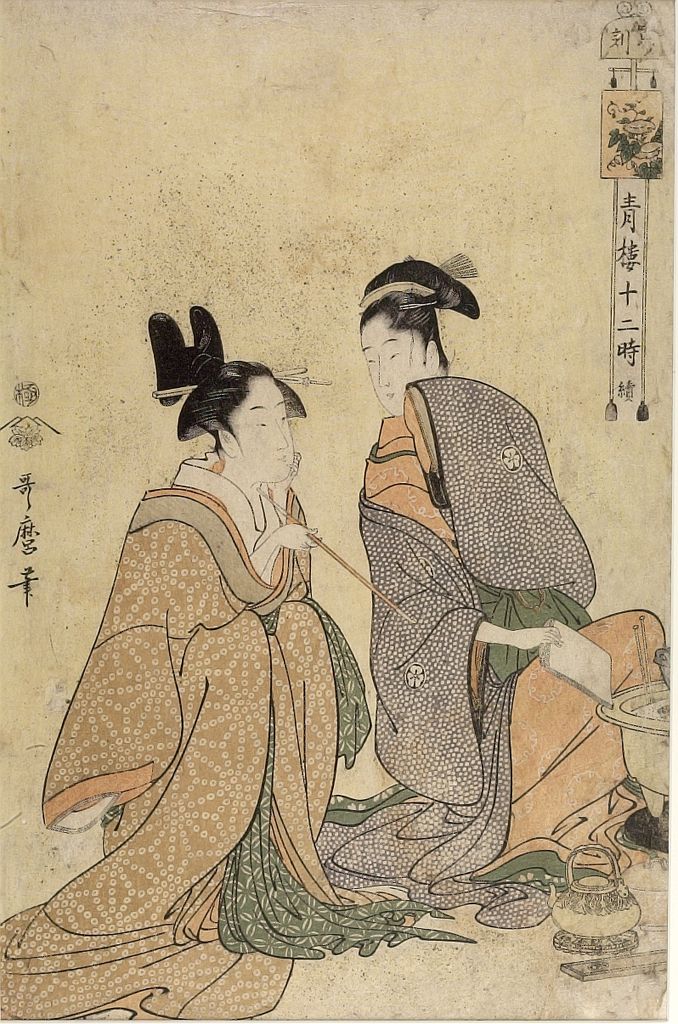
Hour of the Tiger (Tora no koku = 4 AM) from the series Twelve Hours in Yoshiwara (Seirô jûni toki tsuzuki), Late Edo period, circa 1794
Woodblock print
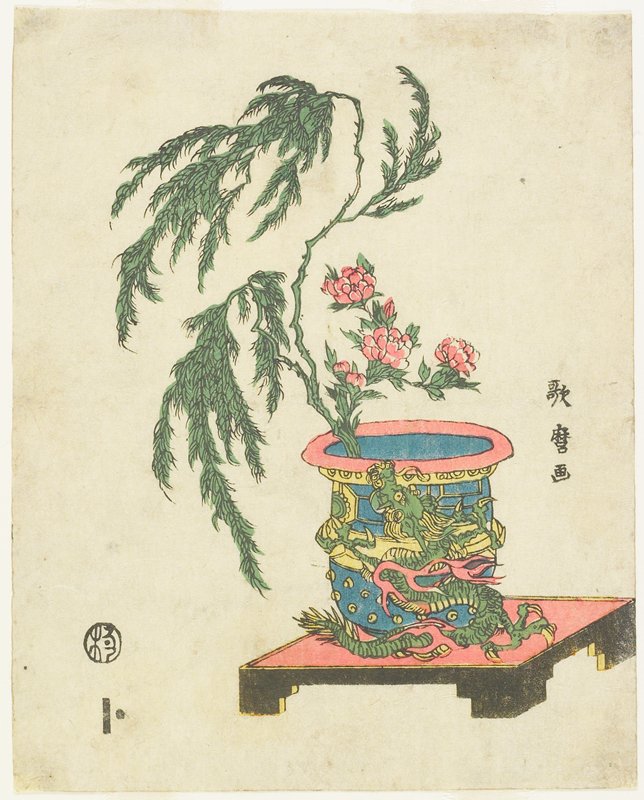
Ikebana arrangement of Peony and Willow in Dragon Pot
1781–1806
Woodblock print (nishiki-e), ink and color on paper
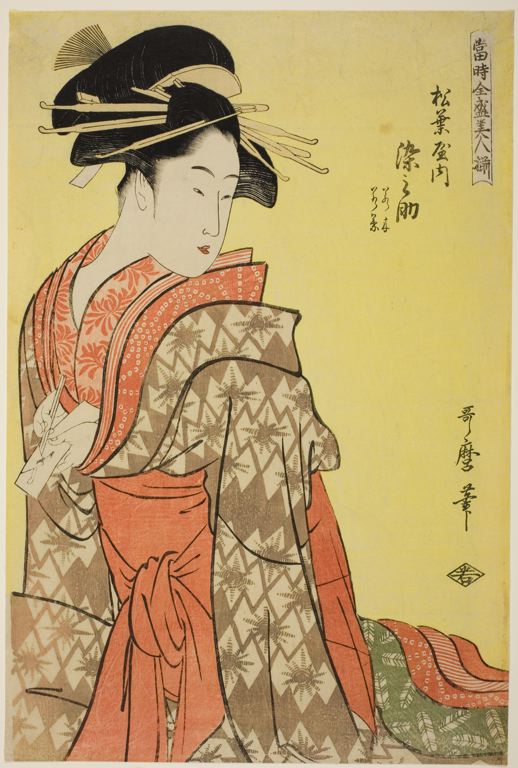
The Greatest Beauties of Our Time (Toji zensei bijin zoroe): Somenosuke of the Matsubaya with Attendants Wakagi and Wakaba
Woodblock print
Frequently Asked Questions
Seven Gods of Good Fortune and Otafuku Celebrating New Year's from the series Prosperous and Harmonious Month (Fukutoku mutsumashi tsuki) was created by Kitagawa Utamaro (喜多川歌麿) in 18th century.