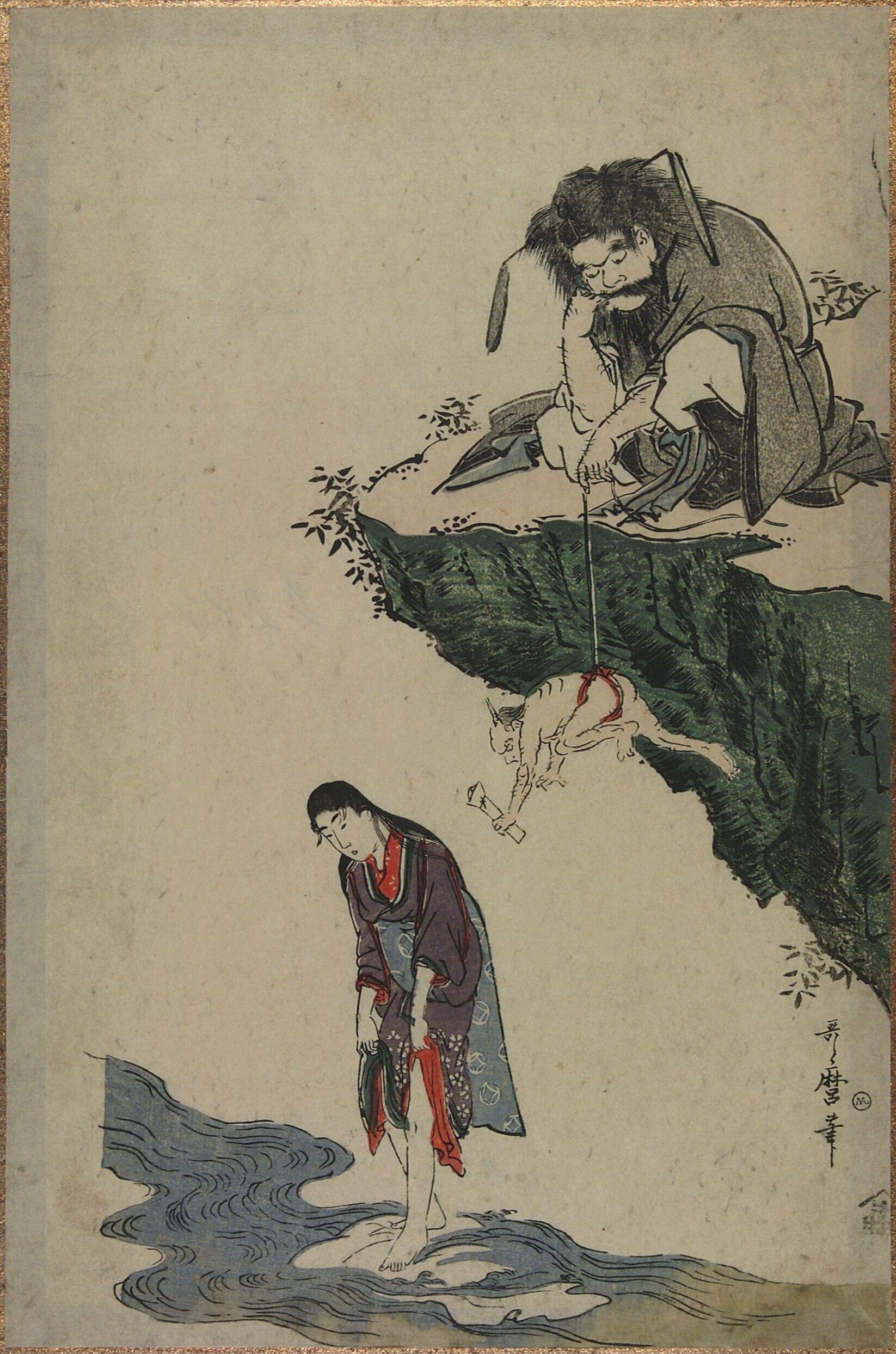
'Shoki lowering a demon on a rope to deliver a love-letter to a washer woman'
- Date:
- 18th century
- Medium:
- Source:
- Victoria and Albert Museum
Description
'Shoki lowering a demon on a rope to deliver a love-letter to a washer woman', a Kitagawa Utamaro design held by the Victoria and Albert Museum, is a striking example of his use of mitate to combine folklore and Edo bijin-ga. Shoki, the legendary Chinese demon queller, was typically depicted in ukiyo-e and painting as a stern warrior banishing oni; in this print Utamaro upends the convention, casting Shoki and his captive demon as comic accomplices in a romantic errand. From above, Shoki lowers the demon on a rope into the everyday space of a washerwoman, the captured imp clutching a love letter to be delivered. The conceit allows Utamaro to set a fearsome figure into a wholly domestic Edo bijin-ga environment, contrasting muscular folkloric bodies with the rounded grace of a woman at her chores. As ukiyo-e, the print plays on the popular shokia exorcist iconography of fifth-month boys' day rituals while turning the protector into an inadvertent matchmaker. Utamaro's drawing distinguishes clearly between the supernatural figures and the unsuspecting washerwoman, both in line weight and in posture, and his composition uses the vertical drop of the rope to bind upper and lower zones of the design. For collectors of Kitagawa Utamaro and admirers of mitate-e, the Victoria and Albert Museum impression preserves a sharply witty example of how he transformed traditional iconography into commentary on Edo love and labor.
More Prints by Kitagawa Utamaro
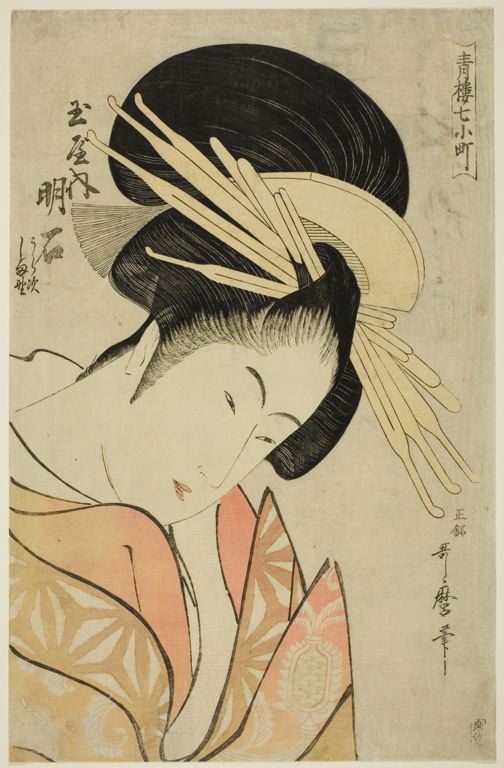
Akashi of the Tamaya, from the series Seven Komachis of Yoshiwara (Seiro nana Komachi) (Tamaya uchi Akashi, Uraji, Shimano)
Woodblock print
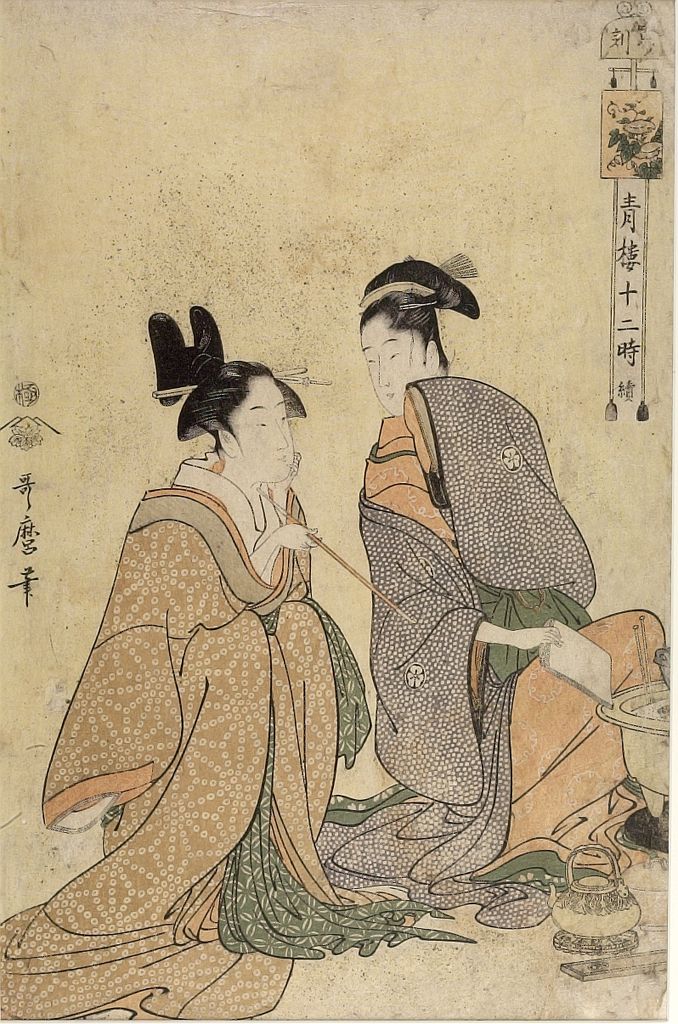
Hour of the Tiger (Tora no koku = 4 AM) from the series Twelve Hours in Yoshiwara (Seirô jûni toki tsuzuki), Late Edo period, circa 1794
Woodblock print
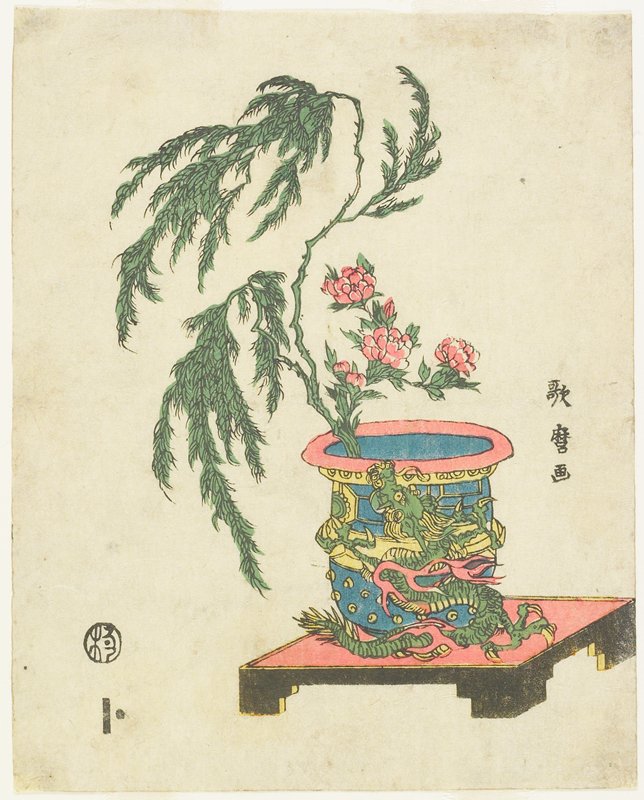
Ikebana arrangement of Peony and Willow in Dragon Pot
1781–1806
Woodblock print (nishiki-e), ink and color on paper
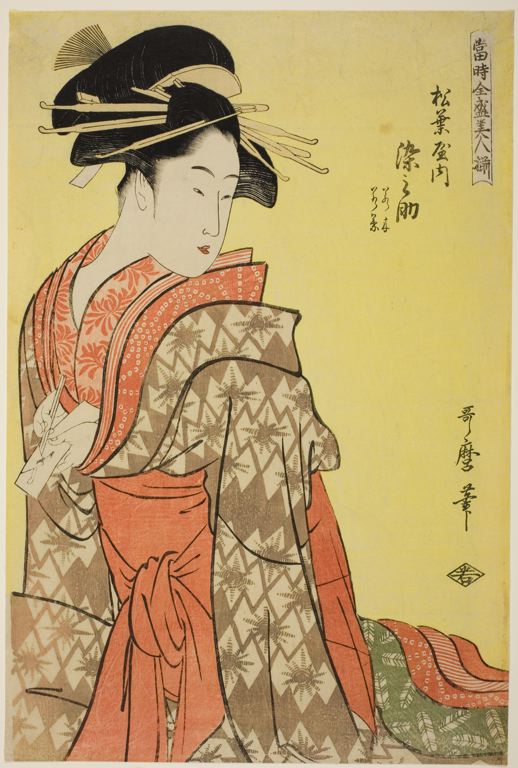
The Greatest Beauties of Our Time (Toji zensei bijin zoroe): Somenosuke of the Matsubaya with Attendants Wakagi and Wakaba
Woodblock print
Frequently Asked Questions
'Shoki lowering a demon on a rope to deliver a love-letter to a washer woman' was created by Kitagawa Utamaro (喜多川歌麿) in 18th century.