Teasing the Baby with a Winter Cherry (Hōzuki), from an untitled series of everyday scenes
- Date:
- c. 1799-1800 (Kansei 11-12)
- Medium:
- Woodblock print (nishiki-e); ink and color on paper
- Source:
- Harvard Art Museums
Description
Teasing the Baby with a Winter Cherry (Hozuki), from an untitled series of everyday scenes, is a Kitagawa Utamaro print of about 1794 in the Harvard Art Museums. Hozuki, the bright orange fruit of the Chinese lantern plant, was a familiar plaything held by mothers and older siblings to capture an infant's attention, its bell-like rattle and saturated color uniquely suited to such use. Utamaro stages the scene at close range, in the manner of his okubi-e bijin portraits, so that mother and child fill the sheet, the hozuki dangling between them as the focus of mutual attention. The composition turns on small gestures: the woman's tilted head, the infant's reaching hand, the slight twist of fingers as she shows him the fruit. As Edo bijin-ga, the print represents Kitagawa Utamaro's mature absorption of the mother-and-child theme, in which intimate domestic moments are given the same close, attentive design that he elsewhere reserved for celebrated courtesans. The result is a quiet but technically refined image in which everyday Edo life appears almost monumental within the small space of a single sheet. The printing makes the most of the limited palette, with the warm hozuki standing out against gentler tones. For collectors of Kitagawa Utamaro and of ukiyo-e mother-and-child prints, the Harvard Art Museums impression offers a particularly tender example of his domestic mode.
More Prints by Kitagawa Utamaro
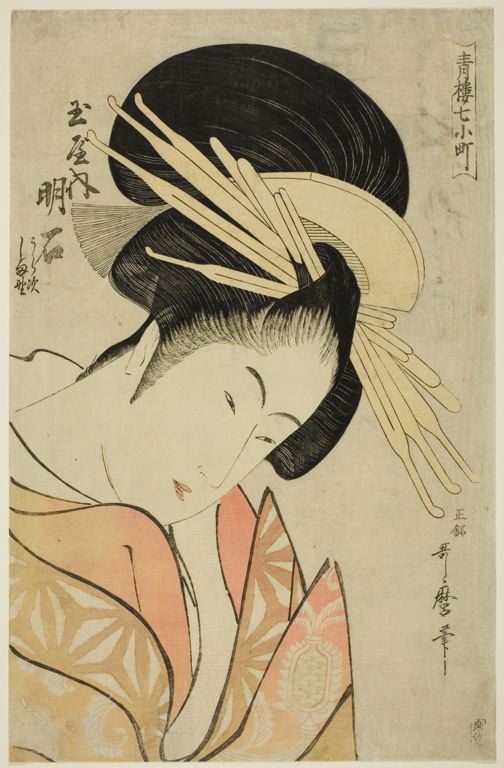
Akashi of the Tamaya, from the series Seven Komachis of Yoshiwara (Seiro nana Komachi) (Tamaya uchi Akashi, Uraji, Shimano)
Woodblock print
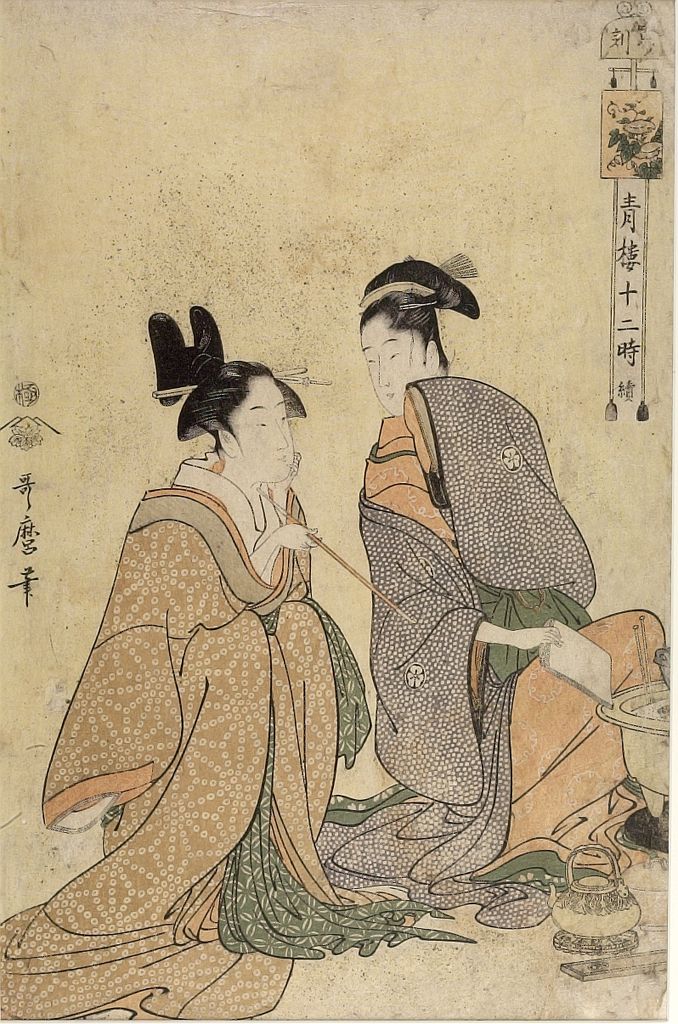
Hour of the Tiger (Tora no koku = 4 AM) from the series Twelve Hours in Yoshiwara (Seirô jûni toki tsuzuki), Late Edo period, circa 1794
Woodblock print
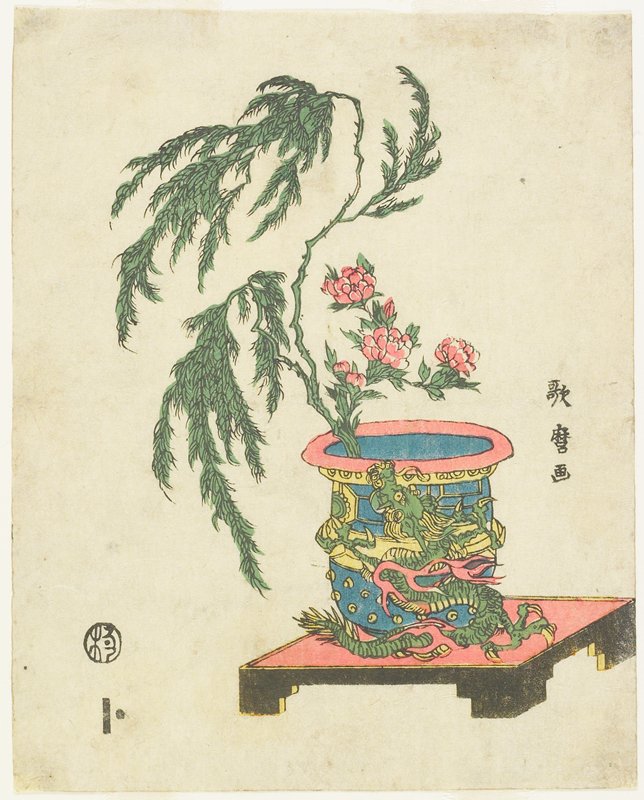
Ikebana arrangement of Peony and Willow in Dragon Pot
1781–1806
Woodblock print (nishiki-e), ink and color on paper
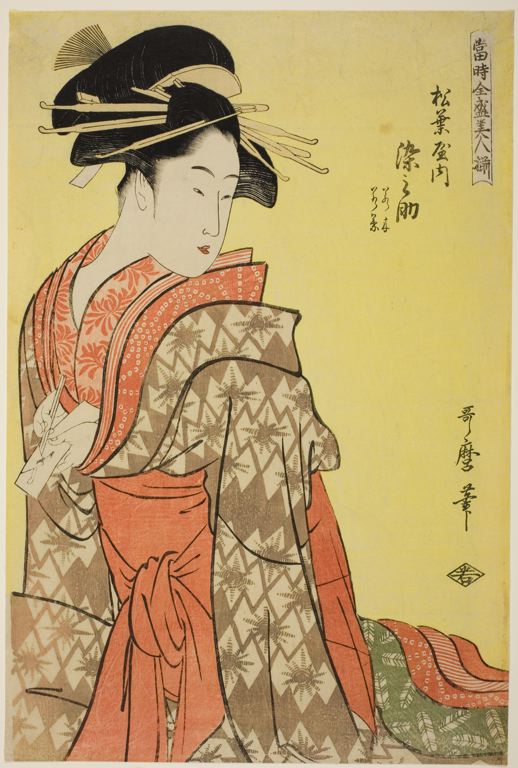
The Greatest Beauties of Our Time (Toji zensei bijin zoroe): Somenosuke of the Matsubaya with Attendants Wakagi and Wakaba
Woodblock print
Frequently Asked Questions
Teasing the Baby with a Winter Cherry (Hōzuki), from an untitled series of everyday scenes was created by Kitagawa Utamaro (喜多川歌麿) in c. 1799-1800 (Kansei 11-12).