
The Courtesan Hanamurasaki of the Tamaya, from the series "Courtesans of the Five Festivals (Yukun gosekku)"
- Date:
- c. 1805
- Medium:
- Color woodblock print; oban
- Source:
- Art Institute of Chicago
Description
The Courtesan Hanamurasaki of the Tamaya, from the series Courtesans of the Five Festivals (Yukun gosekku), designed by Kitagawa Utamaro around 1800 and held by the Art Institute of Chicago, ties the most famous beauties of the Yoshiwara to the seasonal calendar. The five festivals (gosekku) were major points in the Edo year, and the series pairs each with a named courtesan whose house and attire signal her standing in the licensed quarter. Hanamurasaki of the Tamaya was among the celebrated names of the day, and Utamaro draws her with the elongated grace that became almost a hallmark of late 1790s ukiyo-e: a long neck, narrow shoulders, and an elaborately patterned kimono that reads as both gift and burden. The festival context allows the artist and his printers to exploit a richly symbolic palette, drawing on the iconography of the relevant seasonal observance while keeping the courtesan herself at the center of attention. The series stands as one of Kitagawa Utamaro's mature accomplishments in Edo bijin-ga, combining celebrity portraiture with the rhythmic structure of the year. For collectors of ukiyo-e and of Yoshiwara prints, Hanamurasaki's sheet offers both documentary identification, named woman, named house, and a refined design with which to study Utamaro's late style. The Art Institute of Chicago impression preserves the textile and pattern work that made the original commission so visually compelling.
More Prints by Kitagawa Utamaro
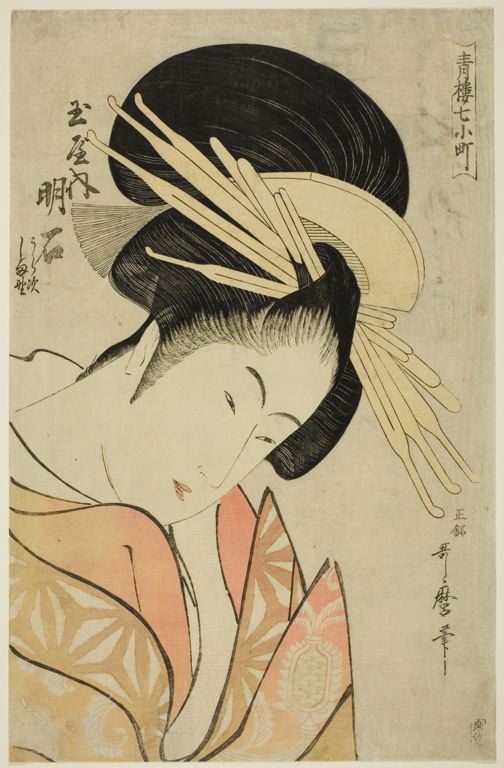
Akashi of the Tamaya, from the series Seven Komachis of Yoshiwara (Seiro nana Komachi) (Tamaya uchi Akashi, Uraji, Shimano)
Woodblock print
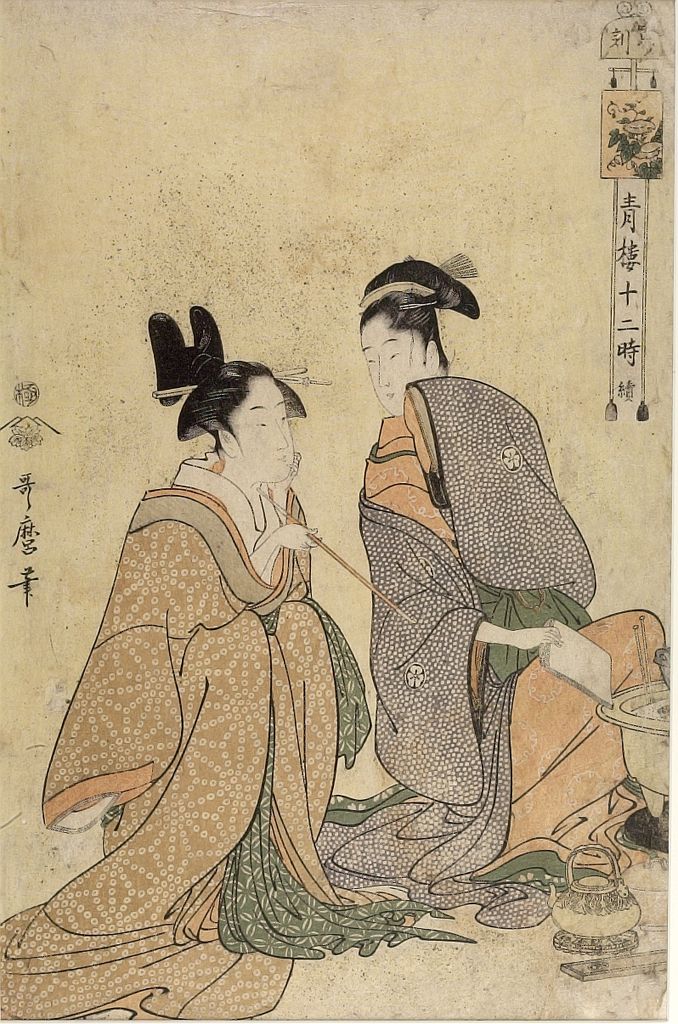
Hour of the Tiger (Tora no koku = 4 AM) from the series Twelve Hours in Yoshiwara (Seirô jûni toki tsuzuki), Late Edo period, circa 1794
Woodblock print
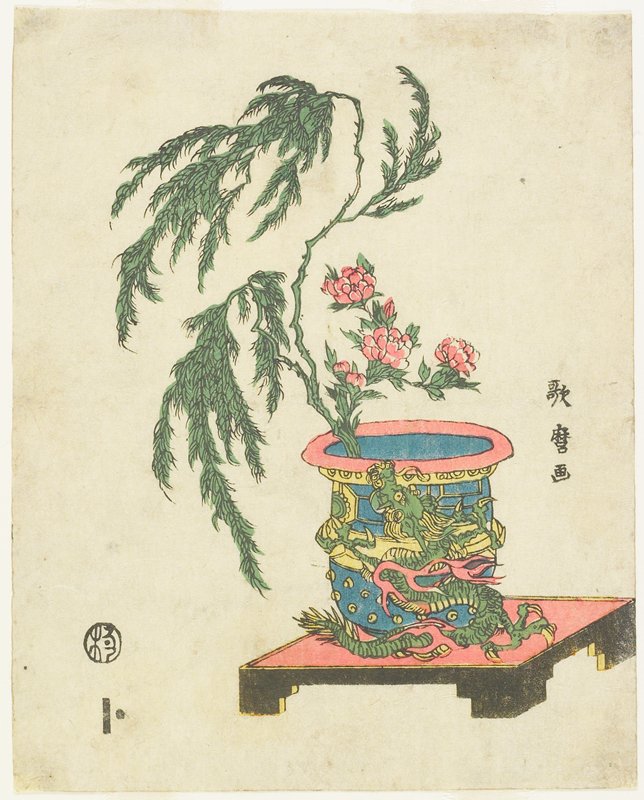
Ikebana arrangement of Peony and Willow in Dragon Pot
1781–1806
Woodblock print (nishiki-e), ink and color on paper
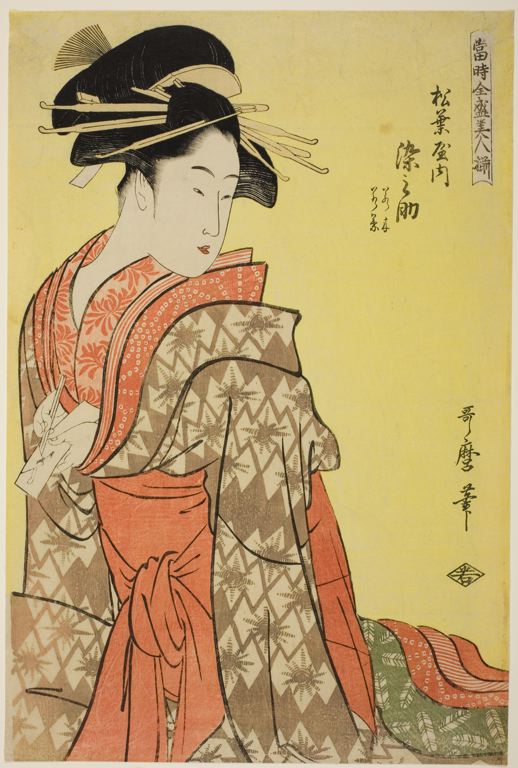
The Greatest Beauties of Our Time (Toji zensei bijin zoroe): Somenosuke of the Matsubaya with Attendants Wakagi and Wakaba
Woodblock print
Frequently Asked Questions
The Courtesan Hanamurasaki of the Tamaya, from the series "Courtesans of the Five Festivals (Yukun gosekku)" was created by Kitagawa Utamaro (喜多川歌麿) in c. 1805.