The Courtesan Segawa Takeno of Matsubaya at Edo-cho ittchome
- Date:
- 18th-19th century
- Medium:
- Ukiyo-e woodblock print in "ōban" format; ink and color on paper
- Source:
- Harvard Art Museums
Description
The Courtesan Segawa Takeno of Matsubaya at Edo-cho ittchome is a Kitagawa Utamaro design at the Harvard Art Museums, naming both the sitter, a high-ranking Matsubaya courtesan called Segawa Takeno, and the precise street address of her house in the Yoshiwara. This kind of geographical specificity is characteristic of Edo bijin-ga in its mature phase, when prints functioned as branded portraits attached to particular brothels and as informal guides to the licensed quarter. Utamaro's design presents Segawa Takeno as a single full-length or near full-length figure, her elongated body wrapped in patterned robes whose textiles and obi indicate both seasonal fashion and the substantial wealth of her establishment. The face conforms to his idealised type, with a long oval contour, small features and a serenely tilted neck, while the hands and hair ornaments receive the attentive draftsmanship for which he was widely admired. Cartouches identify the courtesan and her house, allowing contemporary viewers to recognise Segawa Takeno as an individual celebrity within the densely populated star system of the Yoshiwara. Held at Harvard alongside other Matsubaya portraits, the sheet contributes to the documentary record of late-eighteenth-century brothel culture and illustrates how ukiyo-e bijin-ga served simultaneously as art, advertisement and social record.
More Prints by Kitagawa Utamaro
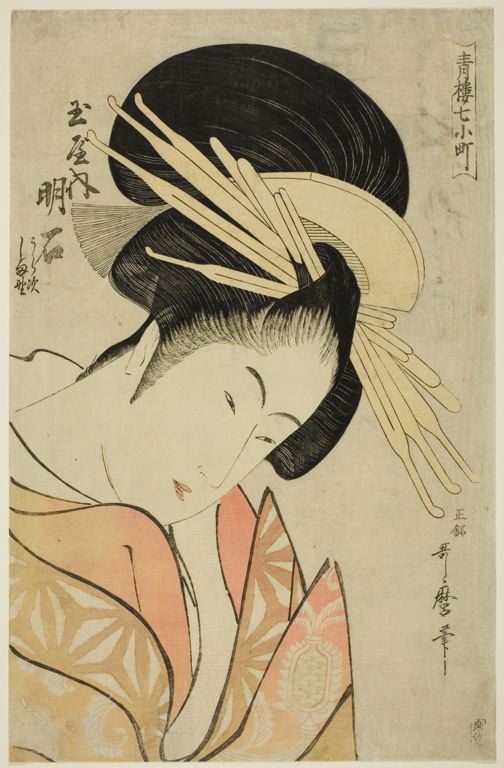
Akashi of the Tamaya, from the series Seven Komachis of Yoshiwara (Seiro nana Komachi) (Tamaya uchi Akashi, Uraji, Shimano)
Woodblock print
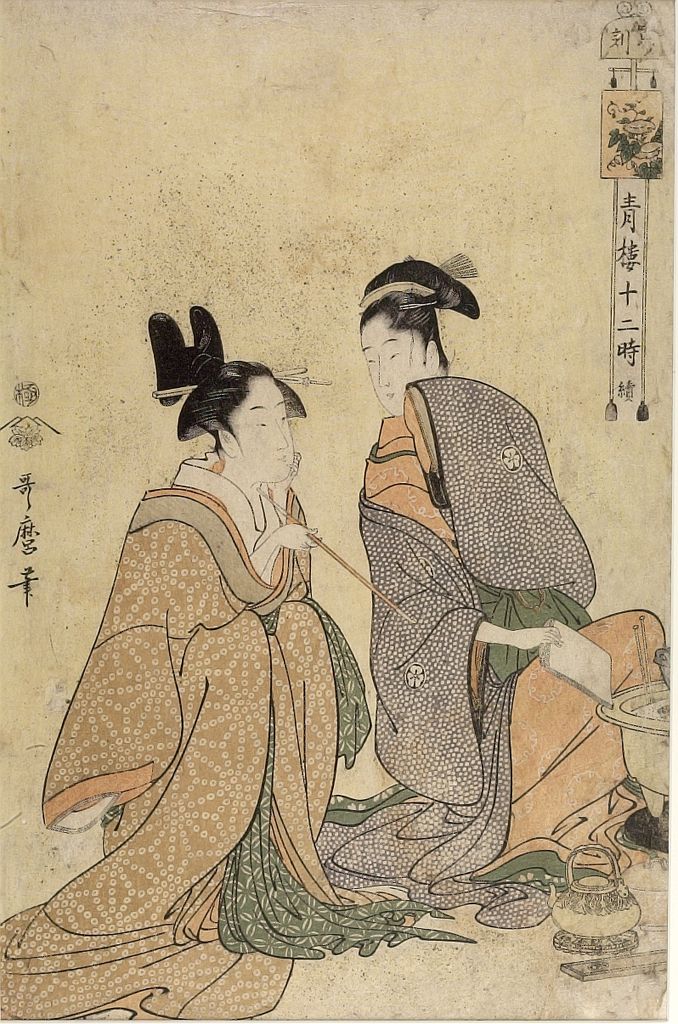
Hour of the Tiger (Tora no koku = 4 AM) from the series Twelve Hours in Yoshiwara (Seirô jûni toki tsuzuki), Late Edo period, circa 1794
Woodblock print
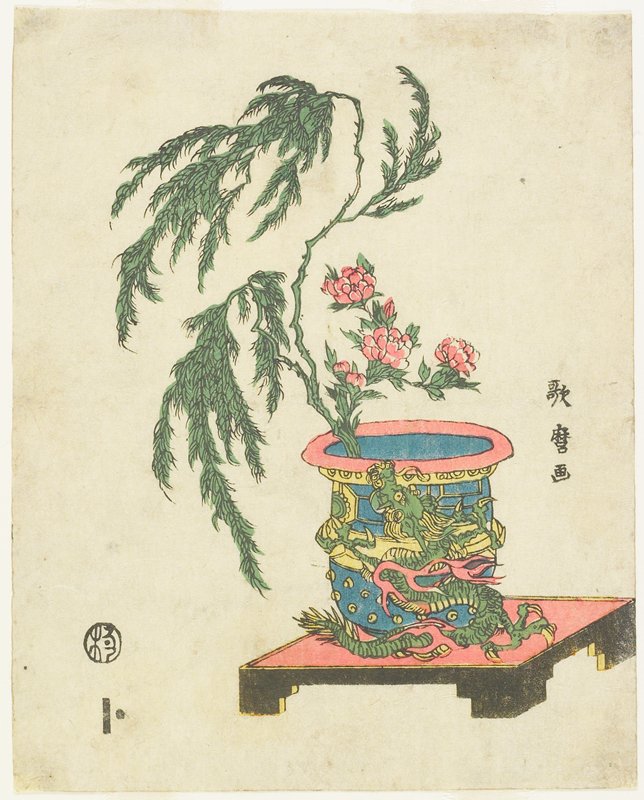
Ikebana arrangement of Peony and Willow in Dragon Pot
1781–1806
Woodblock print (nishiki-e), ink and color on paper
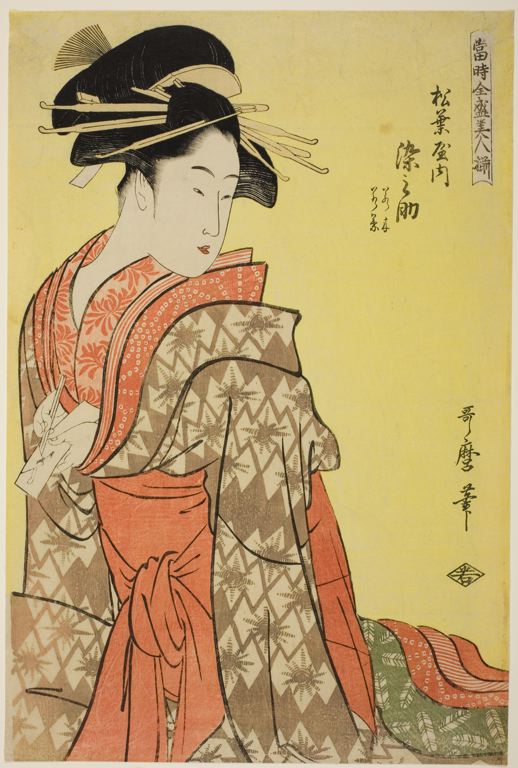
The Greatest Beauties of Our Time (Toji zensei bijin zoroe): Somenosuke of the Matsubaya with Attendants Wakagi and Wakaba
Woodblock print
Frequently Asked Questions
The Courtesan Segawa Takeno of Matsubaya at Edo-cho ittchome was created by Kitagawa Utamaro (喜多川歌麿) in 18th-19th century.