The Courtesan Tagasode of the Tamaya
- Medium:
- Ukiyo-e woodblock print; ink and color on paper
- Source:
- Harvard Art Museums
Description
The Courtesan Tagasode of the Tamaya is a Kitagawa Utamaro ukiyo-e portrait that joins the artist's long sequence of named-courtesan prints set in Yoshiwara houses. Tagasode, a poetic name evoking the suggestive question Whose sleeves? from classical Japanese verse, was used in succession by leading courtesans, and the Tamaya was one of the more prestigious brothels of the licensed quarter. Utamaro emphasizes Tagasode's status by placing her at full or near full length, her trailing uchikake spread to reveal an obi tied with the elaborate front knot reserved for top-ranking oiran. Patterned textiles printed from carefully coordinated blocks create a rhythm of color across the figure, balanced against the smooth pale ground of unprinted paper. The face follows Utamaro's mature Edo bijin-ga template, with its elongated oval, slender neck, and subtly asymmetric features that turn a fashion plate into a recognizable individual. Such prints functioned as both portrait and advertisement, allowing patrons across Edo to keep track of which beauty held which name in which house. The Harvard Art Museums preserves this impression (object 208372), where it joins a number of related Tamaya prints that together document the house's role in the visual economy of late eighteenth-century ukiyo-e.
More Prints by Kitagawa Utamaro
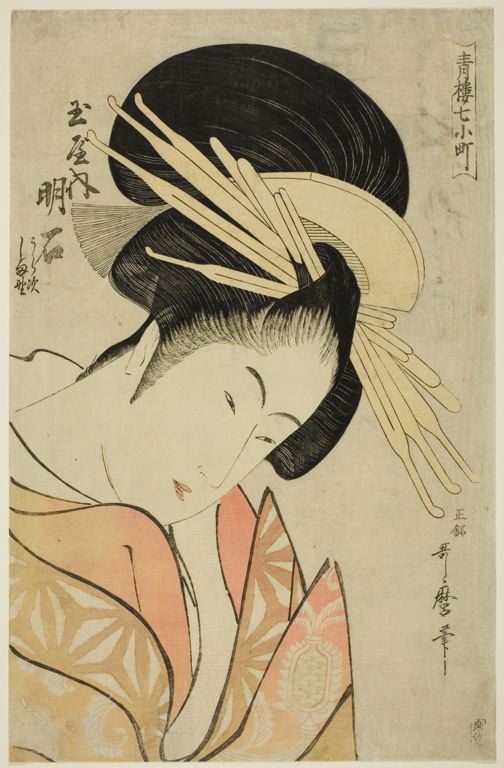
Akashi of the Tamaya, from the series Seven Komachis of Yoshiwara (Seiro nana Komachi) (Tamaya uchi Akashi, Uraji, Shimano)
Woodblock print
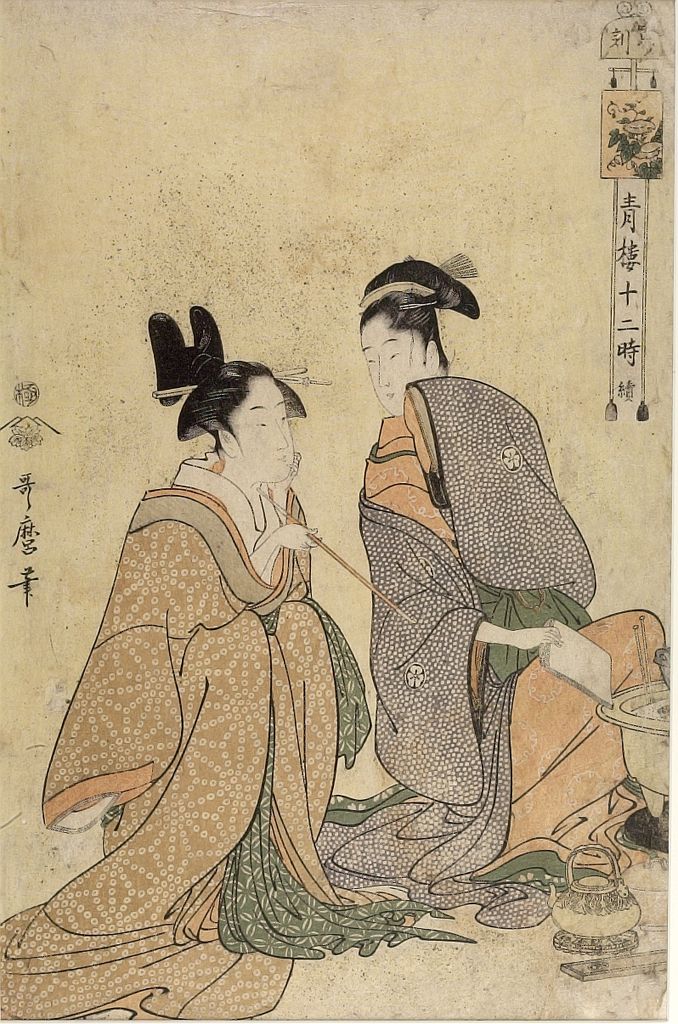
Hour of the Tiger (Tora no koku = 4 AM) from the series Twelve Hours in Yoshiwara (Seirô jûni toki tsuzuki), Late Edo period, circa 1794
Woodblock print
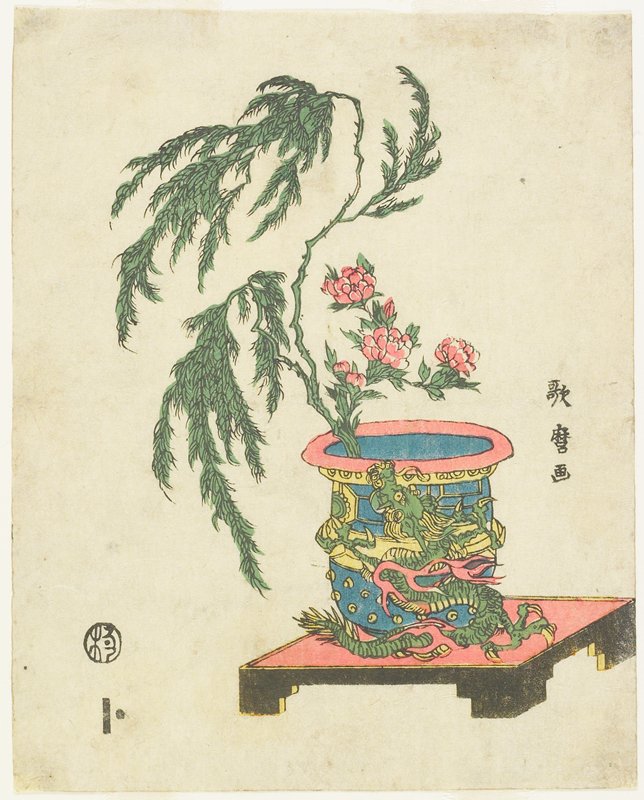
Ikebana arrangement of Peony and Willow in Dragon Pot
1781–1806
Woodblock print (nishiki-e), ink and color on paper
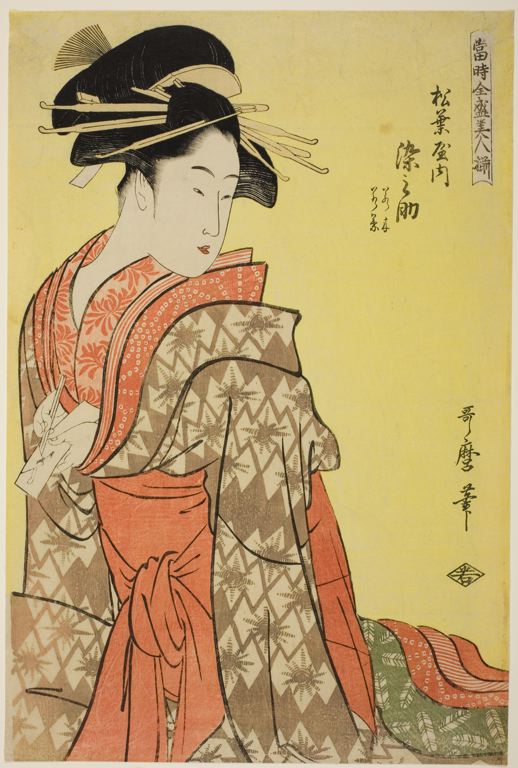
The Greatest Beauties of Our Time (Toji zensei bijin zoroe): Somenosuke of the Matsubaya with Attendants Wakagi and Wakaba
Woodblock print
Frequently Asked Questions
The Courtesan Tagasode of the Tamaya was created by Kitagawa Utamaro (喜多川歌麿).