
The Courtesan Umegawa and Chubei from the Courier Service (Umegawa, Chubei)
- Date:
- c. 1797
- Medium:
- Color woodblock print, hashira-e
- Source:
- Art Institute of Chicago
Description
Kitagawa Utamaro's The Courtesan Umegawa and Chūbei from the Courier Service (Umegawa, Chūbei), a color woodblock print of about 1792 in the Art Institute of Chicago, draws on one of the most popular love stories of the Edo theater. Umegawa, a Shinmachi courtesan, and Chūbei, the young courier whose passion leads him to embezzle money entrusted to him, were familiar figures from puppet and kabuki plays based on plays by Chikamatsu Monzaemon. Utamaro presents them as a paired half-length portrait, a convention of his Edo bijin-ga in which two emblematic figures are framed in close intimacy. Umegawa is dressed in patterned robes and elaborate hair ornaments appropriate to her rank as a courtesan, while Chūbei wears the simpler garments of a man who has stepped beyond his place. The closeness of their heads and the slight inclination of their bodies signal both attachment and impending catastrophe, the inevitable end of their flight known to every contemporary viewer. As in much of his ukiyo-e, Utamaro does not narrate the story directly; instead he condenses the play's emotional content into the relationship between two faces. The series in which the print appears applies the language of bijin-ga, finely drawn women, refined fabrics, controlled colors, to lovers from the stage, turning theatrical celebrity into a study of feeling. The Art Institute of Chicago's impression preserves the sheet's quiet intensity and its place among Kitagawa Utamaro's compelling treatments of doomed Edo lovers.
More Prints by Kitagawa Utamaro
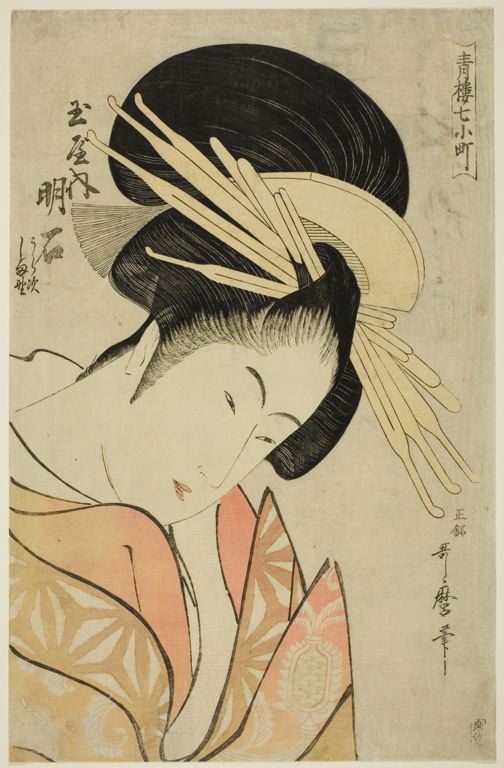
Akashi of the Tamaya, from the series Seven Komachis of Yoshiwara (Seiro nana Komachi) (Tamaya uchi Akashi, Uraji, Shimano)
Woodblock print
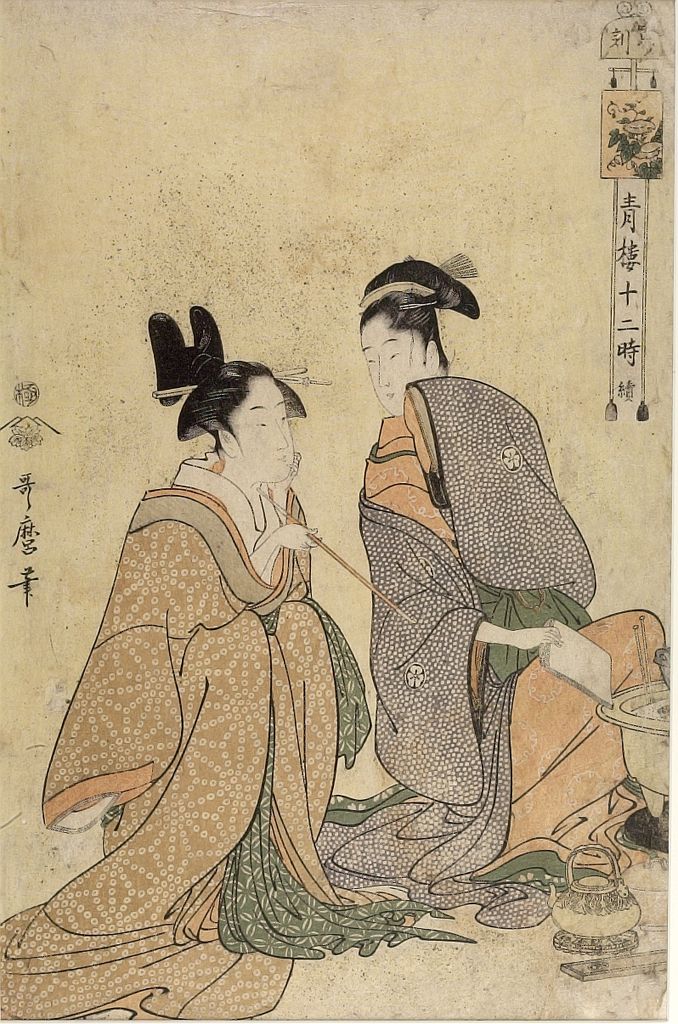
Hour of the Tiger (Tora no koku = 4 AM) from the series Twelve Hours in Yoshiwara (Seirô jûni toki tsuzuki), Late Edo period, circa 1794
Woodblock print
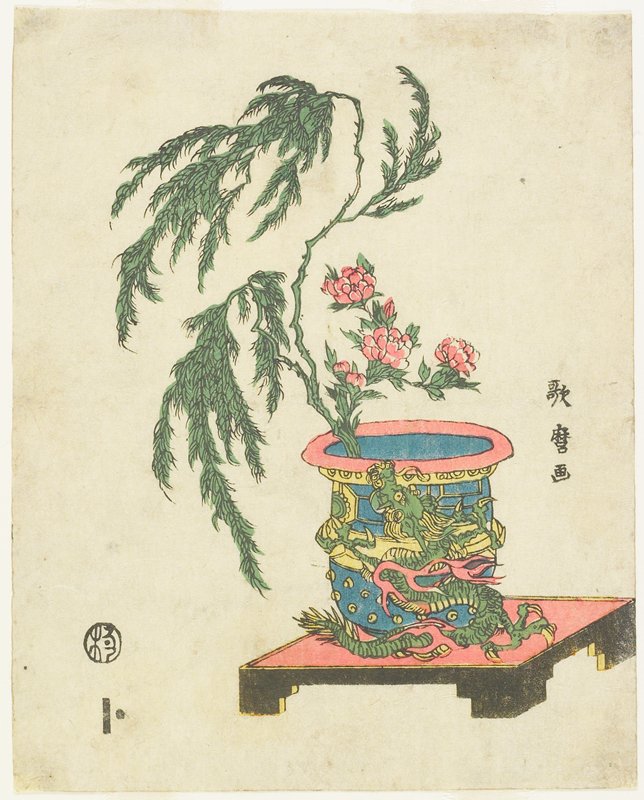
Ikebana arrangement of Peony and Willow in Dragon Pot
1781–1806
Woodblock print (nishiki-e), ink and color on paper
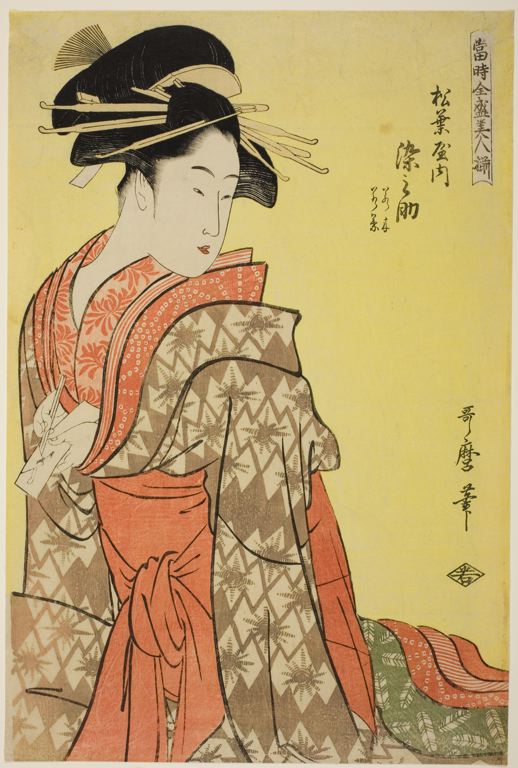
The Greatest Beauties of Our Time (Toji zensei bijin zoroe): Somenosuke of the Matsubaya with Attendants Wakagi and Wakaba
Woodblock print
Frequently Asked Questions
The Courtesan Umegawa and Chubei from the Courier Service (Umegawa, Chubei) was created by Kitagawa Utamaro (喜多川歌麿) in c. 1797.