The Courtesan Usugōri from the Tsuruya (Tsuruya uchi Usugōri)
- Date:
- Late Edo period, circa 1797
- Medium:
- Ukiyo-e woodblock print in "ōban" format; ink and color on paper, with printed signature reading "Utamaro hitsu"
- Source:
- Harvard Art Museums
Description
Dated 1797 and held by the Harvard Art Museums, "The Courtesan Usugori from the Tsuruya" exemplifies Kitagawa Utamaro at the apex of his Edo bijin-ga practice. The Tsuruya was one of the well-known houses of the Yoshiwara licensed quarter, and Usugori, named in the title, was among its celebrated tayu. The naming convention belongs to the late-Tenmei and Kansei celebrity-portrait mode that Utamaro and his publisher Tsutaya Juzaburo helped pioneer, transforming the Yoshiwara woman from anonymous emblem into named star whose persona could be marketed across the print and gossip markets of Edo. Utamaro's image deploys his mature vocabulary: an elongated neck, a softly tilted oval face, hair styled in the most current fashion, and a kimono whose patterning serves as both decorative tour de force and social signature. By the mid-1790s, the okubi-e half-length format had become his preferred container for such named portraits, allowing him maximum scope for facial nuance. Harvard's impression sits within a major institutional collection that documents the breadth of Utamaro's portraiture, and the sheet contributes to our understanding of how ukiyo-e participated in the celebrity culture that animated the Edo period. The image remains a touchstone for the genre of named Yoshiwara portraiture.
More Prints by Kitagawa Utamaro
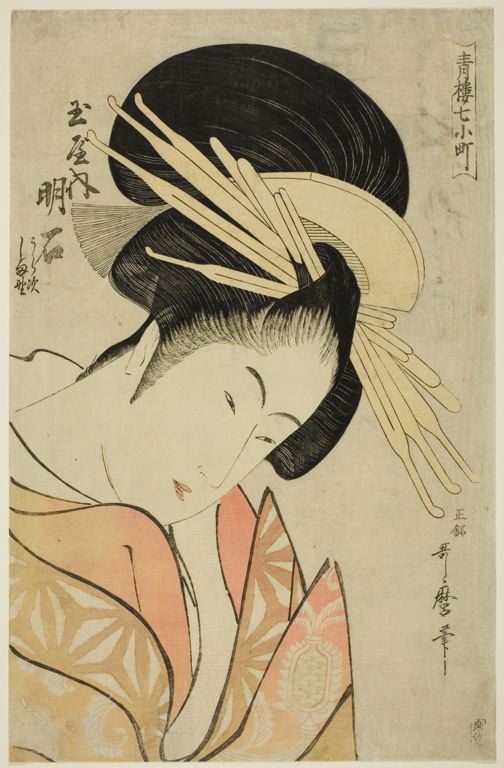
Akashi of the Tamaya, from the series Seven Komachis of Yoshiwara (Seiro nana Komachi) (Tamaya uchi Akashi, Uraji, Shimano)
Woodblock print
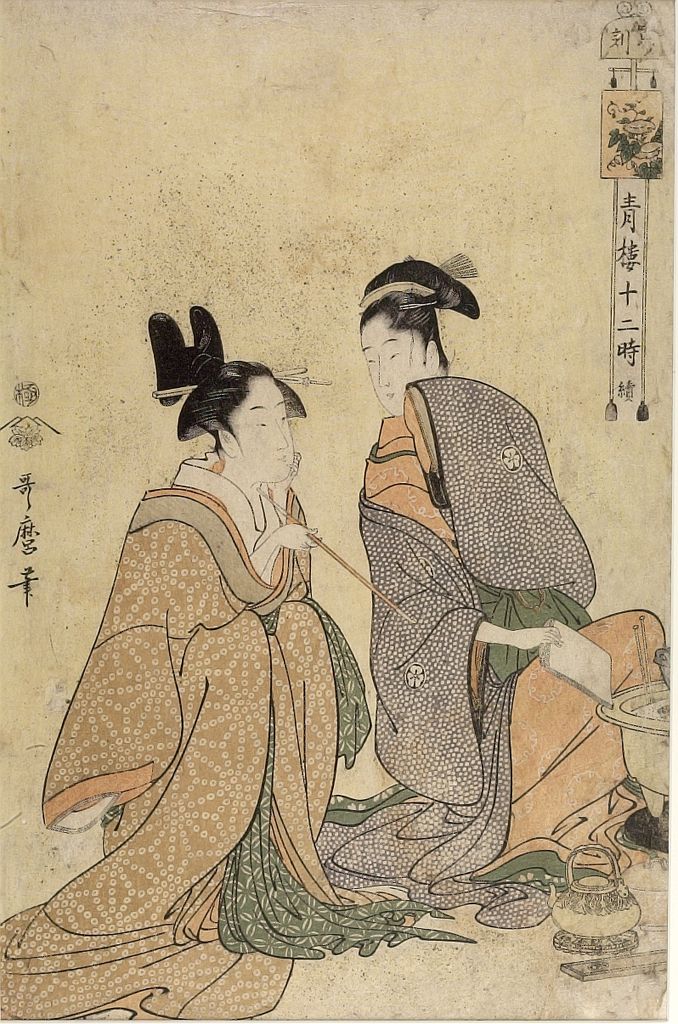
Hour of the Tiger (Tora no koku = 4 AM) from the series Twelve Hours in Yoshiwara (Seirô jûni toki tsuzuki), Late Edo period, circa 1794
Woodblock print
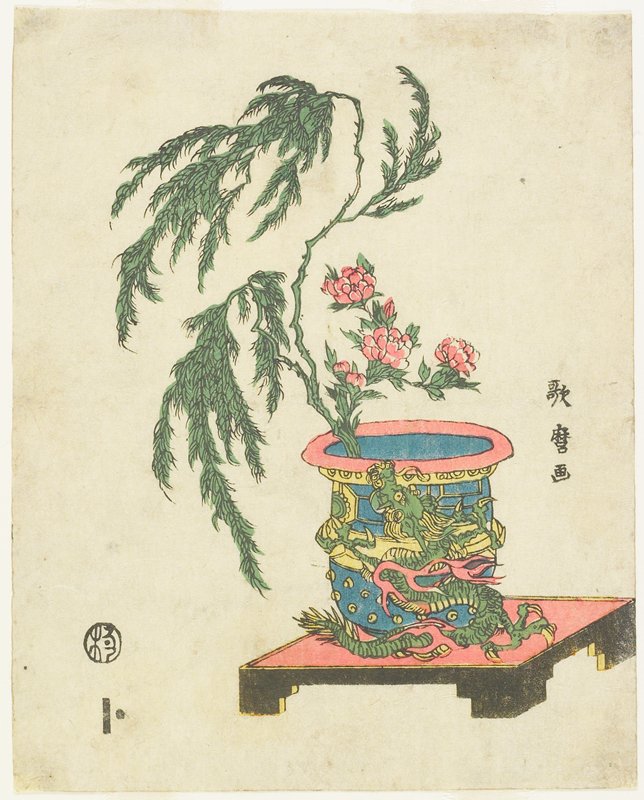
Ikebana arrangement of Peony and Willow in Dragon Pot
1781–1806
Woodblock print (nishiki-e), ink and color on paper
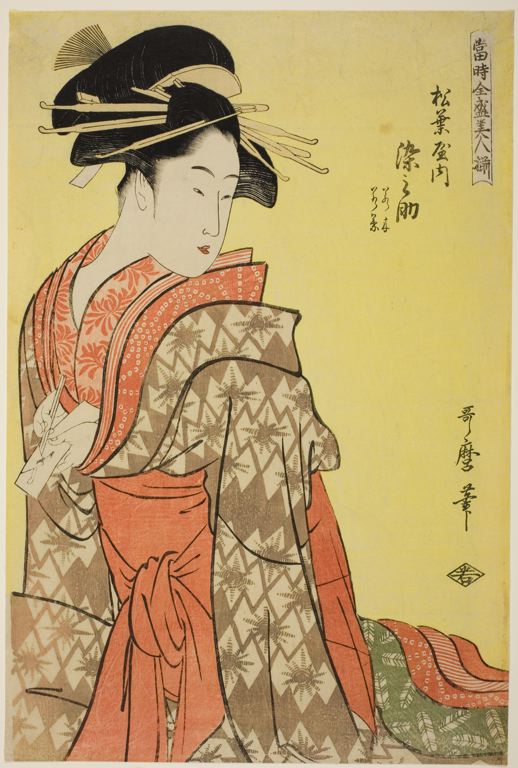
The Greatest Beauties of Our Time (Toji zensei bijin zoroe): Somenosuke of the Matsubaya with Attendants Wakagi and Wakaba
Woodblock print
Frequently Asked Questions
The Courtesan Usugōri from the Tsuruya (Tsuruya uchi Usugōri) was created by Kitagawa Utamaro (喜多川歌麿) in Late Edo period, circa 1797.