
The Courtesan Yosooi of the Matsubaya
- Date:
- c. 1799
- Medium:
- Color woodblock print; oban
- Source:
- Art Institute of Chicago
Description
Kitagawa Utamaro's portrait of the courtesan Yosooi of the Matsubaya, dating to about 1794, exemplifies the half-length okubi-e mode through which he transformed Edo bijin-ga. Yosooi was a high-ranking oiran of the Matsubaya, one of the most prominent brothels of the Yoshiwara, and she appears repeatedly in Utamaro's prints, often identified by the inscription on the design. Here the composition isolates her against a plain ground, drawing the viewer's eye to the angle of her head, the gathered collar of her elaborate robe, and the volume of her coiffure pierced by ornamental combs and pins. By stripping away the architectural and crowd contexts of earlier Yoshiwara portraiture, Utamaro and his publisher Tsutaya Juzaburo invited closer attention to physiognomy and inward expression, qualities that distinguished his work from contemporaries within ukiyo-e. The Art Institute of Chicago holds the impression. As an act of public naming, the print participates in the celebrity culture of the licensed quarter, where leading courtesans circulated as recognizable personalities across prints, poetry, and popular fiction. As an artistic statement, it shows how Utamaro made the individuated portrait of a named courtesan into a central genre of late-eighteenth-century ukiyo-e and a model for bijin-ga long after his death.
More Prints by Kitagawa Utamaro
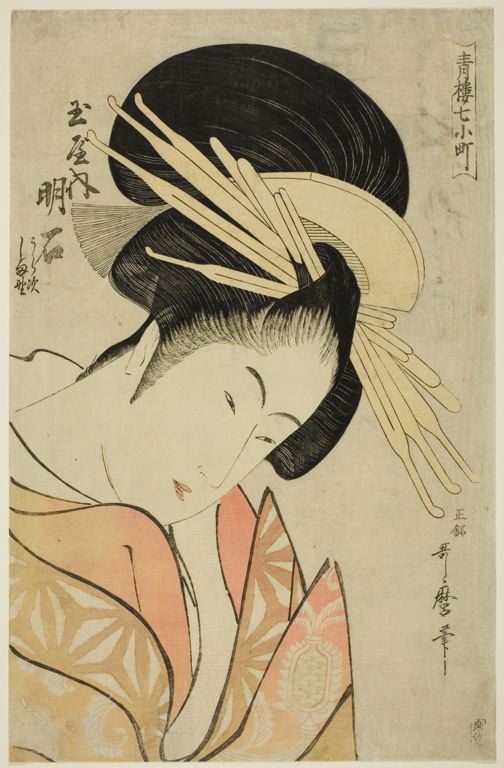
Akashi of the Tamaya, from the series Seven Komachis of Yoshiwara (Seiro nana Komachi) (Tamaya uchi Akashi, Uraji, Shimano)
Woodblock print
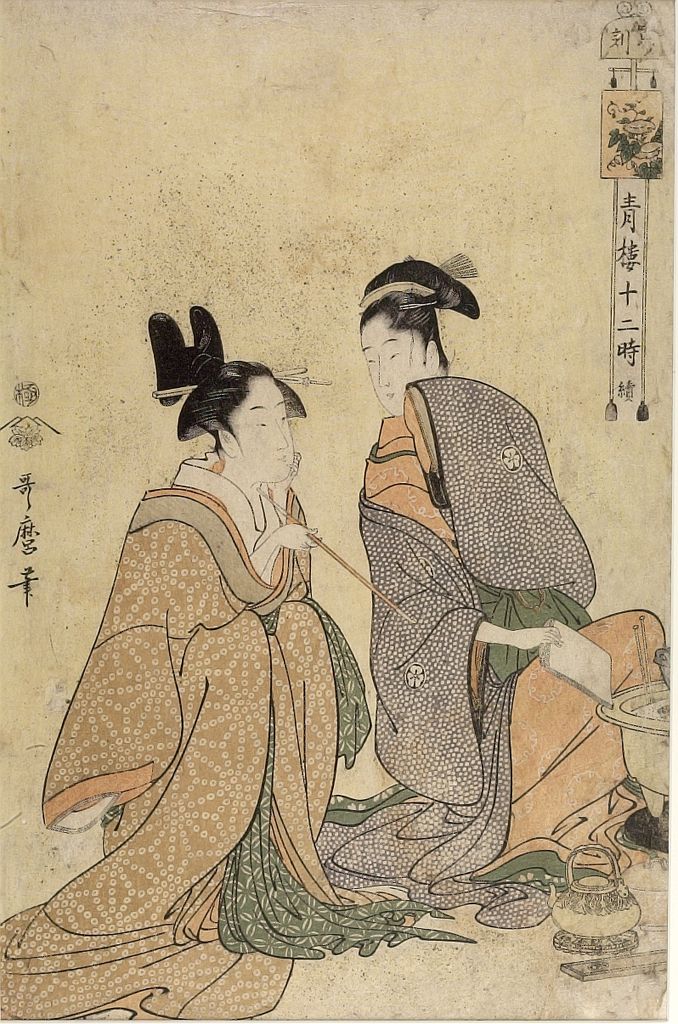
Hour of the Tiger (Tora no koku = 4 AM) from the series Twelve Hours in Yoshiwara (Seirô jûni toki tsuzuki), Late Edo period, circa 1794
Woodblock print
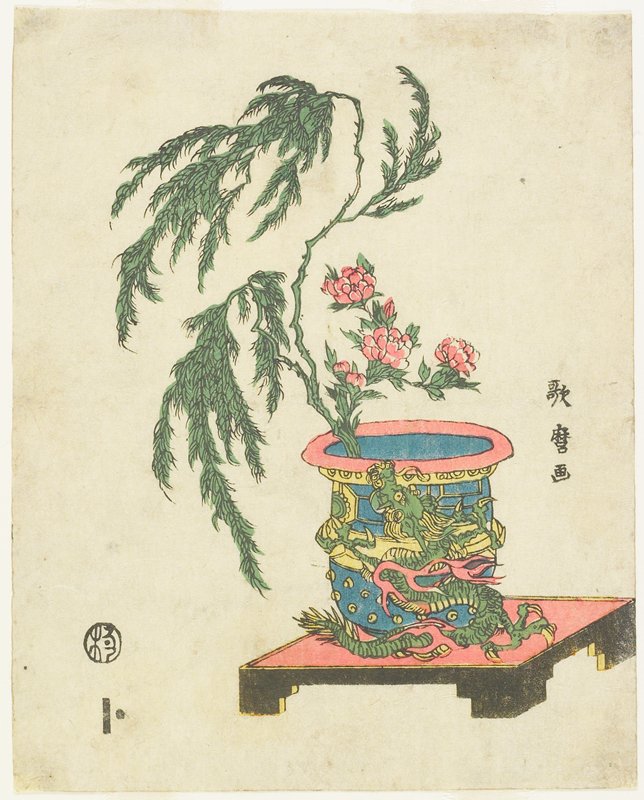
Ikebana arrangement of Peony and Willow in Dragon Pot
1781–1806
Woodblock print (nishiki-e), ink and color on paper
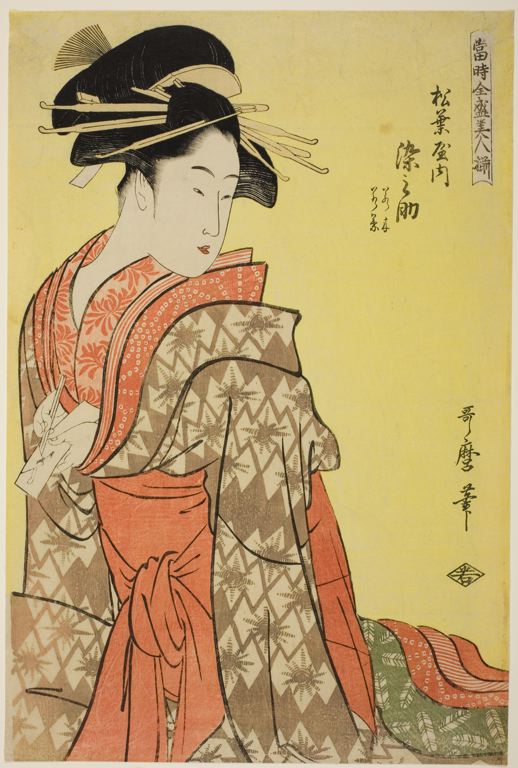
The Greatest Beauties of Our Time (Toji zensei bijin zoroe): Somenosuke of the Matsubaya with Attendants Wakagi and Wakaba
Woodblock print
Frequently Asked Questions
The Courtesan Yosooi of the Matsubaya was created by Kitagawa Utamaro (喜多川歌麿) in c. 1799.