
The Courtesans Shizuka and Akashi of the Tamaya
- Date:
- c. 1797
- Medium:
- Color woodblock print; hashira-e
- Source:
- Art Institute of Chicago
Description
Kitagawa Utamaro's The Courtesans Shizuka and Akashi of the Tamaya, a color woodblock print held by the Art Institute of Chicago, dates to about 1792 and exemplifies the kind of double-portrait bijin-ga that brought him to the height of his Edo-period fame. The two women named in the title were ranking courtesans of the Tamaya, one of the great houses of the Yoshiwara pleasure quarter, and Utamaro situates them in the kind of close, intimate framing he had pioneered for the ukiyo-e genre. The composition is built around the contrast between their patterned outer robes, their carefully knotted obi, and the elaborate sweep of their hair ornamented with combs and pins, set against a quiet background that lets the figures dominate the sheet. As in much of Utamaro's Edo bijin-ga, the women's faces are drawn with the long, downcast eyes, delicate mouths, and serene, almost interior expressions that came to define his ideal of feminine beauty. The print also functions as a kind of celebrity image, identifying real personalities of the quarter for an audience of city dwellers who followed the Yoshiwara as both fashion source and entertainment district. Utamaro's command of line, his understated color palette, and his attentiveness to the textures of silk, paper, and lacquered hair all reflect the technical sophistication of the publisher Tsutaya Jūzaburō's workshop, with whom he was closely associated in this period. For collectors today, the sheet is a clear example of how Utamaro reshaped ukiyo-e bijin-ga from anonymous types into psychologically charged portraits of named women within Edo's pleasure-quarter culture.
More Prints by Kitagawa Utamaro
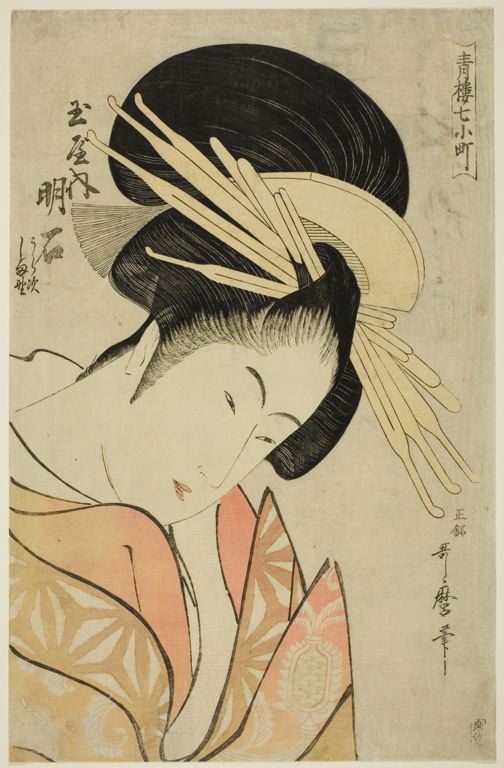
Akashi of the Tamaya, from the series Seven Komachis of Yoshiwara (Seiro nana Komachi) (Tamaya uchi Akashi, Uraji, Shimano)
Woodblock print
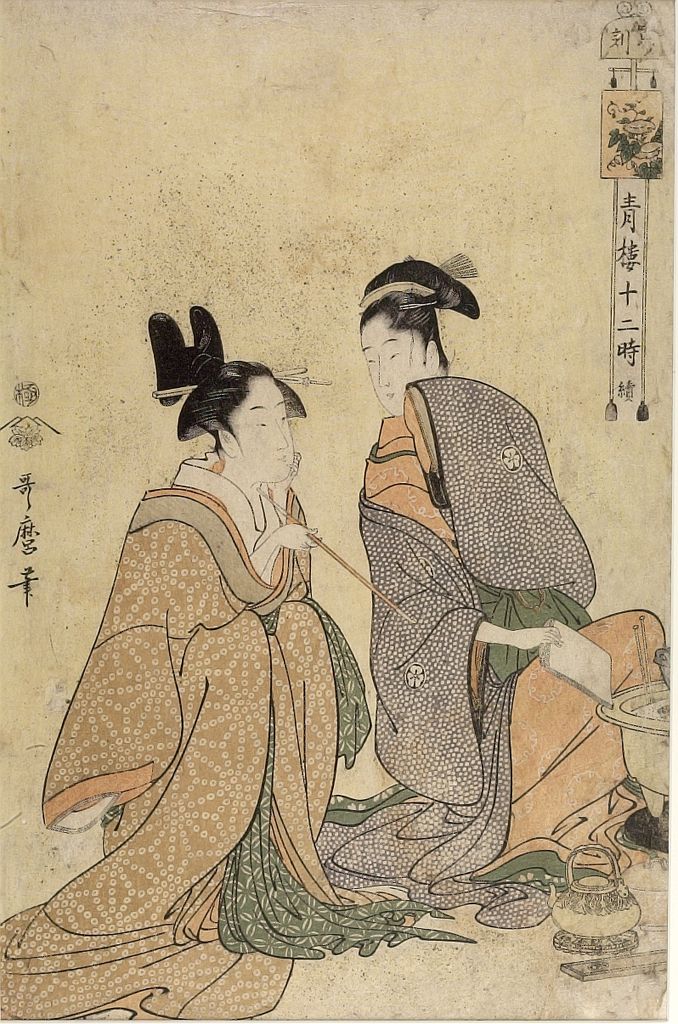
Hour of the Tiger (Tora no koku = 4 AM) from the series Twelve Hours in Yoshiwara (Seirô jûni toki tsuzuki), Late Edo period, circa 1794
Woodblock print
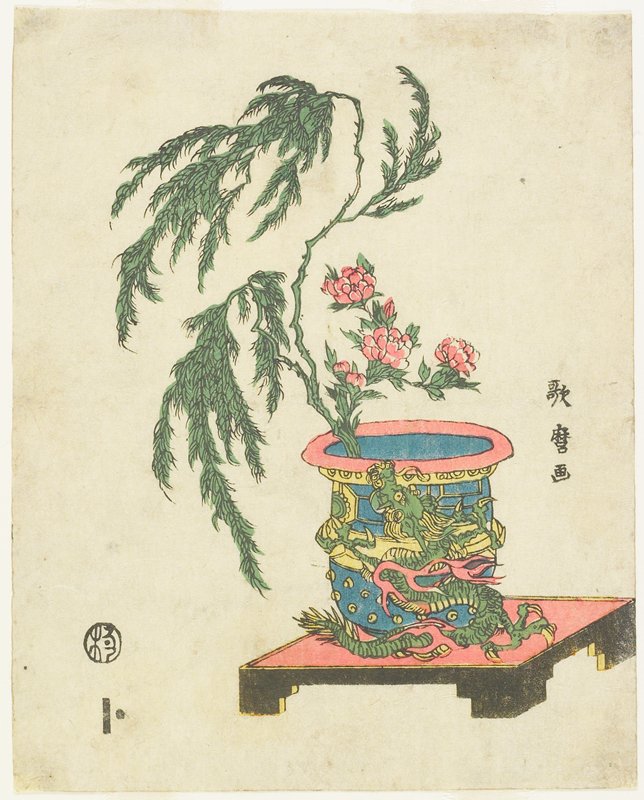
Ikebana arrangement of Peony and Willow in Dragon Pot
1781–1806
Woodblock print (nishiki-e), ink and color on paper
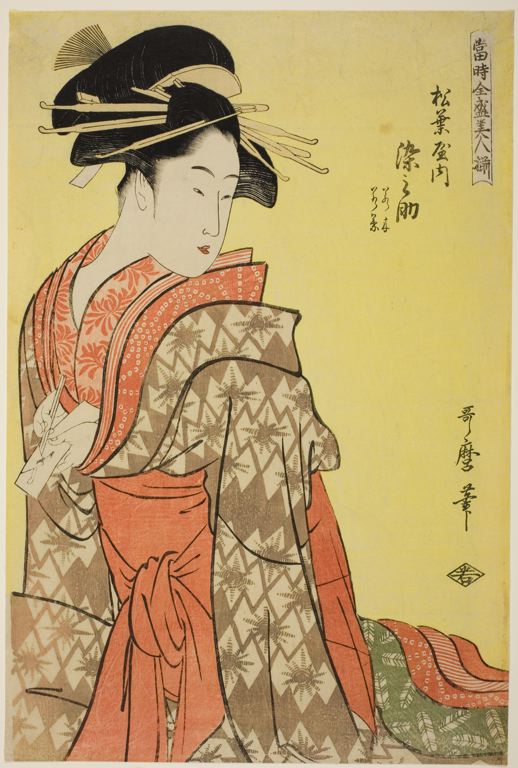
The Greatest Beauties of Our Time (Toji zensei bijin zoroe): Somenosuke of the Matsubaya with Attendants Wakagi and Wakaba
Woodblock print
Frequently Asked Questions
The Courtesans Shizuka and Akashi of the Tamaya was created by Kitagawa Utamaro (喜多川歌麿) in c. 1797.