
The Embankment at Mimeguri
- Date:
- 1799
- Medium:
- Color woodblock print; right sheet of oban triptych
- Source:
- Art Institute of Chicago
Description
Around 1799 Kitagawa Utamaro designed The Embankment at Mimeguri, now in the Art Institute of Chicago, a print that combines bijin-ga elegance with the cultural geography of Edo's outskirts. Mimeguri, located on the eastern bank of the Sumida River, was famed for the embankment that protected its riverside settlement and for the Mimeguri Inari shrine that anchored local devotion. In Utamaro's hands the locale becomes a stage for a small group of contemporary women, perhaps on a seasonal outing, perhaps en route to a shrine festival, in any case offering the artist room to articulate his hallmarks: the carefully composed grouping of slim, tall figures, the careful play of pattern on outer kimono against the plain ground of the embankment, and the introduction of small landscape elements such as willows or boats. Edo-period viewers of ukiyo-e would have read in such embankment scenes a familiar mix of leisure, civic identification, and topographical pride; their commercial appeal depended on coupling glamorous figures with recognizable Edo places. Utamaro's signature line stays anchored in the bijin-ga tradition rather than the meisho landscape print, distinguishing his approach from the contemporaneous topographical work of artists like Hiroshige a generation later. As a result, the Art Institute's impression documents how Utamaro extended his Edo bijin-ga vocabulary into outdoor scenes, situating his beauties within the layered geography of late-eighteenth-century Edo and confirming his role as one of ukiyo-e's most attentive observers of the urban everyday.
More Prints by Kitagawa Utamaro
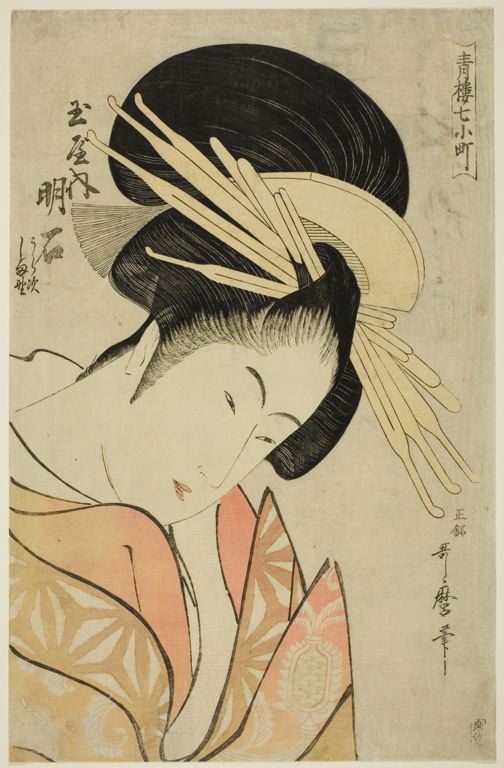
Akashi of the Tamaya, from the series Seven Komachis of Yoshiwara (Seiro nana Komachi) (Tamaya uchi Akashi, Uraji, Shimano)
Woodblock print
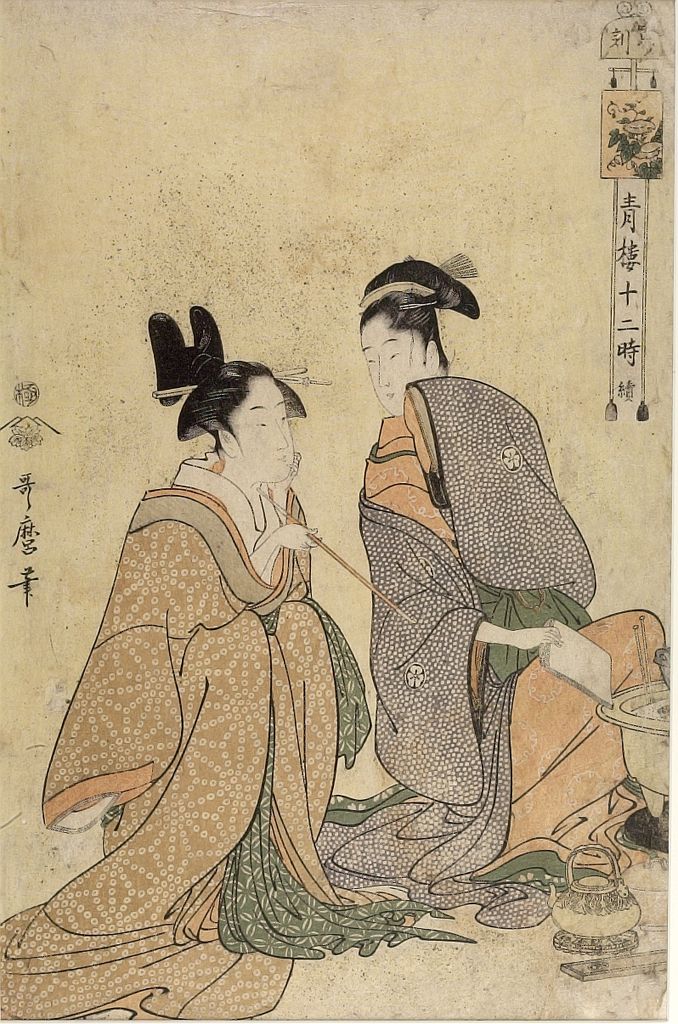
Hour of the Tiger (Tora no koku = 4 AM) from the series Twelve Hours in Yoshiwara (Seirô jûni toki tsuzuki), Late Edo period, circa 1794
Woodblock print
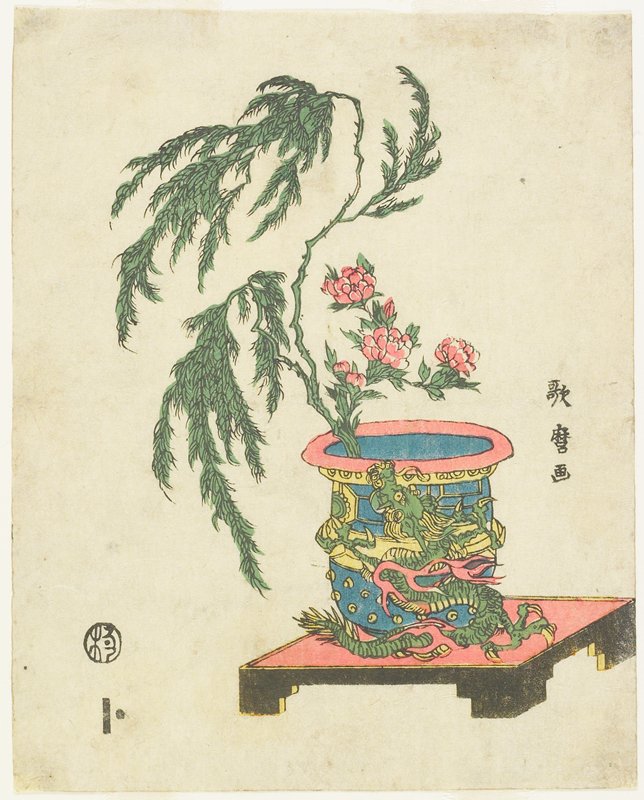
Ikebana arrangement of Peony and Willow in Dragon Pot
1781–1806
Woodblock print (nishiki-e), ink and color on paper
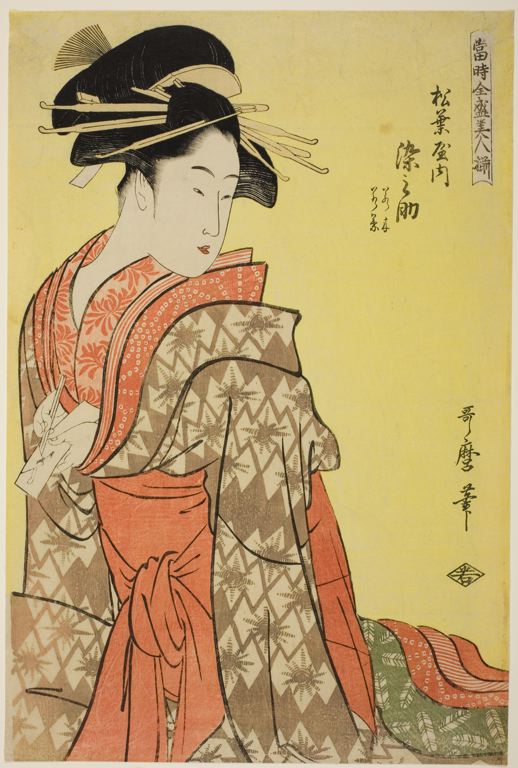
The Greatest Beauties of Our Time (Toji zensei bijin zoroe): Somenosuke of the Matsubaya with Attendants Wakagi and Wakaba
Woodblock print
Frequently Asked Questions
The Embankment at Mimeguri was created by Kitagawa Utamaro (喜多川歌麿) in 1799.