
The Habit of Boisterousness (Sawagashiki kuse), from the series "Seven Bad Habits (Nakute nana kuse)"
- Date:
- c. 1797
- Medium:
- Color woodblock print; oban
- Source:
- Art Institute of Chicago
Description
Kitagawa Utamaro's The Habit of Boisterousness (Sawagashiki kuse), from the series Seven Bad Habits (Nakute nana kuse), is a color woodblock print of about 1792 held by the Art Institute of Chicago. The series belongs to a strand of Edo bijin-ga in which Utamaro used the framework of moral or social commentary to organize portraits of women: each sheet is keyed to a particular fault, and the woman shown is meant to embody it. Boisterousness, as Utamaro presents it, is not the loud chaos of caricature but a more subtly indicated quality of being too easily roused, perhaps too freely expressive in her gestures or speech. The figure is given the controlled facial features typical of his ukiyo-e portraits, while small details, a tilt of the head, an open mouth, an animated hand, communicate the type. The half-length, close-up framing that Utamaro made his own places the woman directly before the viewer, inviting them to read the trait both with sympathy and with a wry awareness of its social cost. The patterned kimono and hair ornaments anchor the image in the fashionable Edo of the early 1790s, where bijin-ga functioned as both fashion plate and gentle social commentary. As part of a numbered set of seven habits, the print encouraged collectors to build complete series and to compare types side by side. The Art Institute of Chicago's impression is a fine example of how Kitagawa Utamaro's ukiyo-e could pair sharp observation with affectionate humor about Edo's women.
More Prints by Kitagawa Utamaro
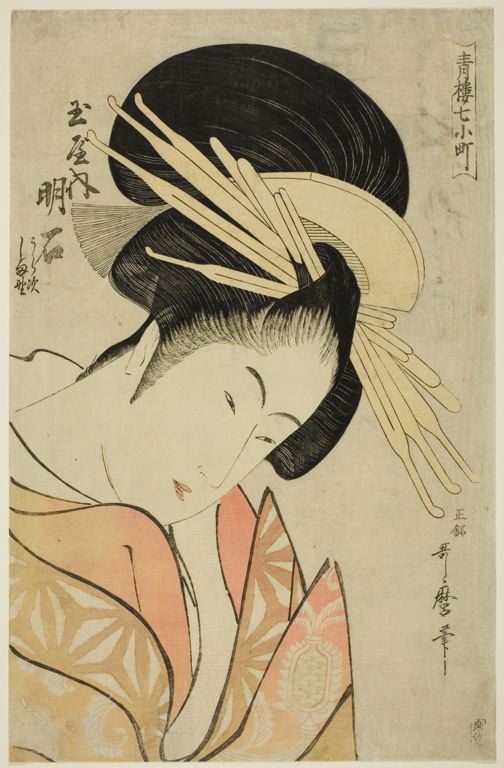
Akashi of the Tamaya, from the series Seven Komachis of Yoshiwara (Seiro nana Komachi) (Tamaya uchi Akashi, Uraji, Shimano)
Woodblock print
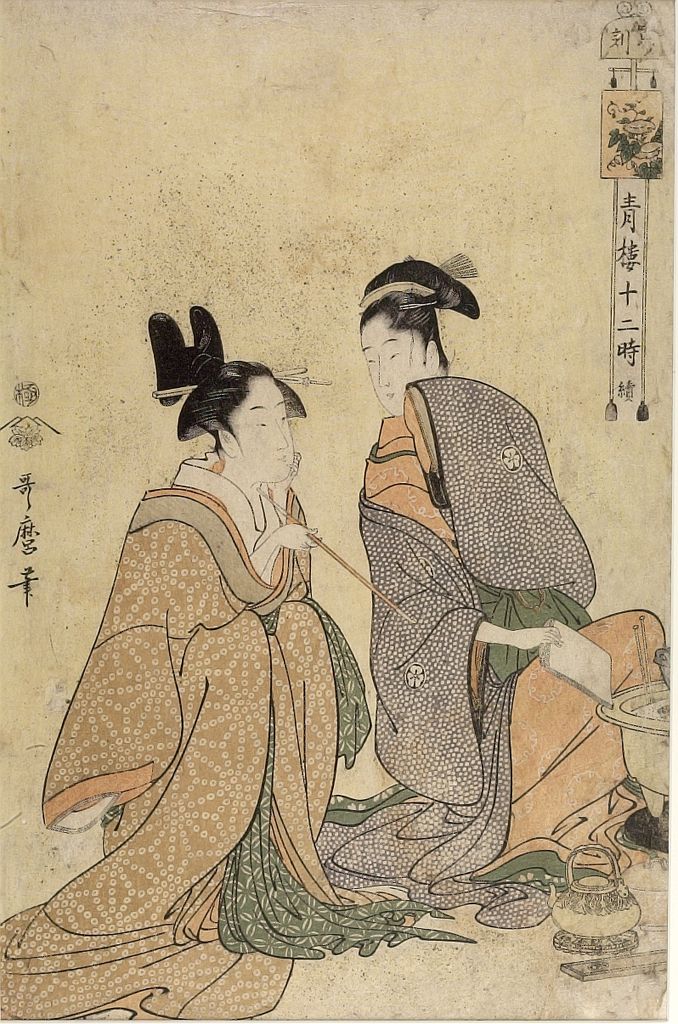
Hour of the Tiger (Tora no koku = 4 AM) from the series Twelve Hours in Yoshiwara (Seirô jûni toki tsuzuki), Late Edo period, circa 1794
Woodblock print
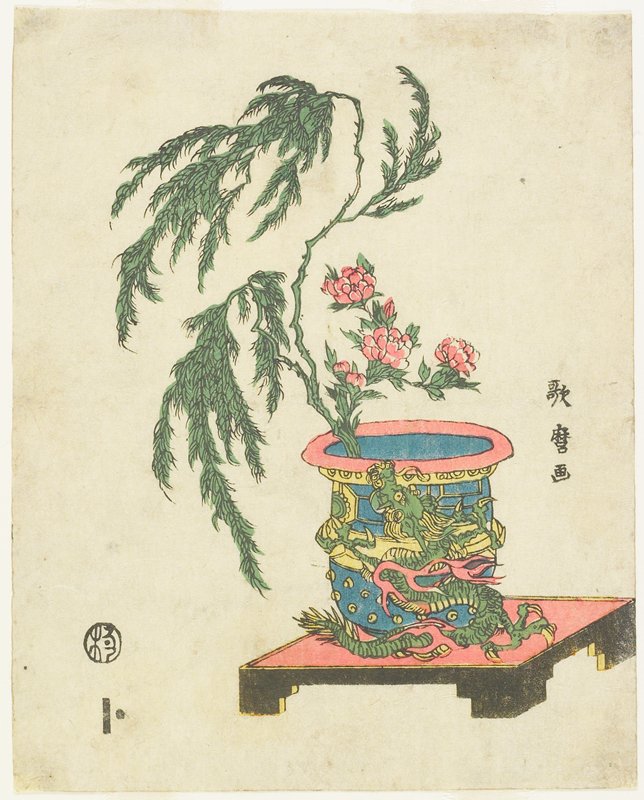
Ikebana arrangement of Peony and Willow in Dragon Pot
1781–1806
Woodblock print (nishiki-e), ink and color on paper
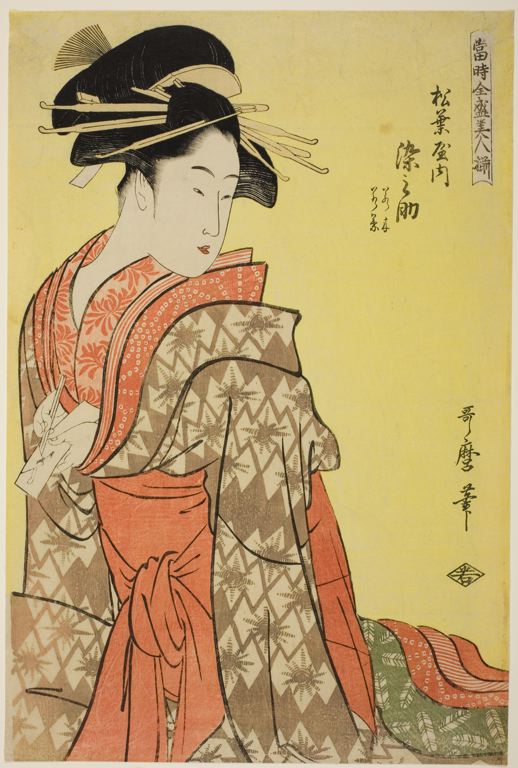
The Greatest Beauties of Our Time (Toji zensei bijin zoroe): Somenosuke of the Matsubaya with Attendants Wakagi and Wakaba
Woodblock print
Frequently Asked Questions
The Habit of Boisterousness (Sawagashiki kuse), from the series "Seven Bad Habits (Nakute nana kuse)" was created by Kitagawa Utamaro (喜多川歌麿) in c. 1797.