![The Hour of the Horse [noon]: Shrine Maiden (Uma no koku, miko), from the series A Clock of the Customs of Beauties (Fūzoku bijin tokei) by Kitagawa Utamaro — Japanese Woodblock print (nishiki-e); ink and color on paper, c. 1798-1799 (Kansei 10-11)](https://www.artic.edu/iiif/2/c68ead89-856e-7be2-1d3e-5b195621fab0/full/843,/0/default.jpg)
The Hour of the Horse [noon]: Shrine Maiden (Uma no koku, miko), from the series A Clock of the Customs of Beauties (Fūzoku bijin tokei)
- Date:
- c. 1798-1799 (Kansei 10-11)
- Medium:
- Woodblock print (nishiki-e); ink and color on paper
- Source:
- Art Institute of Chicago
Description
A shrine maiden in a pale pink robe patterned with bamboo leaves stands at right, a red under-layer showing at the collar and a large white hood-like headdress framing her face; she holds a long wand hung with folded white paper strips (gohei) over her shoulder. Beside her a young attendant in a green robe and black eboshi-style cap holds a gold-ornamented staff or sword hilt tied with red cord. Set against a plain warm-grey background, the print includes a title cartouche and vertical text at upper left; the palette is limited to soft pink, green, red, black, and white.
More Prints by Kitagawa Utamaro
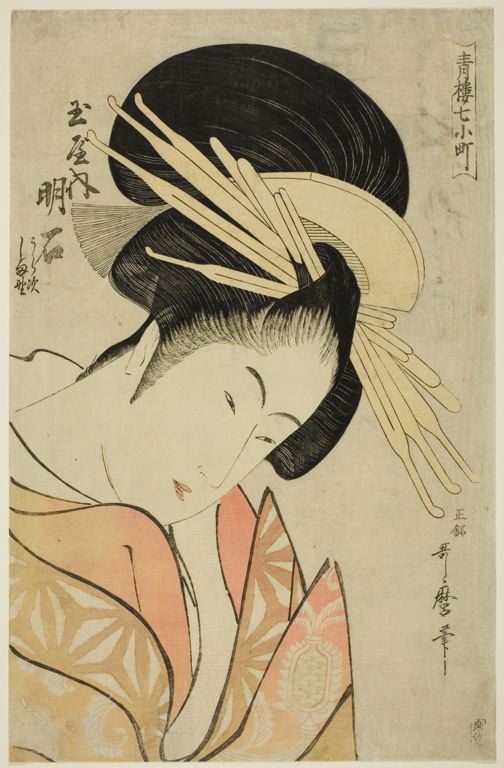
Akashi of the Tamaya, from the series Seven Komachis of Yoshiwara (Seiro nana Komachi) (Tamaya uchi Akashi, Uraji, Shimano)
Woodblock print
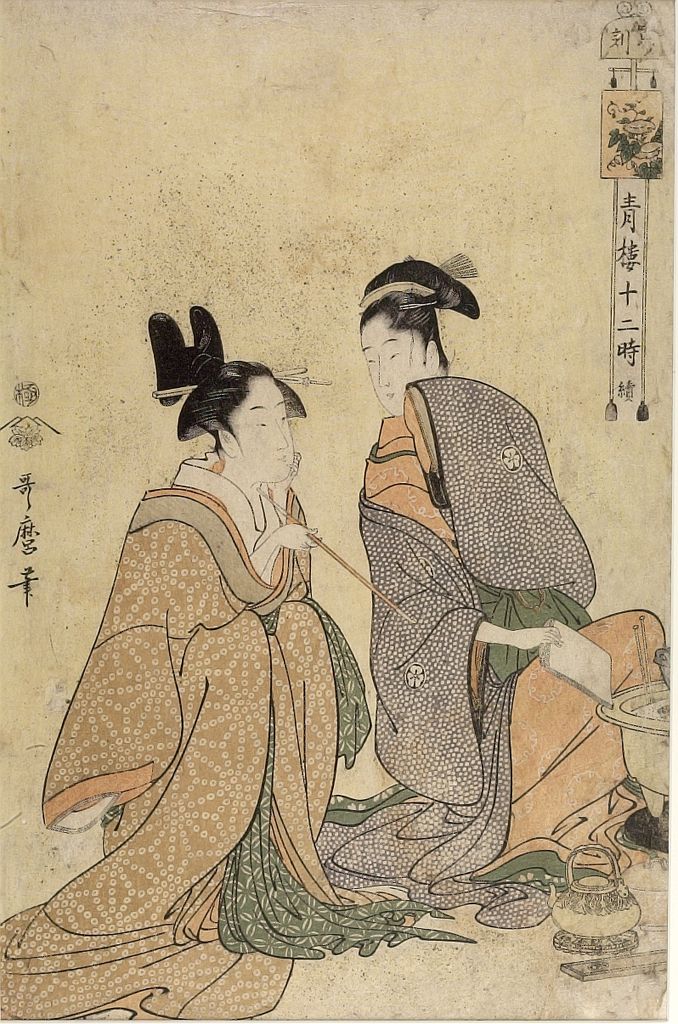
Hour of the Tiger (Tora no koku = 4 AM) from the series Twelve Hours in Yoshiwara (Seirô jûni toki tsuzuki), Late Edo period, circa 1794
Woodblock print
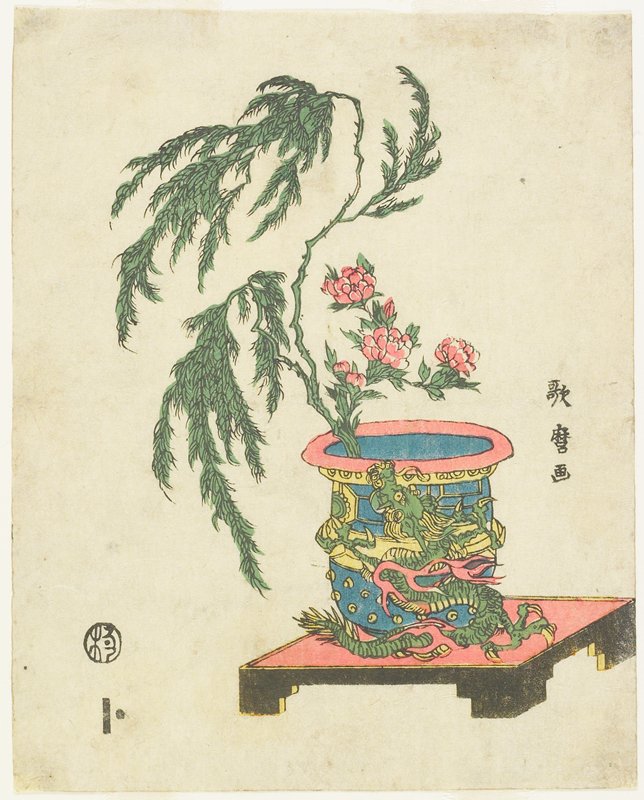
Ikebana arrangement of Peony and Willow in Dragon Pot
1781–1806
Woodblock print (nishiki-e), ink and color on paper
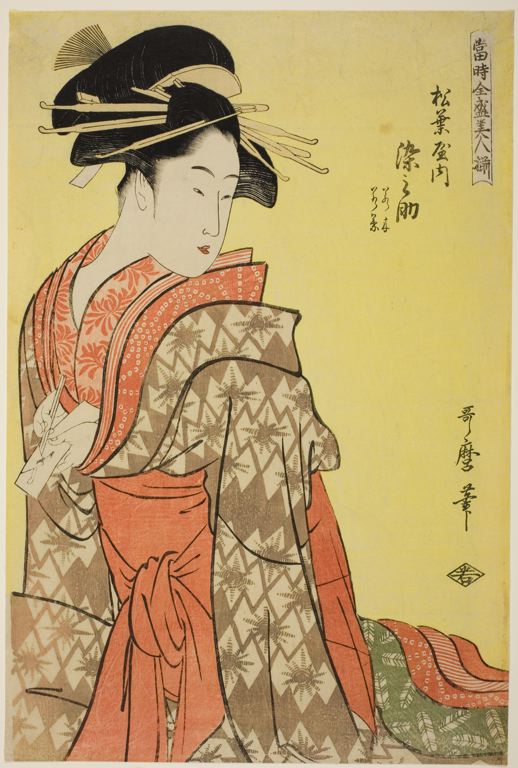
The Greatest Beauties of Our Time (Toji zensei bijin zoroe): Somenosuke of the Matsubaya with Attendants Wakagi and Wakaba
Woodblock print
Frequently Asked Questions
The Hour of the Horse [noon]: Shrine Maiden (Uma no koku, miko), from the series A Clock of the Customs of Beauties (Fūzoku bijin tokei) was created by Kitagawa Utamaro (喜多川歌麿) in c. 1798-1799 (Kansei 10-11).