
The Nakadaya teahouse
- Date:
- c. 1794/95
- Medium:
- Color woodblock print; oban
- Source:
- Art Institute of Chicago
Description
Kitagawa Utamaro's The Nakadaya teahouse, a print of 1789 held by the Art Institute of Chicago (artwork 23853), depicts a real Edo establishment, the Nakadaya, one of the well-known waterside teahouses on the route to Yoshiwara and along the Sumida River. Edo teahouses functioned as crucial nodes in the social geography of the city: they hosted assignations, refreshment stops for travelers and pleasure-quarter clients, and informal gatherings, and their best-known waitresses became celebrities in their own right, frequently celebrated in ukiyo-e. Utamaro's Edo bijin-ga repeatedly attended to such teahouse women, treating them as named subjects on a par with Yoshiwara courtesans, and he played a central role in turning waitresses such as Naniwaya Okita and Takashima Ohisa into the recognizable celebrities of the print market. The Nakadaya teahouse design participates in this broader Utamaro project, identifying its setting and presumably showing a representative scene of the establishment's clientele or staff. By tying the figural composition to a specific named location, the print sits at the intersection of bijin-ga and meisho-e, place-specific imagery, asking the viewer to enjoy both the women shown and the recognized geography of the city. Stylistically the work belongs to Utamaro's late 1780s production, with the controlled keyblock line and nishiki-e palette of the period. The Art Institute of Chicago's holding preserves the print as documentary as well as artistic evidence: it contributes to the visual record of Edo's teahouse culture in the year of the French Revolution, when the Nakadaya itself was a fixture of the city's leisure economy. The print is a useful reference for the wider place of teahouses in ukiyo-e culture.
More Prints by Kitagawa Utamaro
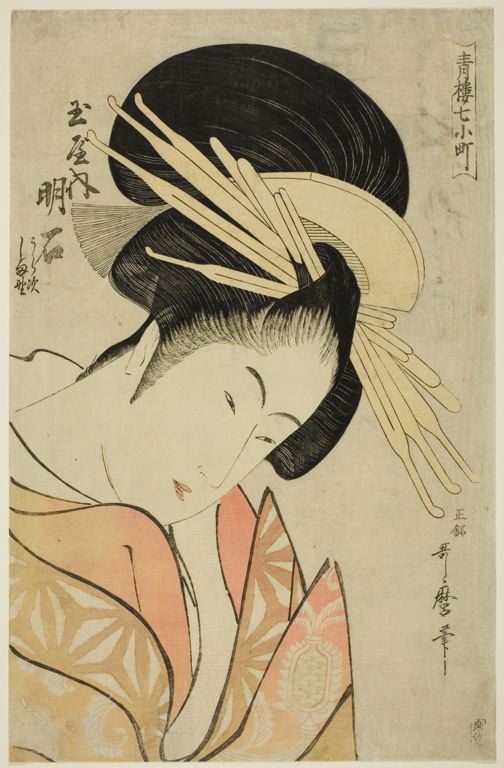
Akashi of the Tamaya, from the series Seven Komachis of Yoshiwara (Seiro nana Komachi) (Tamaya uchi Akashi, Uraji, Shimano)
Woodblock print
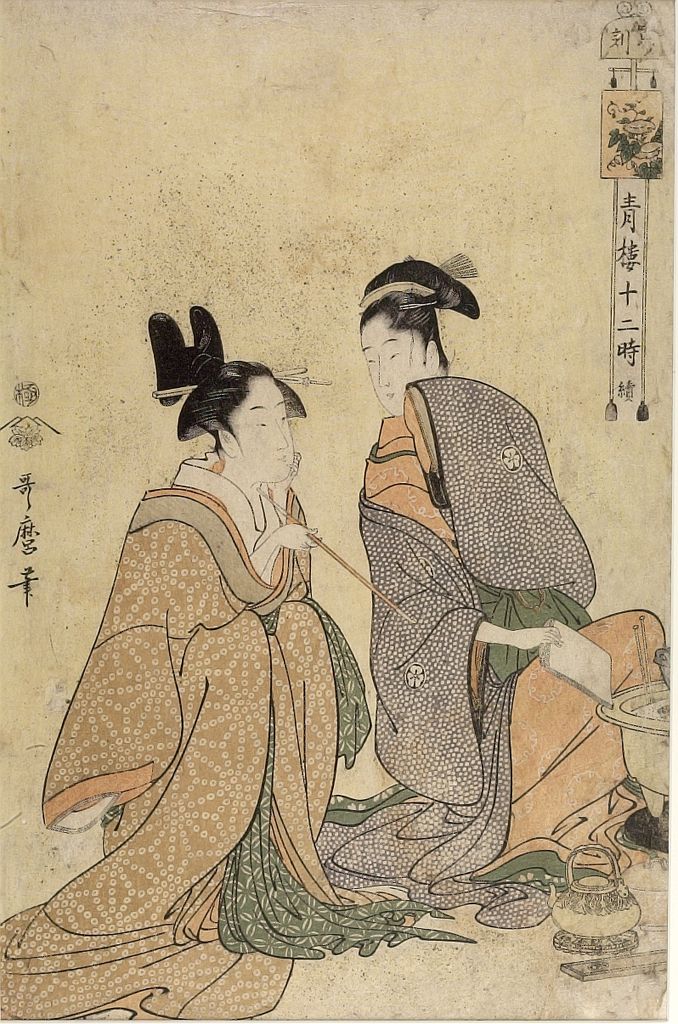
Hour of the Tiger (Tora no koku = 4 AM) from the series Twelve Hours in Yoshiwara (Seirô jûni toki tsuzuki), Late Edo period, circa 1794
Woodblock print
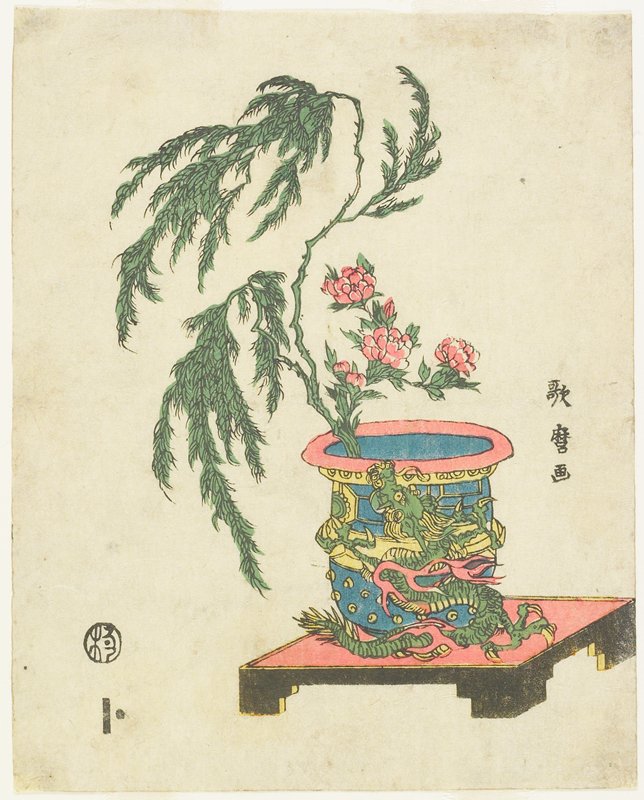
Ikebana arrangement of Peony and Willow in Dragon Pot
1781–1806
Woodblock print (nishiki-e), ink and color on paper
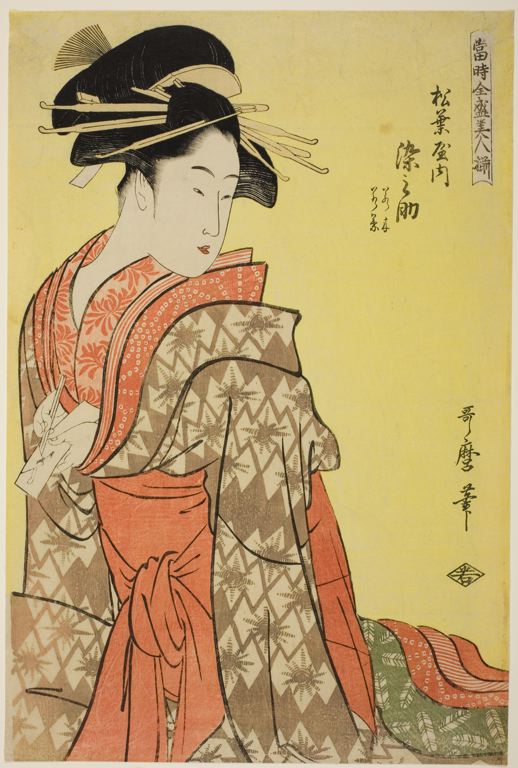
The Greatest Beauties of Our Time (Toji zensei bijin zoroe): Somenosuke of the Matsubaya with Attendants Wakagi and Wakaba
Woodblock print
Frequently Asked Questions
The Nakadaya teahouse was created by Kitagawa Utamaro (喜多川歌麿) in c. 1794/95.