
The Ninth Month, from the series Five Amorous Festivals of Love (Aibore iro no gosekku)
- Date:
- 1801
- Medium:
- Color woodblock print; oban
- Source:
- Art Institute of Chicago
Description
The Ninth Month, from Kitagawa Utamaro's c. 1796 series Five Amorous Festivals of Love (Aibore iro no gosekku) and held by the Art Institute of Chicago, transposes the traditional gosekku, the five seasonal festivals of the lunar calendar, into the amorous idiom of Edo bijin-ga. Where the standard gosekku links each festival to a specific plant (peach in the third month, iris in the fifth, chrysanthemum in the ninth), Utamaro reroutes the calendar through romantic encounter, making each sheet a study in mood as well as season. The Ninth Month corresponds to Choyo, the chrysanthemum festival, a day of longevity wishes; in the print this is filtered through a private domestic scene of figures whose attire, props, and gesture allude to the chrysanthemum motif without explicit ritual. Utamaro's ukiyo-e maturity is evident in the soft modeling of faces, the carefully calibrated kimono patterns, and the way emotional weight is concentrated in shoulders and hands. The series exemplifies his late-1790s tendency to braid classical poetic schemata with the lived emotional textures of contemporary Edo women.
More Prints by Kitagawa Utamaro
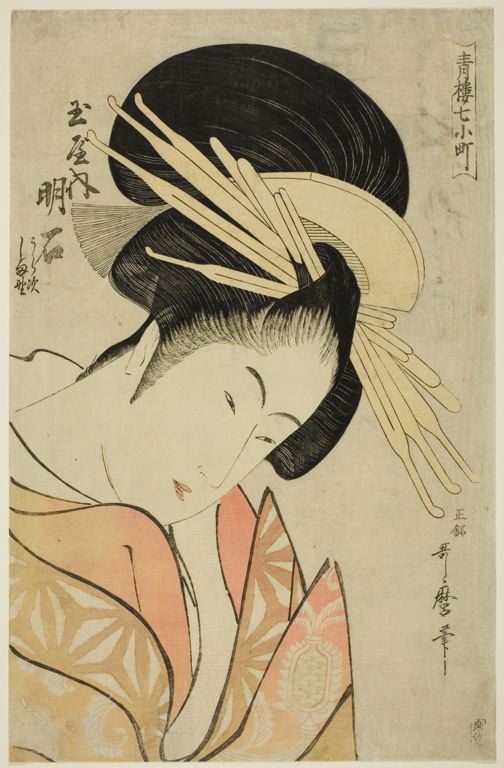
Akashi of the Tamaya, from the series Seven Komachis of Yoshiwara (Seiro nana Komachi) (Tamaya uchi Akashi, Uraji, Shimano)
Woodblock print
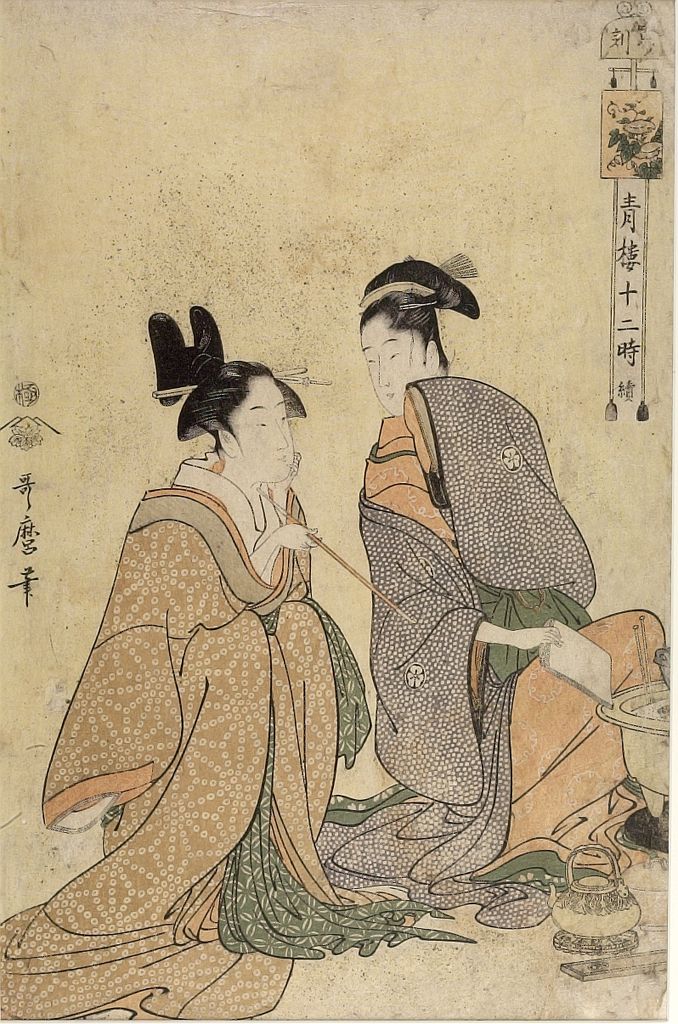
Hour of the Tiger (Tora no koku = 4 AM) from the series Twelve Hours in Yoshiwara (Seirô jûni toki tsuzuki), Late Edo period, circa 1794
Woodblock print
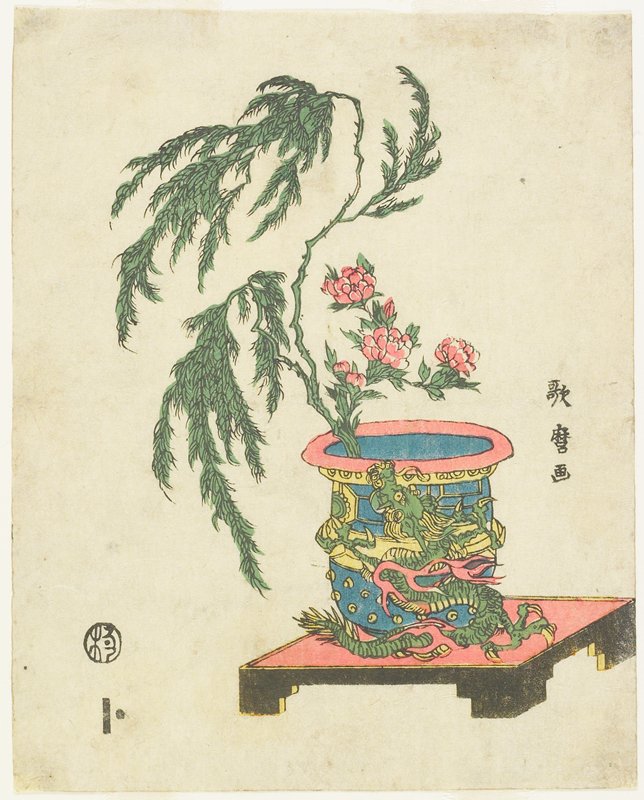
Ikebana arrangement of Peony and Willow in Dragon Pot
1781–1806
Woodblock print (nishiki-e), ink and color on paper
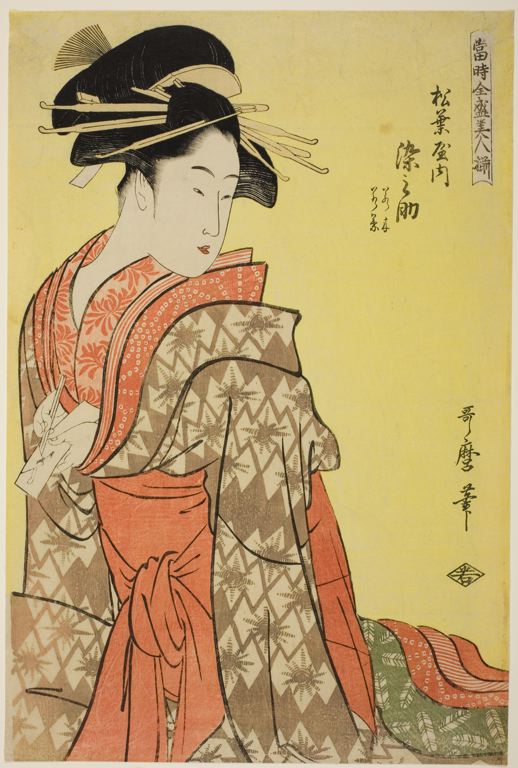
The Greatest Beauties of Our Time (Toji zensei bijin zoroe): Somenosuke of the Matsubaya with Attendants Wakagi and Wakaba
Woodblock print
Frequently Asked Questions
The Ninth Month, from the series Five Amorous Festivals of Love (Aibore iro no gosekku) was created by Kitagawa Utamaro (喜多川歌麿) in 1801.