Three Courtesans
- Medium:
- Center panel from an ukiyo-e woodblock-printed "ōban" triptych; ink and color on paper
- Source:
- Harvard Art Museums
Description
Three Courtesans is a woodblock print after Kitagawa Utamaro (c. 1753-1806), the Edo bijin-ga master whose group compositions helped define ukiyo-e portraiture at the turn of the nineteenth century. The sheet, held by the Harvard Art Museums (object 30369), assembles three women of the licensed Yoshiwara pleasure quarter into a single image, allowing Utamaro to play their bearing, costume, and expression off one another within a unified design. Group portraits of courtesans were a staple of his late career, used both to celebrate the famed beauties of particular houses and to package the spectacle of the quarter for buyers across the city. Utamaro typically distinguishes figures in such prints by subtle adjustments rather than caricature, varying the tilt of a head, the height of a coiffure, the elaboration of a sash, or the placement of a hand to give each woman a distinct rhythm. The kimono on display would have been read as a vocabulary of seasonal motifs and luxury fabrics, signaling rank and house affiliation to Edo viewers fluent in the quarter's codes. By placing the women close together, the composition emphasizes the social fact that courtesans rarely moved alone, traveling in retinues with attendants and peers and presenting themselves as part of a tableau. As a reproduction or later impression, the print preserves Utamaro's design rather than the freshest first state, but it still demonstrates his command of the multi-figure bijin-ga and his interest in the courtesan world as both subject and market. It belongs to the broader corpus that made him synonymous with the genre.
More Prints by Kitagawa Utamaro
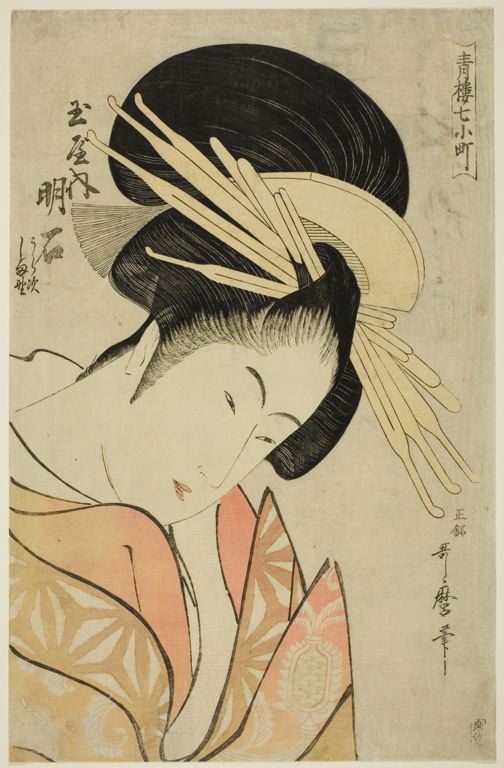
Akashi of the Tamaya, from the series Seven Komachis of Yoshiwara (Seiro nana Komachi) (Tamaya uchi Akashi, Uraji, Shimano)
Woodblock print
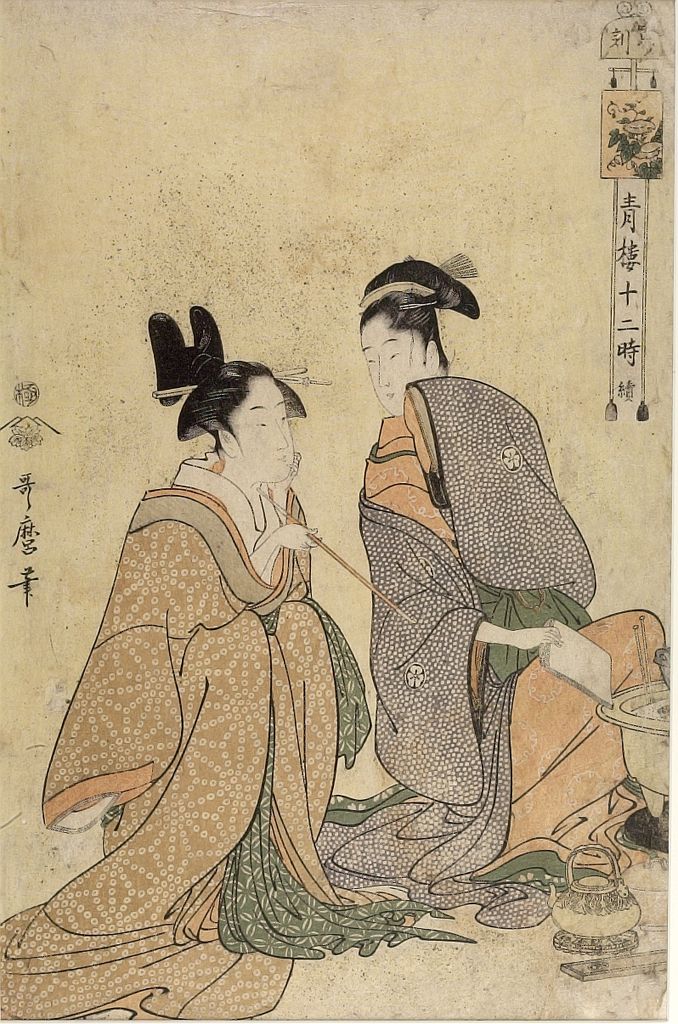
Hour of the Tiger (Tora no koku = 4 AM) from the series Twelve Hours in Yoshiwara (Seirô jûni toki tsuzuki), Late Edo period, circa 1794
Woodblock print
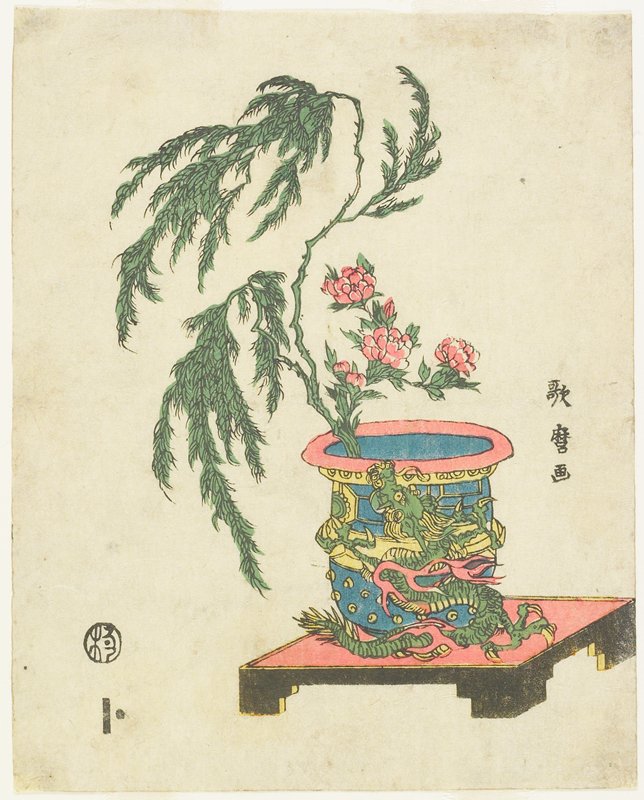
Ikebana arrangement of Peony and Willow in Dragon Pot
1781–1806
Woodblock print (nishiki-e), ink and color on paper
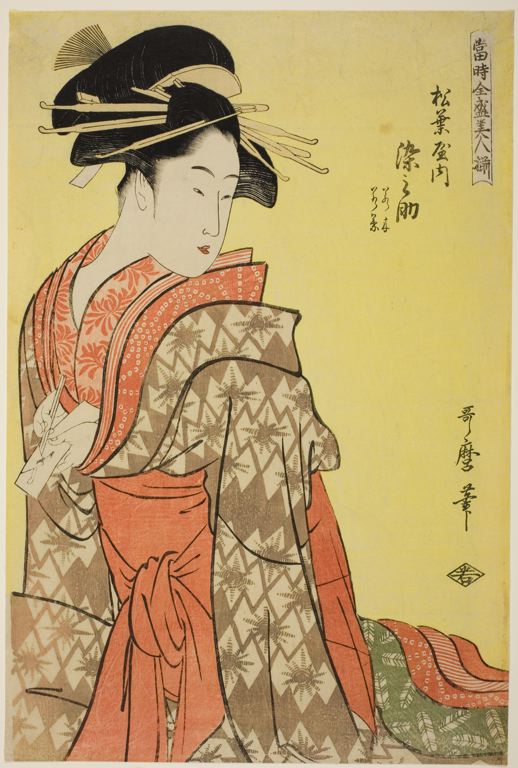
The Greatest Beauties of Our Time (Toji zensei bijin zoroe): Somenosuke of the Matsubaya with Attendants Wakagi and Wakaba
Woodblock print
Frequently Asked Questions
Three Courtesans was created by Kitagawa Utamaro (喜多川歌麿).