Three Women
- Medium:
- Ukiyo-e woodblock print in "ōban" format; ink and color on paper, with printed signature reading "_"
- Source:
- Harvard Art Museums
Description
Kitagawa Utamaro's ukiyo-e print Three Women distills the artist's signature Edo bijin-ga into a tight grouping of figures that lets him explore variations of posture, mood, and costume within a single sheet. Utamaro made his name as the supreme observer of the Yoshiwara pleasure quarter and adjacent urban worlds, where leading courtesans, teahouse hostesses, and townswomen all became subjects of compositions that combined commercial portraiture with quiet psychological insight. In this design the three women are arranged so that their bodies overlap and their gazes diverge, creating an internal conversation that the viewer feels invited to overhear. The artist's familiar drawing devices, the elongated necks, the long oval faces with slightly down-tilted eyes, the calligraphic outline of fingers and hairlines, all serve to flatter while also individualizing his subjects. Patterned textiles printed in carefully separated blocks supply visual energy, set against passages of unprinted paper that let the women's pale faces draw the eye. The composition demonstrates why Utamaro's prints rose above the workshop competition of late eighteenth-century Edo: they offered both ornament and intimacy, both fashion plate and character study. The Harvard Art Museums preserves this impression (object 208349), where it sits among the institution's strong holdings of Utamaro bijin-ga.
More Prints by Kitagawa Utamaro
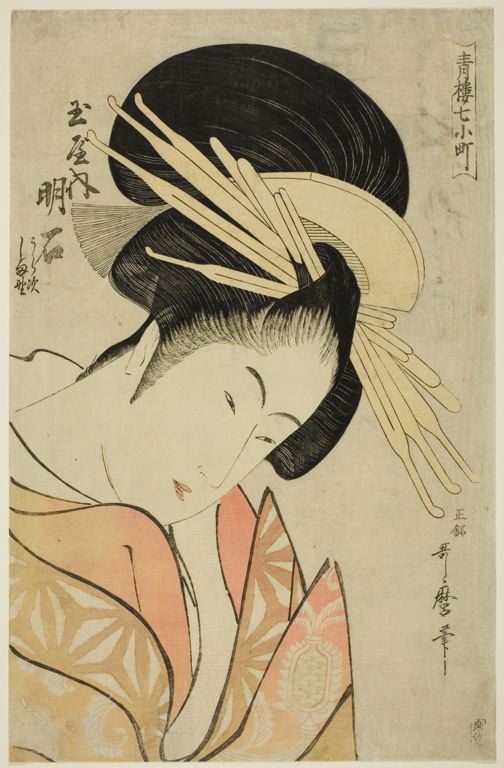
Akashi of the Tamaya, from the series Seven Komachis of Yoshiwara (Seiro nana Komachi) (Tamaya uchi Akashi, Uraji, Shimano)
Woodblock print
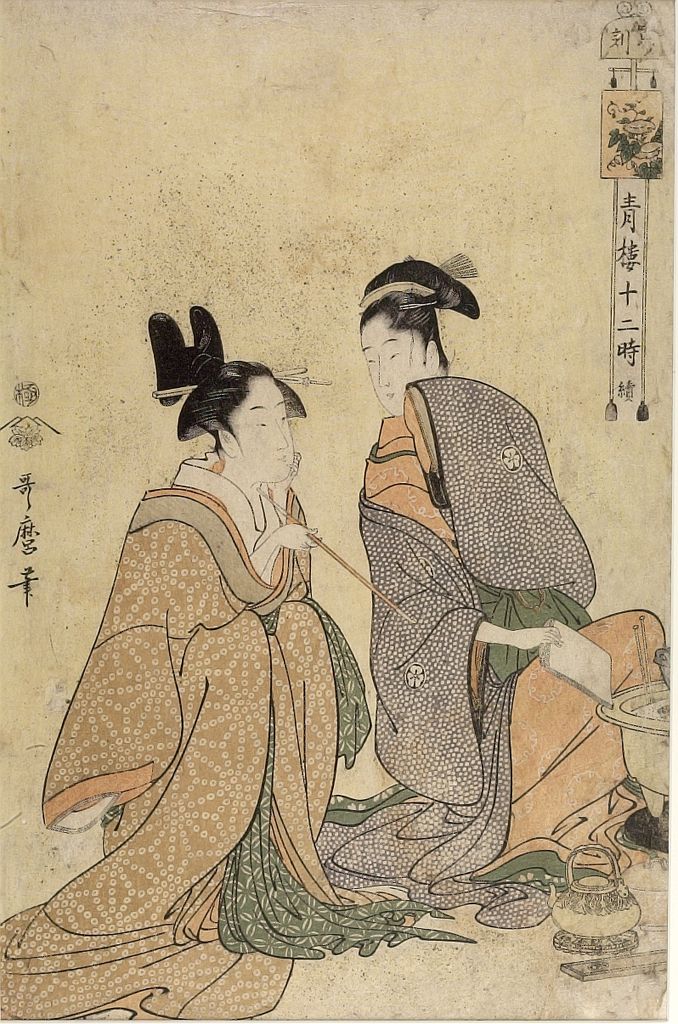
Hour of the Tiger (Tora no koku = 4 AM) from the series Twelve Hours in Yoshiwara (Seirô jûni toki tsuzuki), Late Edo period, circa 1794
Woodblock print
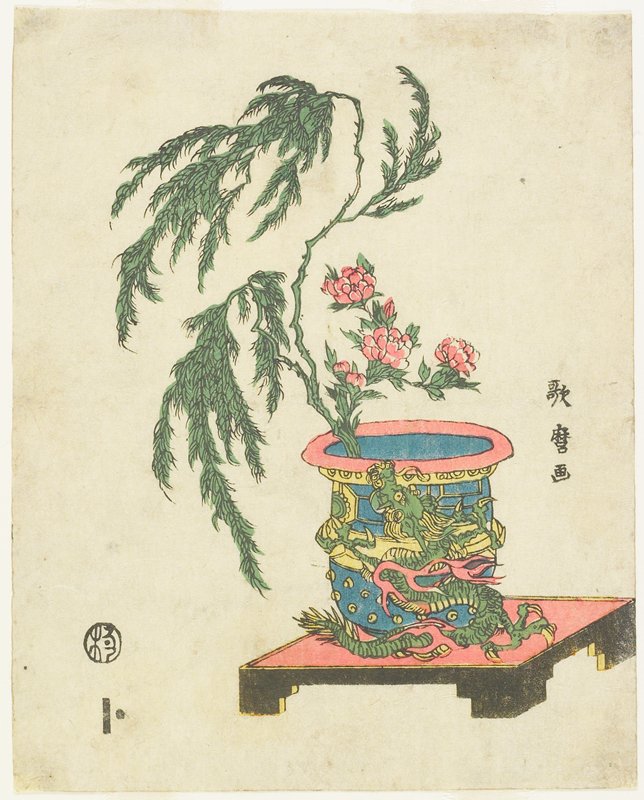
Ikebana arrangement of Peony and Willow in Dragon Pot
1781–1806
Woodblock print (nishiki-e), ink and color on paper
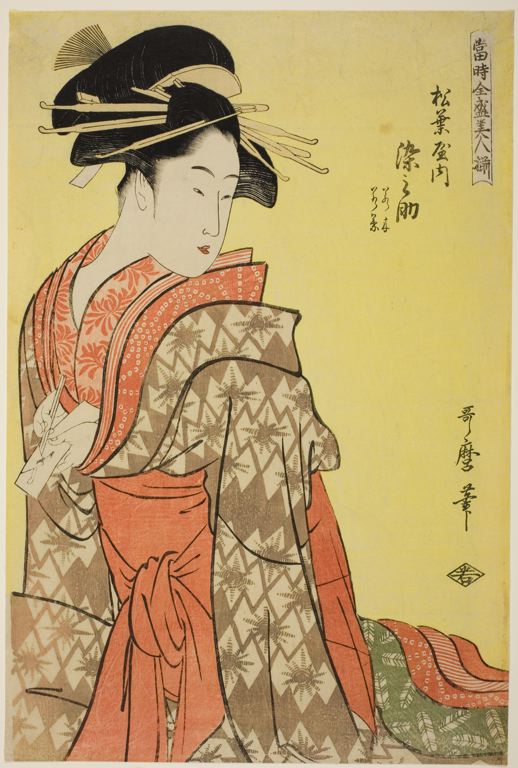
The Greatest Beauties of Our Time (Toji zensei bijin zoroe): Somenosuke of the Matsubaya with Attendants Wakagi and Wakaba
Woodblock print
Frequently Asked Questions
Three Women was created by Kitagawa Utamaro (喜多川歌麿).