Three Women Walking
- Date:
- 19th century
- Medium:
- Ukiyo-e woodblock print in "ōban" format; ink and color on paper, with printed signature reading "Utamaro hitsu"
- Source:
- Harvard Art Museums
Description
Three Women Walking is a Kitagawa Utamaro design at the Harvard Art Museums showing a closely grouped trio of female figures moving across the sheet. Compositions of two or three beauties in motion were a recurring vehicle within Edo bijin-ga for Utamaro's exploration of bodily relation - how figures lean, glance and pass close to one another. Here the three women, possibly courtesans with an attendant or fashionable townswomen on a seasonal outing, are arranged so that their bodies overlap in graceful diagonals. Utamaro's draftsmanship uses long unbroken outlines to define their robes, while small adjustments in head angle and gaze suggest conversation and inner thought. Patterned kimonos in the carefully separated colours of nishiki-e printing identify each figure's status and taste, and the open background concentrates attention on silhouette and gesture. Such prints functioned both as fashion plates and as portraits of an idealised modern femininity that Utamaro did more than any other ukiyo-e designer to define. Their popularity helped to drive the late eighteenth-century print market and to elevate bijin-ga to a position of cultural importance alongside actor prints. As preserved at the Harvard Art Museums, Three Women Walking offers an accessible example of Utamaro's mature group composition, in which the spaces between bodies become as expressive as the figures themselves.
More Prints by Kitagawa Utamaro
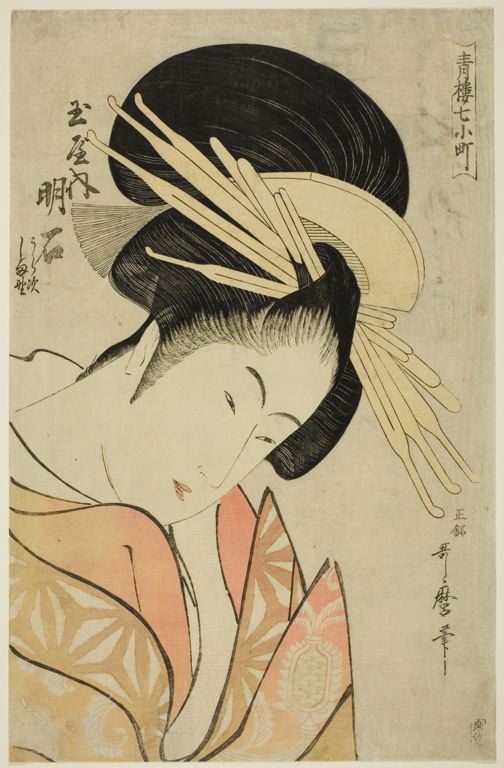
Akashi of the Tamaya, from the series Seven Komachis of Yoshiwara (Seiro nana Komachi) (Tamaya uchi Akashi, Uraji, Shimano)
Woodblock print
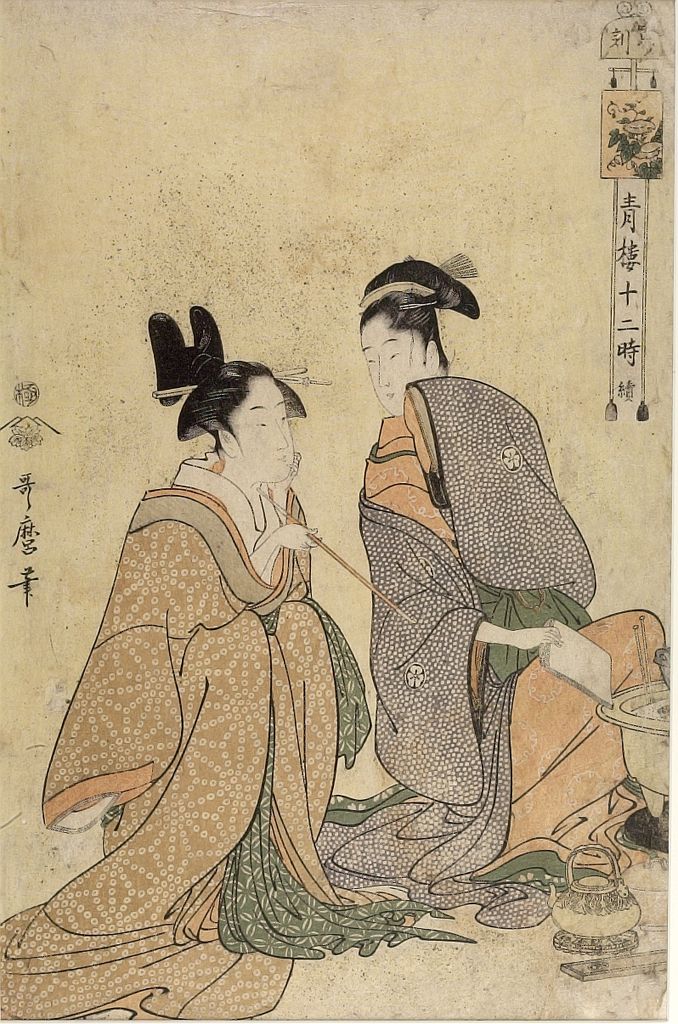
Hour of the Tiger (Tora no koku = 4 AM) from the series Twelve Hours in Yoshiwara (Seirô jûni toki tsuzuki), Late Edo period, circa 1794
Woodblock print
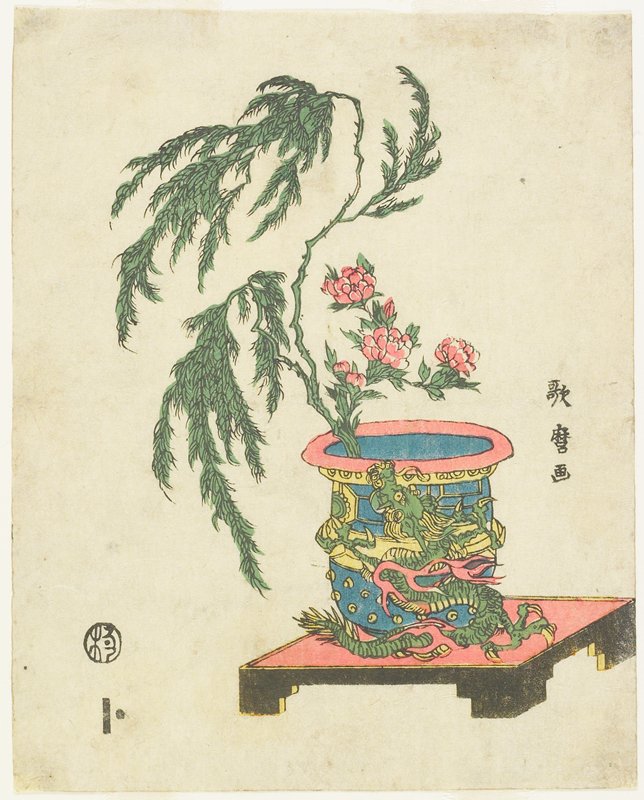
Ikebana arrangement of Peony and Willow in Dragon Pot
1781–1806
Woodblock print (nishiki-e), ink and color on paper
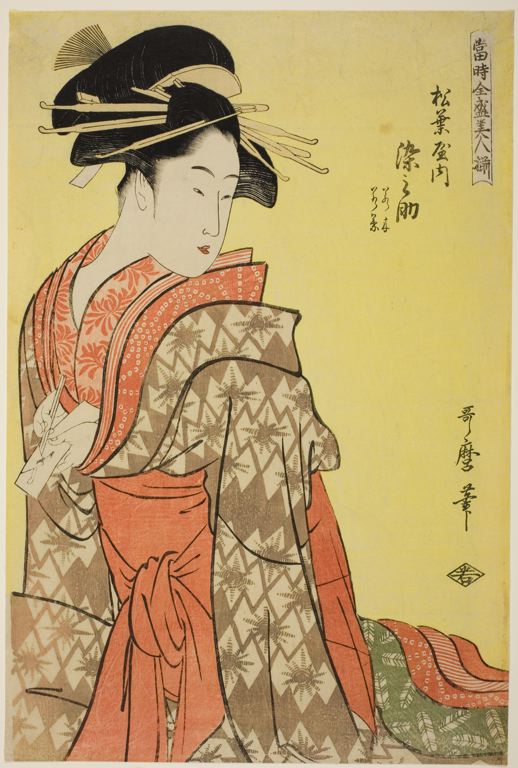
The Greatest Beauties of Our Time (Toji zensei bijin zoroe): Somenosuke of the Matsubaya with Attendants Wakagi and Wakaba
Woodblock print
Frequently Asked Questions
Three Women Walking was created by Kitagawa Utamaro (喜多川歌麿) in 19th century.