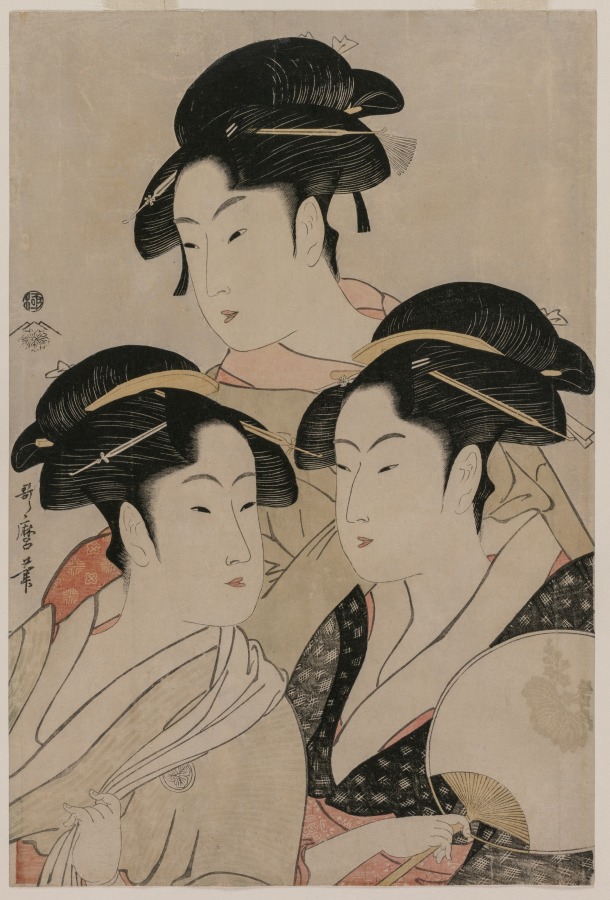
Tomimoto Toyohina, Takashimaya Ohisa, and Naniwaya Okita
- Date:
- c. 1794
- Medium:
- color woodblock print
- Source:
- Cleveland Museum of Art
Description
Tomimoto Toyohina, Takashimaya Ohisa, and Naniwaya Okita brings together three of the most famous beauties of late-eighteenth-century Edo in a single sheet by Kitagawa Utamaro, dated 1789 and held by the Cleveland Museum of Art. The trio formed an unofficial canon of Edo bijin-ga celebrities: Toyohina, a geisha and accomplished performer of tomimoto-bushi narrative music; Ohisa, the daughter of a Ryogoku senbei shop; and Okita, the teenage server at the Naniwaya teahouse. Each was independently the subject of dozens of single-figure portraits by Utamaro and his contemporaries; assembling all three on one print turned the work into a kind of all-star portrait, comparable to a modern celebrity group photograph. Utamaro arranges them with subtle distinctions in coiffure, kimono pattern, and gesture so that careful viewers could recognize each woman without inscription. The composition is paradigmatic of his ukiyo-e celebrity culture: rather than idealized types, three named townswomen are honored with the visual treatment once reserved for legendary heroines, demonstrating how the print medium produced and circulated fame in the urban Edo of the Kansei era.
More Prints by Kitagawa Utamaro
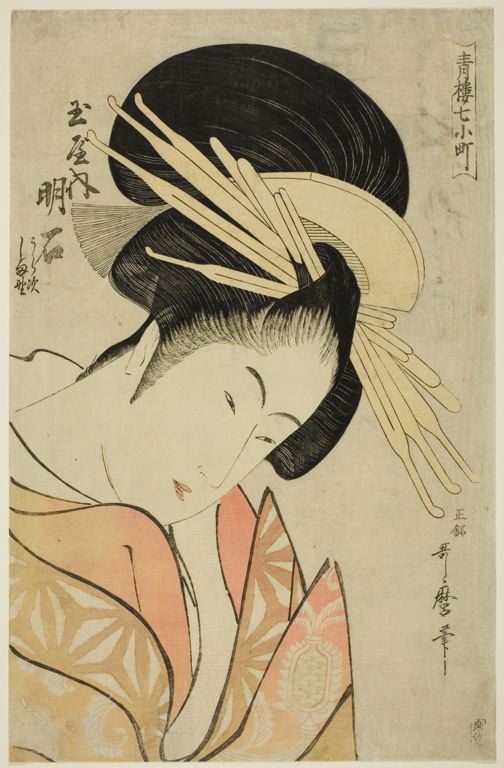
Akashi of the Tamaya, from the series Seven Komachis of Yoshiwara (Seiro nana Komachi) (Tamaya uchi Akashi, Uraji, Shimano)
Woodblock print
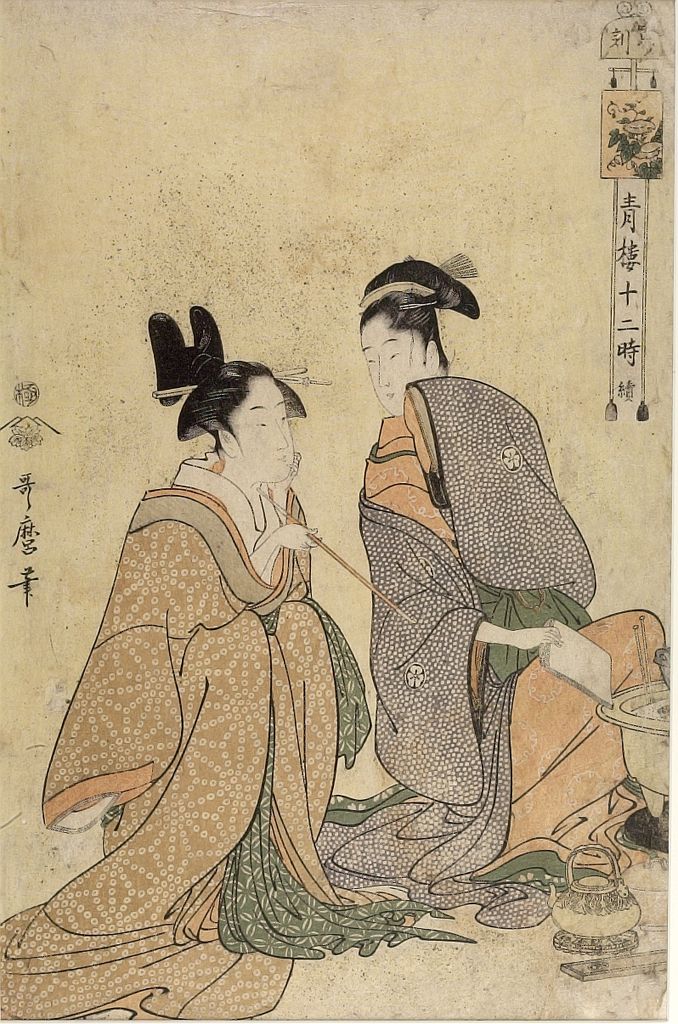
Hour of the Tiger (Tora no koku = 4 AM) from the series Twelve Hours in Yoshiwara (Seirô jûni toki tsuzuki), Late Edo period, circa 1794
Woodblock print
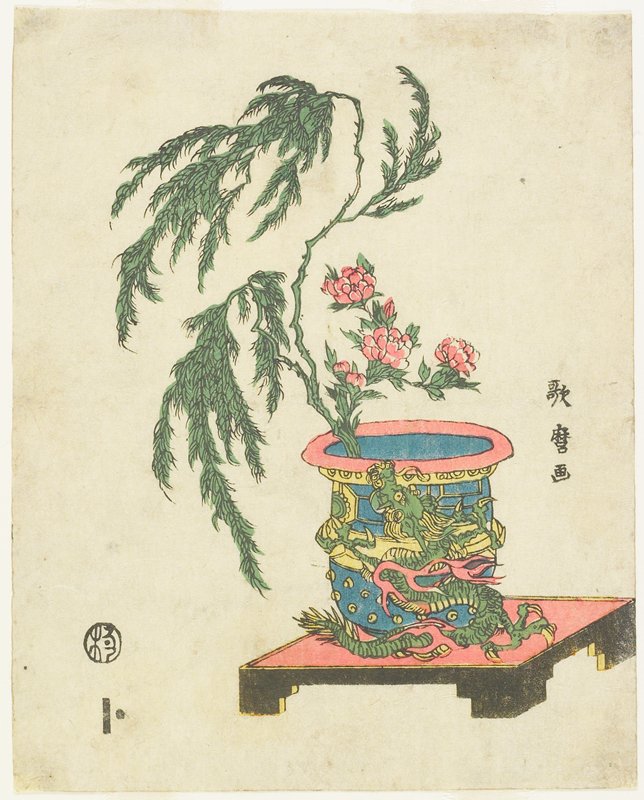
Ikebana arrangement of Peony and Willow in Dragon Pot
1781–1806
Woodblock print (nishiki-e), ink and color on paper
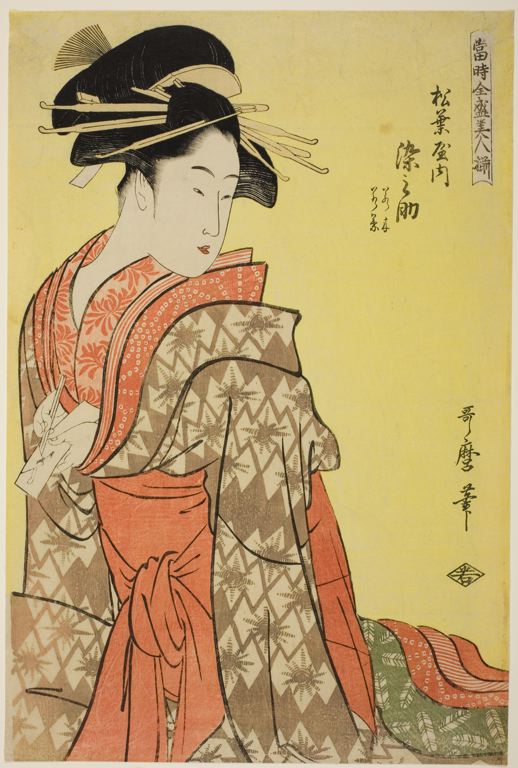
The Greatest Beauties of Our Time (Toji zensei bijin zoroe): Somenosuke of the Matsubaya with Attendants Wakagi and Wakaba
Woodblock print
Frequently Asked Questions
Tomimoto Toyohina, Takashimaya Ohisa, and Naniwaya Okita was created by Kitagawa Utamaro (喜多川歌麿) in c. 1794.