
Turning a Shamisen (Shamisen no nejime), from the series "Chanting to Shamisen by Young Women of Today (Tosei musume joruri)"
- Date:
- c. 1804/06
- Medium:
- Color woodblock print; oban
- Source:
- Art Institute of Chicago
Description
Turning a Shamisen (Shamisen no nejime), from the series Chanting to Shamisen by Young Women of Today (Tosei musume joruri), designed by Kitagawa Utamaro around 1799 and held by the Art Institute of Chicago, is a study in concentrated gesture. The series follows young women performing joruri, narrative song accompanied by shamisen, an activity that bridged amateur practice in respectable households and professional entertainment in the pleasure quarters. This sheet zooms in on the small but characteristic action of tuning, the slim fingers turning a peg while the head tilts to listen, an intimate moment in which the player is briefly absorbed away from any audience. Utamaro's bijin-ga manner is well suited to this kind of subject: the okubi-e proximity of head and shoulders to the picture plane lets him model the curve of the neck, the slight tension in the jaw, and the alertness in the eyes. The Edo bijin-ga genre had long depicted music-making, but Utamaro is unusual in attending to a preparatory, almost private gesture rather than a public performance. The printed surface balances the delicate pattern of the kimono with the precise linework of the instrument, the shamisen body itself a quiet anchor in the composition. For collectors of ukiyo-e prints and of Kitagawa Utamaro in particular, this Art Institute of Chicago impression illustrates how he could find a powerful image inside an action as small as tuning a string.
More Prints by Kitagawa Utamaro
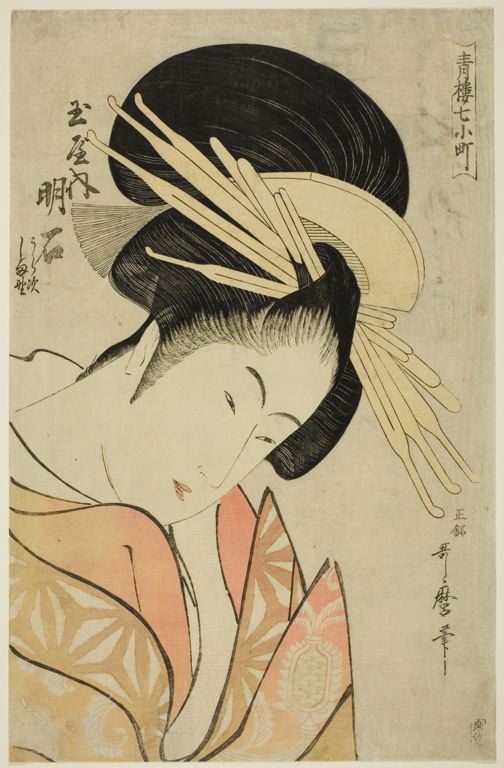
Akashi of the Tamaya, from the series Seven Komachis of Yoshiwara (Seiro nana Komachi) (Tamaya uchi Akashi, Uraji, Shimano)
Woodblock print
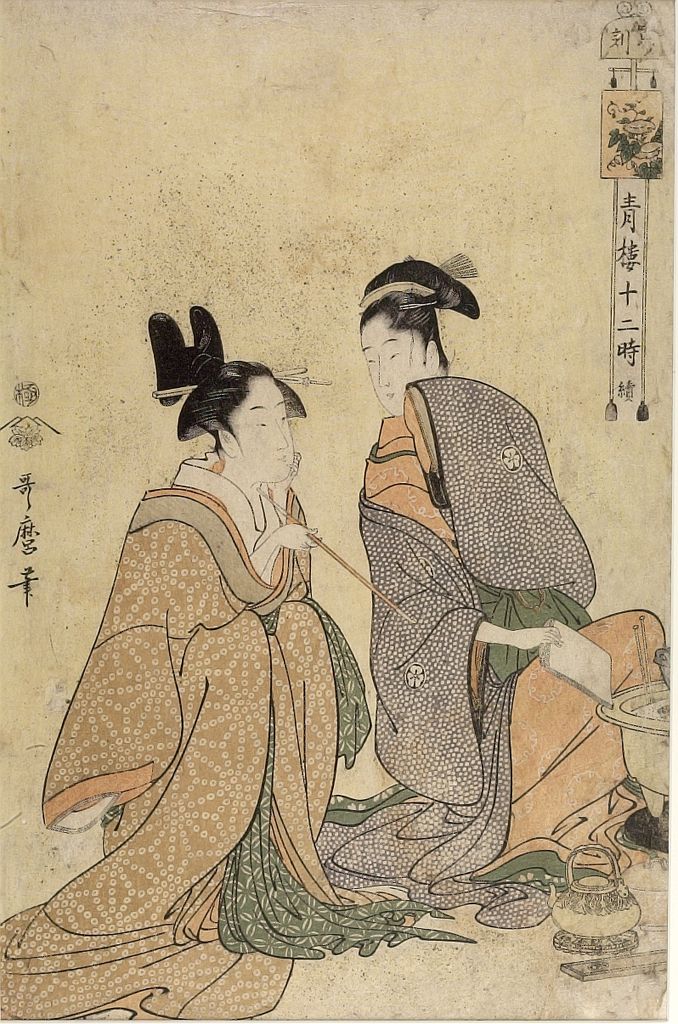
Hour of the Tiger (Tora no koku = 4 AM) from the series Twelve Hours in Yoshiwara (Seirô jûni toki tsuzuki), Late Edo period, circa 1794
Woodblock print
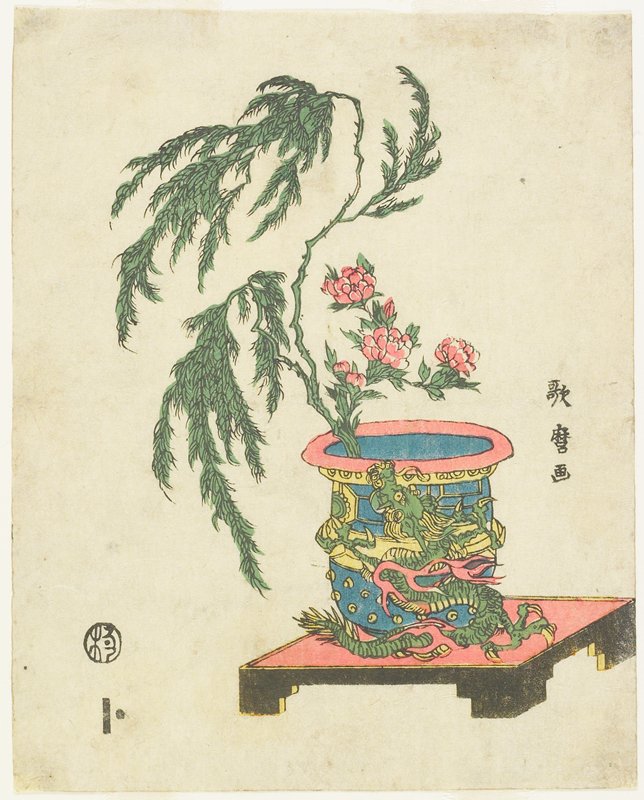
Ikebana arrangement of Peony and Willow in Dragon Pot
1781–1806
Woodblock print (nishiki-e), ink and color on paper
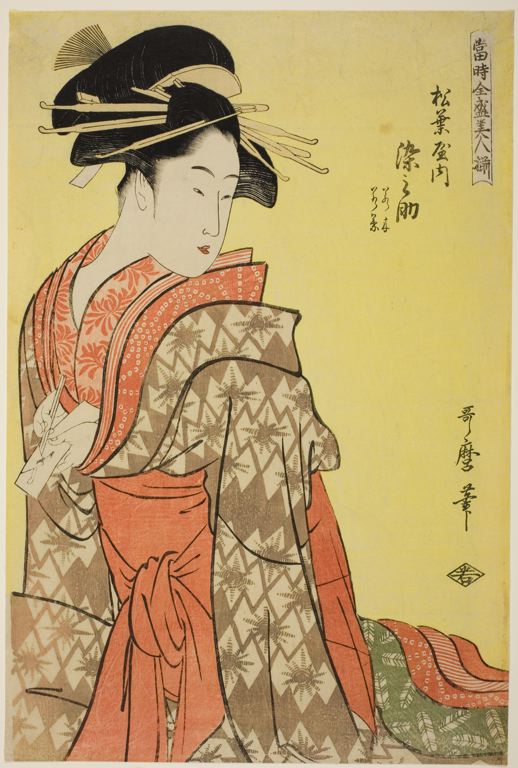
The Greatest Beauties of Our Time (Toji zensei bijin zoroe): Somenosuke of the Matsubaya with Attendants Wakagi and Wakaba
Woodblock print
Frequently Asked Questions
Turning a Shamisen (Shamisen no nejime), from the series "Chanting to Shamisen by Young Women of Today (Tosei musume joruri)" was created by Kitagawa Utamaro (喜多川歌麿) in c. 1804/06.