
Two Girls, from the series "Twelve Physiognomies of Beautiful Women Representing Views of Famous Places (Meisho fukei bijin juni so)"
- Date:
- c. 1803
- Medium:
- Color woodblock print; oban
- Source:
- Art Institute of Chicago
Description
Two Girls, from Kitagawa Utamaro's c. 1798 series Twelve Physiognomies of Beautiful Women Representing Views of Famous Places (Meisho fukei bijin juni so), is a sophisticated entry in his late ukiyo-e in which Edo bijin-ga is fused with meisho landscape tradition. Held by the Art Institute of Chicago, the series matches twelve famous Edo sites with twelve types of women, treating physiognomy and locale as parallel categories of connoisseurship. In this sheet two young women, perhaps of townswoman class, are seen in conversation or shared activity, their figures dominating the composition while a hint of place (a landmark detail, an inscribed cartouche, a glimpsed view) anchors them to a specific neighborhood. Utamaro's line is calligraphically supple, his color planes restrained, and his characteristically subtle modeling allows the differing temperaments of the two girls to register at a glance. The print is paradigmatic of his late-1790s practice, where the okubi-e portrait gives way to small ensembles of figures studied for their psychological and social interplay.
More Prints by Kitagawa Utamaro
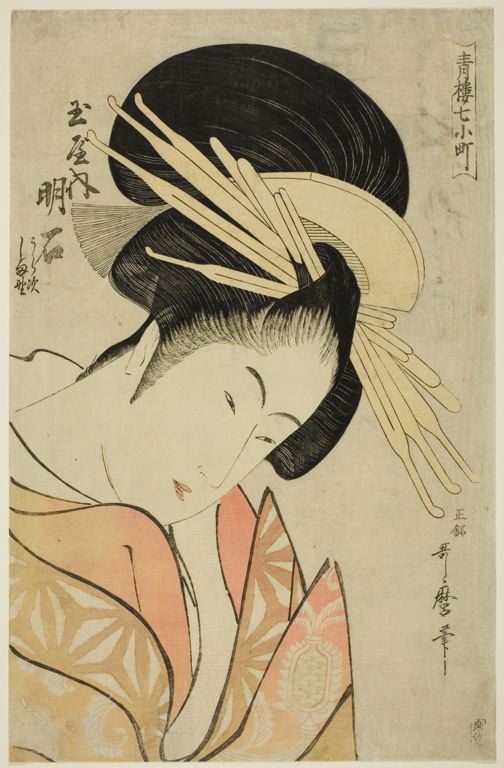
Akashi of the Tamaya, from the series Seven Komachis of Yoshiwara (Seiro nana Komachi) (Tamaya uchi Akashi, Uraji, Shimano)
Woodblock print
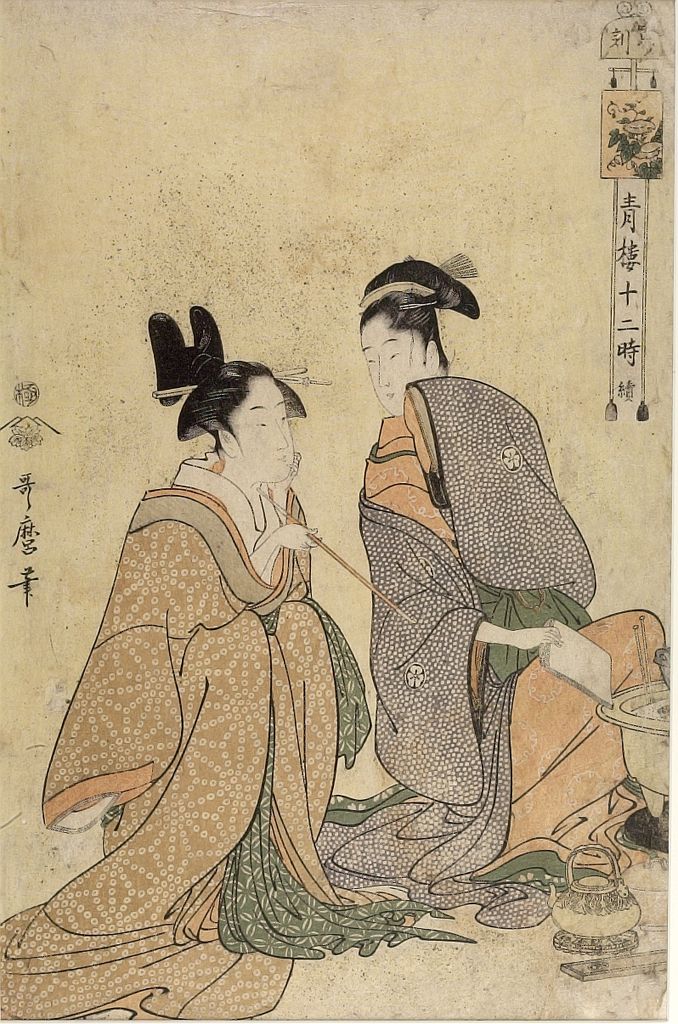
Hour of the Tiger (Tora no koku = 4 AM) from the series Twelve Hours in Yoshiwara (Seirô jûni toki tsuzuki), Late Edo period, circa 1794
Woodblock print
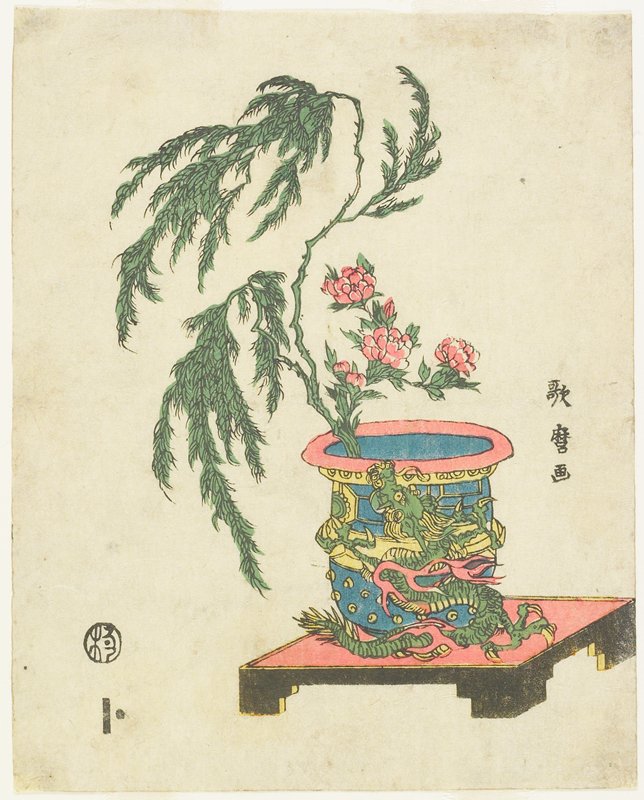
Ikebana arrangement of Peony and Willow in Dragon Pot
1781–1806
Woodblock print (nishiki-e), ink and color on paper
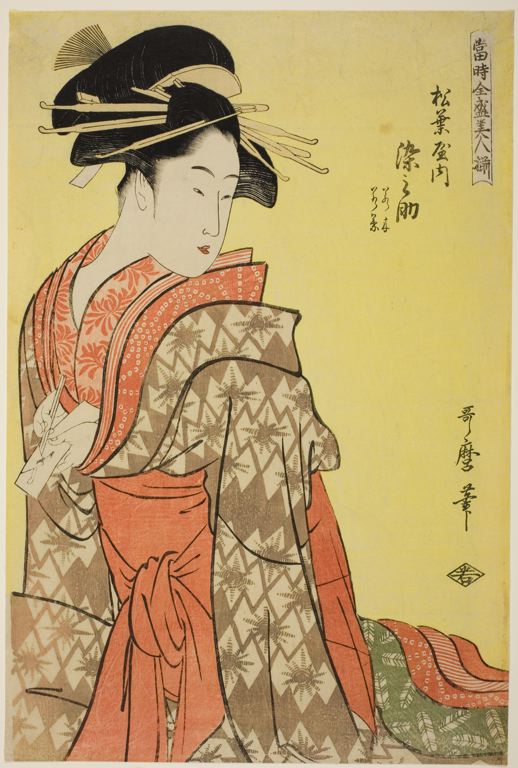
The Greatest Beauties of Our Time (Toji zensei bijin zoroe): Somenosuke of the Matsubaya with Attendants Wakagi and Wakaba
Woodblock print
More Children Prints
Frequently Asked Questions
Two Girls, from the series "Twelve Physiognomies of Beautiful Women Representing Views of Famous Places (Meisho fukei bijin juni so)" was created by Kitagawa Utamaro (喜多川歌麿) in c. 1803.
Two Girls, from the series "Twelve Physiognomies of Beautiful Women Representing Views of Famous Places (Meisho fukei bijin juni so)" depicts children.