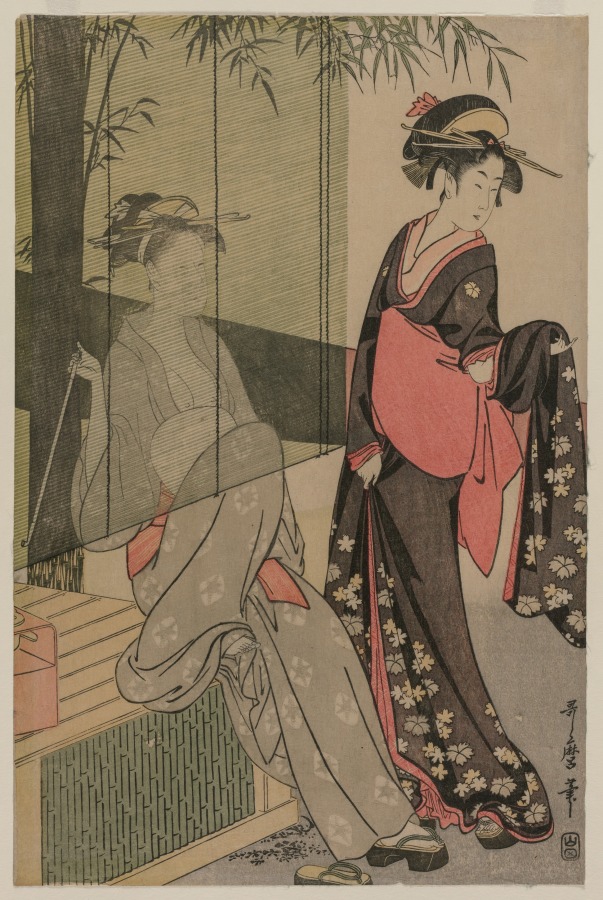
Two Women by a Bamboo Blind
- Date:
- c. 1797 or 1798
- Medium:
- color woodblock print
- Source:
- Cleveland Museum of Art
Description
Two Women by a Bamboo Blind, dated 1792 and now in the Cleveland Museum of Art, is a quiet yet sophisticated example of Kitagawa Utamaro's mature Edo bijin-ga. Two female figures pause beside a slatted bamboo blind, one lifting or holding its edge while the other looks out, the blind itself serving as both compositional armature and a psychological threshold between domestic interior and the street or veranda beyond. Utamaro uses the blind's regular horizontal pattern to anchor the soft contours of the women's faces and the flowing curves of their kimono, contrasting geometric repetition with the supple, almost calligraphic line he reserved for skin and hair. Subtle gradations of color, careful registration, and restrained ground tones direct attention to the women's expressions and quietly choreographed hands. Working at the height of his collaboration with the publisher Tsutaya Juzaburo, Utamaro was at this moment defining a vocabulary of intimate, unscripted moments that would shape ukiyo-e bijin-ga for the next generation, transforming the casual gesture of holding back a blind into an emblematic image of Edo townswoman life.
More Prints by Kitagawa Utamaro
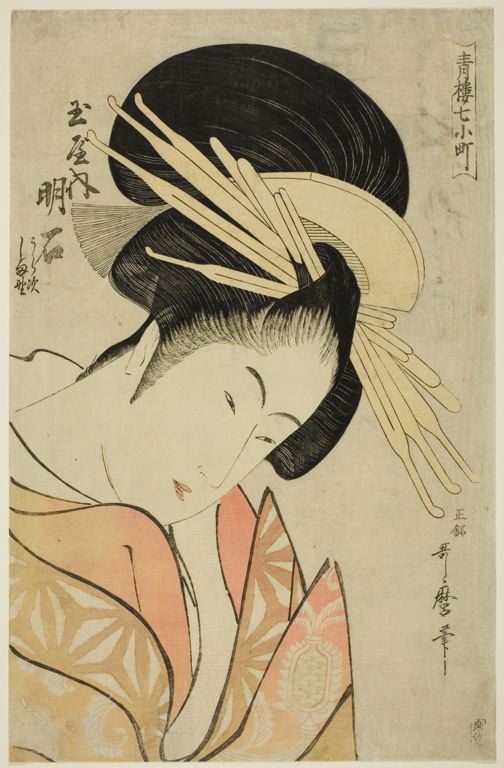
Akashi of the Tamaya, from the series Seven Komachis of Yoshiwara (Seiro nana Komachi) (Tamaya uchi Akashi, Uraji, Shimano)
Woodblock print
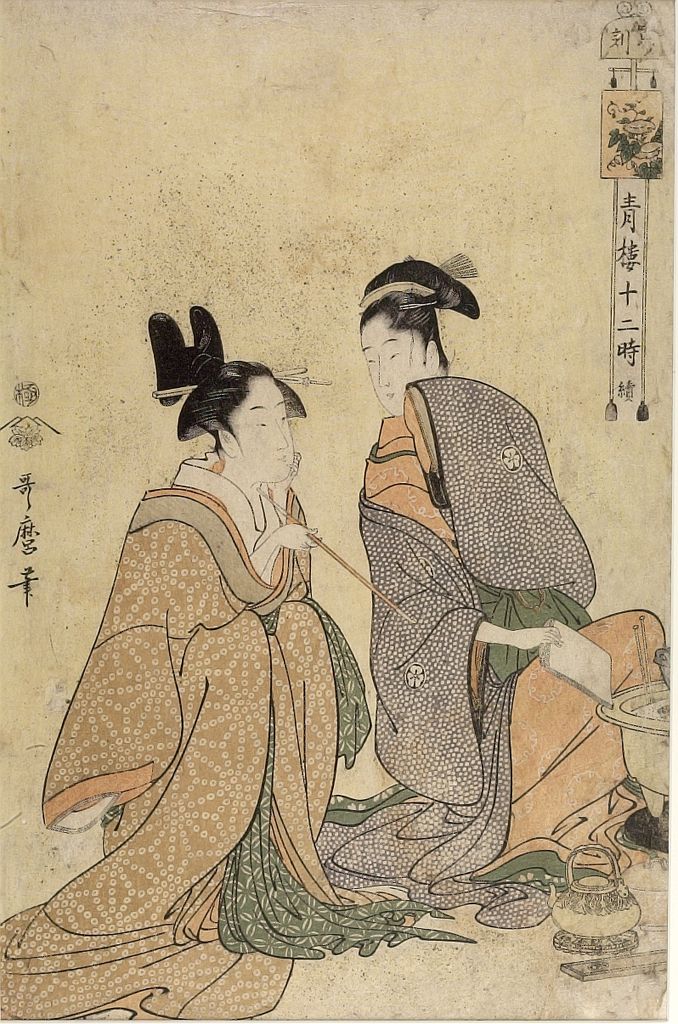
Hour of the Tiger (Tora no koku = 4 AM) from the series Twelve Hours in Yoshiwara (Seirô jûni toki tsuzuki), Late Edo period, circa 1794
Woodblock print
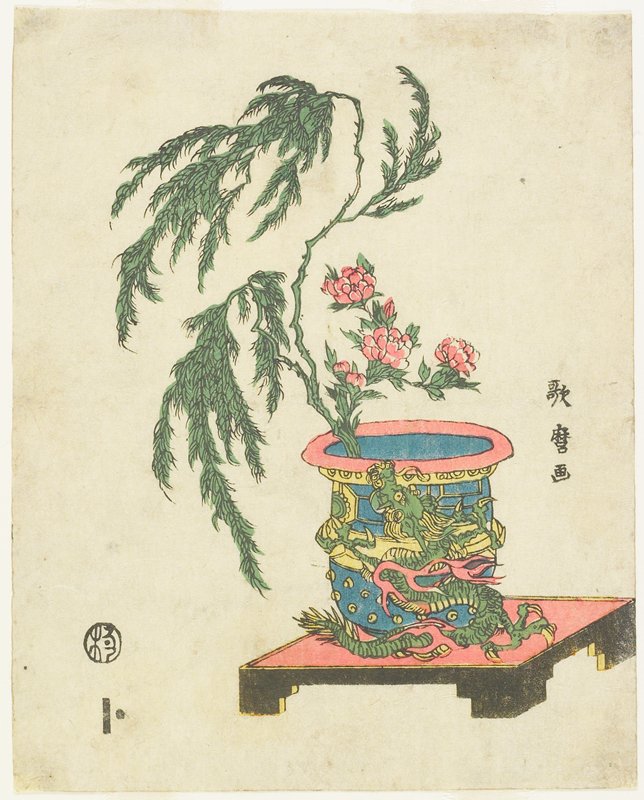
Ikebana arrangement of Peony and Willow in Dragon Pot
1781–1806
Woodblock print (nishiki-e), ink and color on paper
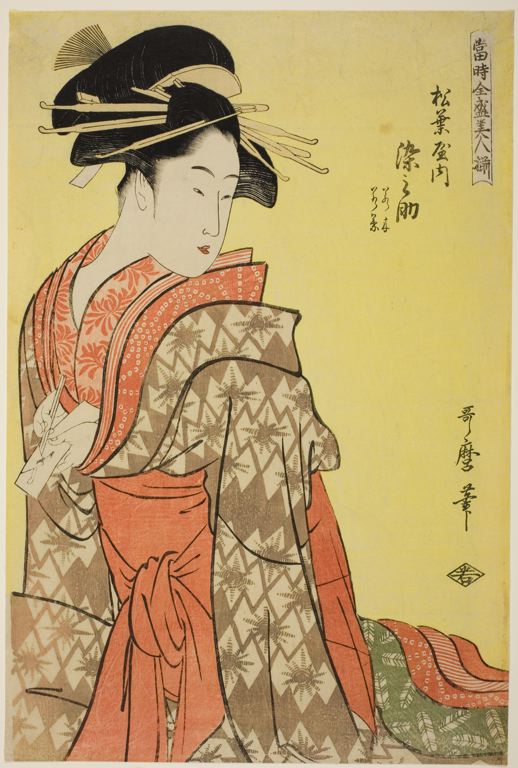
The Greatest Beauties of Our Time (Toji zensei bijin zoroe): Somenosuke of the Matsubaya with Attendants Wakagi and Wakaba
Woodblock print
Frequently Asked Questions
Two Women by a Bamboo Blind was created by Kitagawa Utamaro (喜多川歌麿) in c. 1797 or 1798.