Woman with a fan, from the series Eight Views of Tea-stalls in Celebrated Places (Meisho koshikake hakkei)
- Date:
- c. 1795-1796 (Kansei 7-8)
- Medium:
- Woodblock print (nishiki-e); ink and color on paper
- Source:
- Harvard Art Museums
Description
From the 1790 series "Eight Views of Tea-stalls in Celebrated Places" (Meisho koshikake hakkei) and now in the Harvard Art Museums, this Kitagawa Utamaro print places a woman with a fan at one of Edo's famous outdoor tea stalls (koshikake-jaya). The series fuses two long-standing pictorial traditions: meisho-e, in which celebrated locations are surveyed in sets of views, and bijin-ga, in which the woman is the principal subject. The result is a hybrid that maps the social geography of Edo through the women who worked at and frequented its public sites. Utamaro's tea-stall waitress is a figure type that joined the courtesan and the geisha in the popular imagination of ukiyo-e, a woman whose visibility in public space gave her an aura of accessible romance. Her fan reads as both functional accessory in summer heat and conventional sign of allure within Edo bijin-ga. The hokkei (eight views) framework, borrowed from Chinese landscape series, demonstrates how ukiyo-e absorbed and reworked classical pictorial templates. Harvard's impression preserves a crisp early state of a series that documents how Utamaro broadened the catalog of Edo feminine types beyond the Yoshiwara, charting a wider city of celebrated women.
More Prints by Kitagawa Utamaro
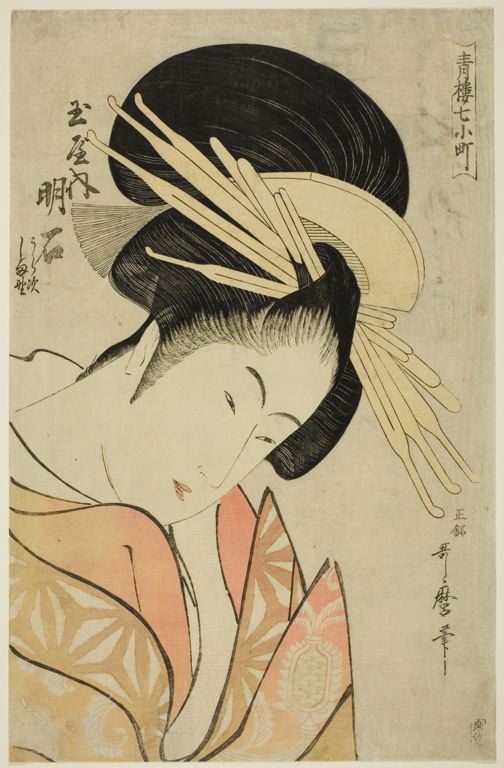
Akashi of the Tamaya, from the series Seven Komachis of Yoshiwara (Seiro nana Komachi) (Tamaya uchi Akashi, Uraji, Shimano)
Woodblock print
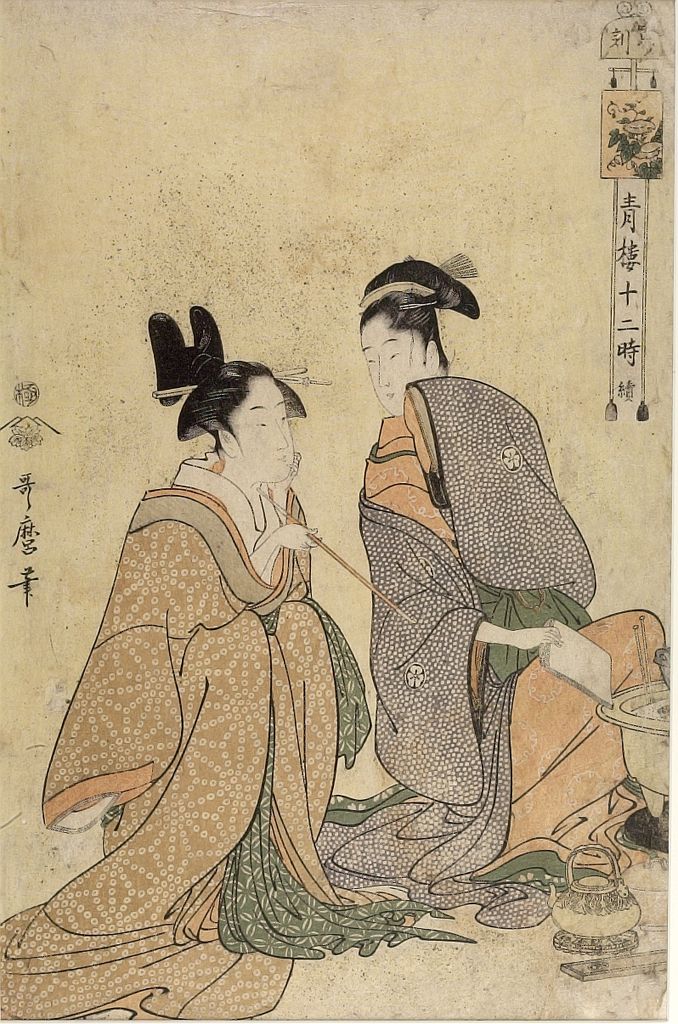
Hour of the Tiger (Tora no koku = 4 AM) from the series Twelve Hours in Yoshiwara (Seirô jûni toki tsuzuki), Late Edo period, circa 1794
Woodblock print
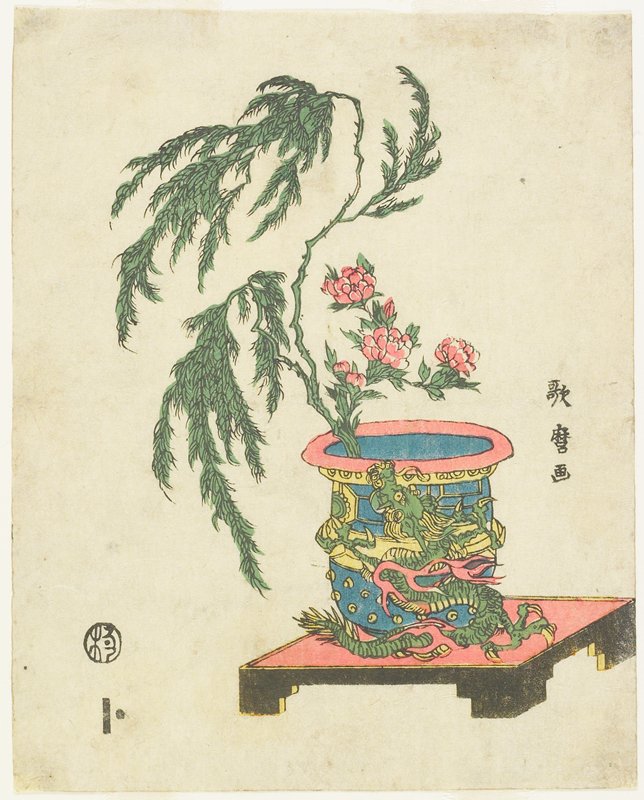
Ikebana arrangement of Peony and Willow in Dragon Pot
1781–1806
Woodblock print (nishiki-e), ink and color on paper
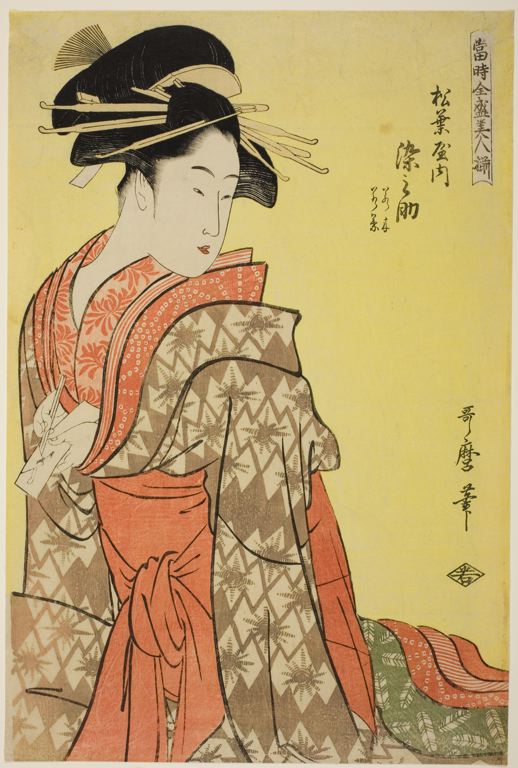
The Greatest Beauties of Our Time (Toji zensei bijin zoroe): Somenosuke of the Matsubaya with Attendants Wakagi and Wakaba
Woodblock print
Frequently Asked Questions
Woman with a fan, from the series Eight Views of Tea-stalls in Celebrated Places (Meisho koshikake hakkei) was created by Kitagawa Utamaro (喜多川歌麿) in c. 1795-1796 (Kansei 7-8).