Women at the Beach of Futami-ga-ura
- Date:
- Late Edo period, circa 1803-1804
- Medium:
- Right panel from an ukiyo-e woodblock-printed "ōban" triptych; ink and colors on paper with printed signature reading "Utamaro hitsu"
- Source:
- Harvard Art Museums
Description
Kitagawa Utamaro's 1803 ukiyo-e triptych Women at the Beach of Futami-ga-ura situates a group of beauties on the famous shore of Futami in Ise Province, where the two wedded rocks rise from the sea and form one of Japan's most recognizable sacred views. Utamaro's late triptychs frequently took such landmarks as a setting in which to display fashionable women going about leisure activities, blending pilgrimage, tourism, and Edo bijin-ga in a single composition. The horizontal format allows the artist to spread his figures across three sheets, organizing them by glance and gesture so that the eye moves easily from one panel to the next. Patterned summer kimono and lightly fluttering sashes catch the breeze coming off the bay, while the iconic rocks and torii anchor the background and supply the geographical reference. The artist's spare drawing of waves and rocks complements his more elaborate treatment of the figures, ensuring that the women remain the primary subject even within a recognizable landscape. The print exemplifies how Utamaro extended ukiyo-e from the licensed quarters to celebrated scenic sites, helping to popularize the genre of figure-and-place imagery that would dominate nineteenth-century printmaking. The Harvard Art Museums preserves this impression (object 199396).
More Prints by Kitagawa Utamaro
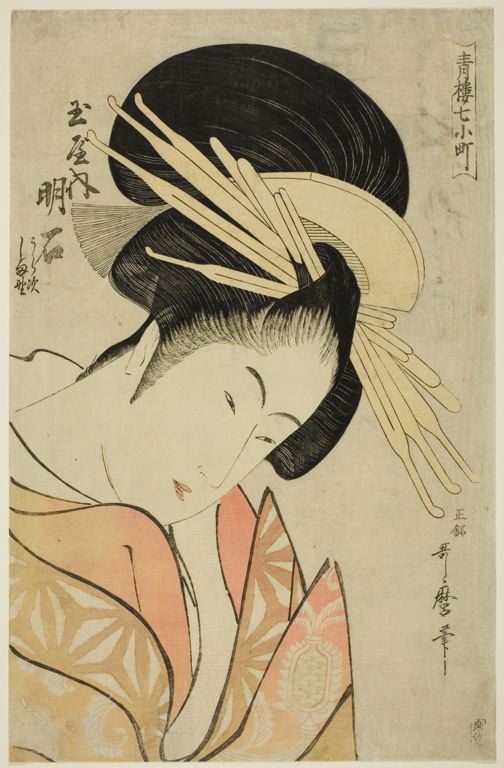
Akashi of the Tamaya, from the series Seven Komachis of Yoshiwara (Seiro nana Komachi) (Tamaya uchi Akashi, Uraji, Shimano)
Woodblock print
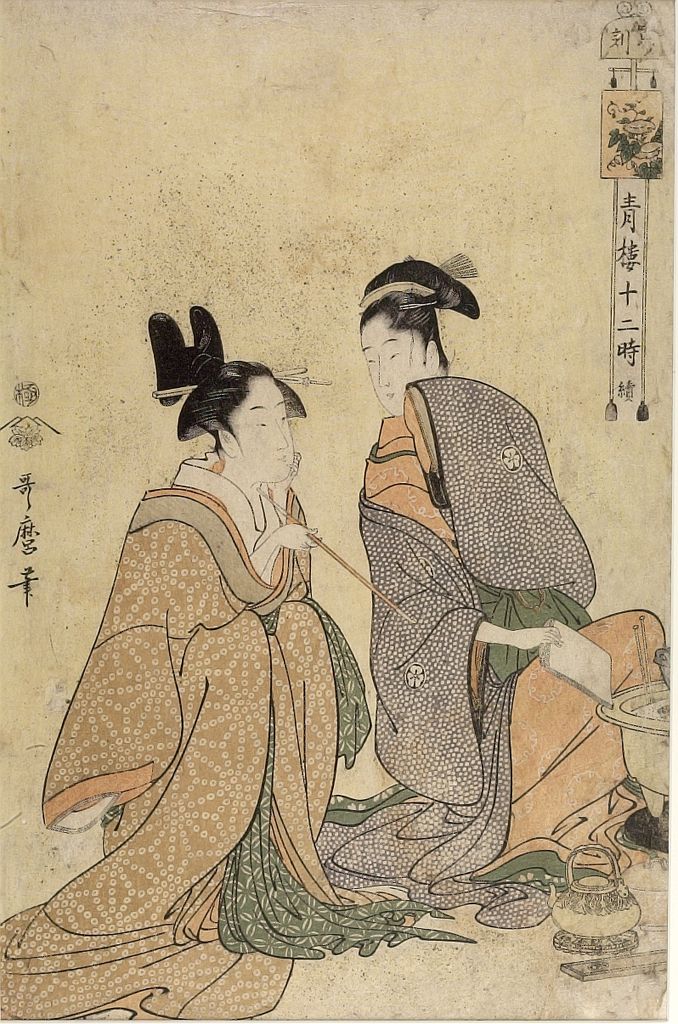
Hour of the Tiger (Tora no koku = 4 AM) from the series Twelve Hours in Yoshiwara (Seirô jûni toki tsuzuki), Late Edo period, circa 1794
Woodblock print
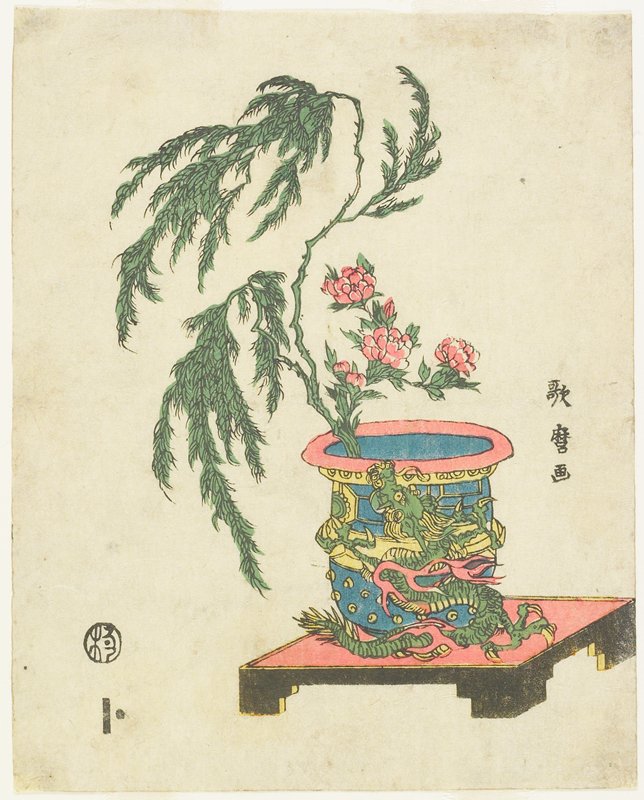
Ikebana arrangement of Peony and Willow in Dragon Pot
1781–1806
Woodblock print (nishiki-e), ink and color on paper
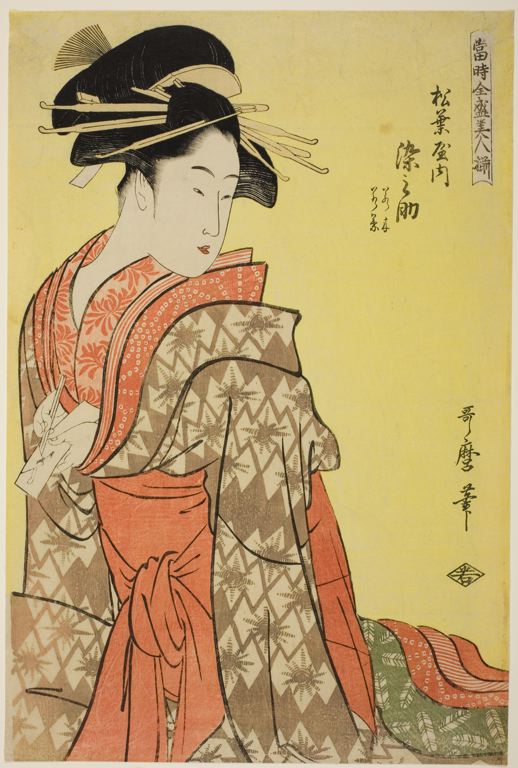
The Greatest Beauties of Our Time (Toji zensei bijin zoroe): Somenosuke of the Matsubaya with Attendants Wakagi and Wakaba
Woodblock print
Frequently Asked Questions
Women at the Beach of Futami-ga-ura was created by Kitagawa Utamaro (喜多川歌麿) in Late Edo period, circa 1803-1804.