
Women Imitating an Imperial Procession
- Date:
- 1805
- Medium:
- Color woodblock print; two sheets of oban triptych
- Source:
- Art Institute of Chicago
Description
Women Imitating an Imperial Procession, designed by Kitagawa Utamaro around 1805 and held by the Art Institute of Chicago, is a late example of the artist's ongoing interest in mitate-e, prints that recast a known subject in playful contemporary terms. Here, beautifully dressed women take the place of nobles and attendants in a stately court progress, transforming an exalted ritual into an Edo bijin-ga parade that lets viewers admire fashionable robes, hairstyles, and bearing while smiling at the conceit. By the date of this print, Utamaro had been the leading designer of women in ukiyo-e for two decades, and his command of figural rhythm is on display in the orderly procession of bodies that march across the format. Subtle gradations of indigo and red, set against the soft tones of skin and patterned silks, give the women presence without sacrificing the airy lightness that defined Kanseiera ukiyo-e bijin-ga. The work also reflects an Edo culture in which courtesans, geisha, and merchant wives often staged elaborate processions of their own through the Yoshiwara and along the Sumida, so that Utamaro's wittily aristocratic theme echoed actual urban spectacles. For modern collectors of Kitagawa Utamaro and of Edo bijin-ga more broadly, this design illustrates the sophistication with which late ukiyo-e played classical and contemporary registers against one another. The Art Institute of Chicago preserves the impression that allows close study of Utamaro's drawing of necks, sleeves, and trailing hems, all of which carry the procession's stately decorum without losing the relaxed grace that is his signature.
More Prints by Kitagawa Utamaro
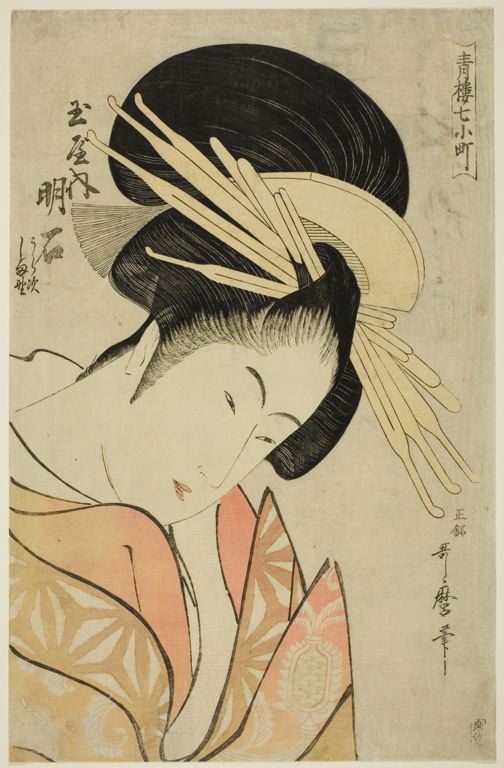
Akashi of the Tamaya, from the series Seven Komachis of Yoshiwara (Seiro nana Komachi) (Tamaya uchi Akashi, Uraji, Shimano)
Woodblock print
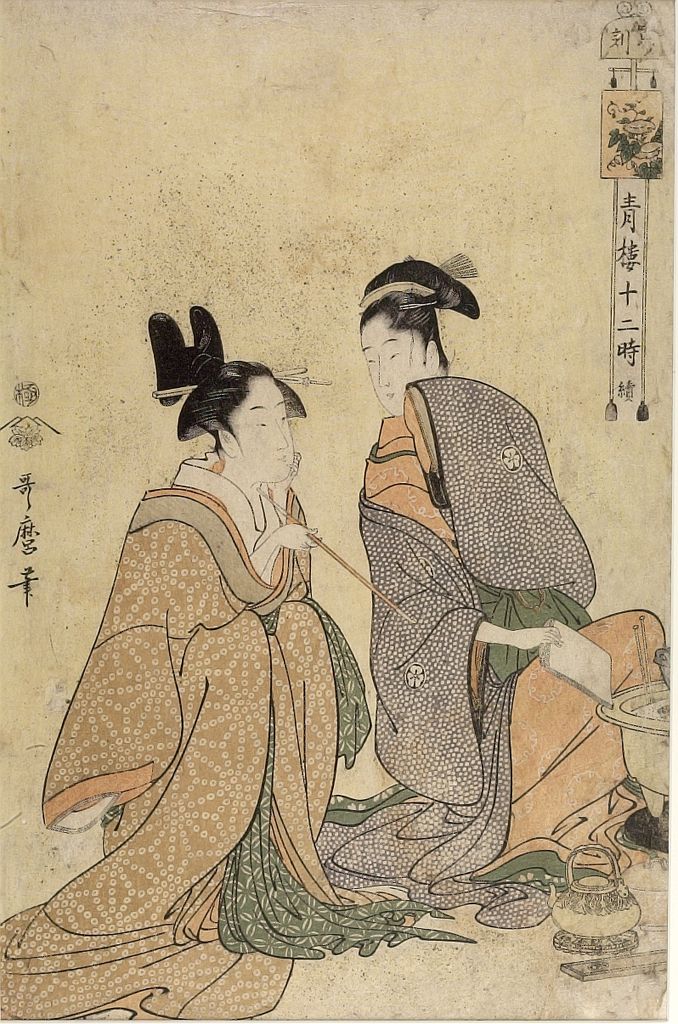
Hour of the Tiger (Tora no koku = 4 AM) from the series Twelve Hours in Yoshiwara (Seirô jûni toki tsuzuki), Late Edo period, circa 1794
Woodblock print
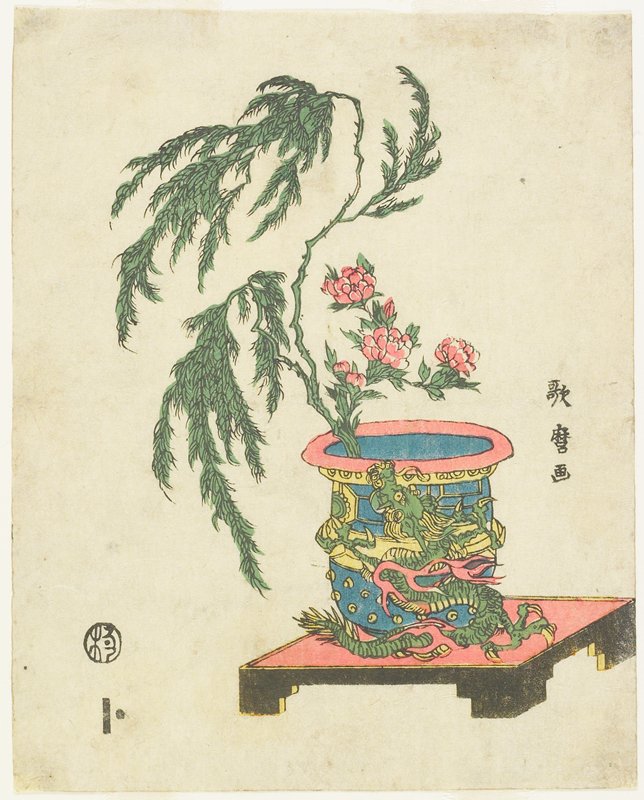
Ikebana arrangement of Peony and Willow in Dragon Pot
1781–1806
Woodblock print (nishiki-e), ink and color on paper
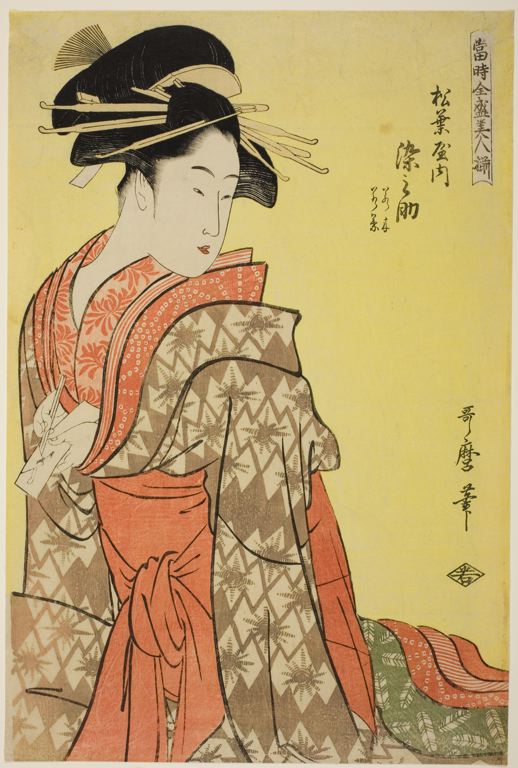
The Greatest Beauties of Our Time (Toji zensei bijin zoroe): Somenosuke of the Matsubaya with Attendants Wakagi and Wakaba
Woodblock print
Frequently Asked Questions
Women Imitating an Imperial Procession was created by Kitagawa Utamaro (喜多川歌麿) in 1805.