Women Playing a Prank on a Sleeping Man
- Date:
- Late Edo period, circa 1790s
- Medium:
- Ukiyo-e woodblock print in "oban" format; ink and color on paper, with printed signature reading "Utamaro hitsu"
- Source:
- Harvard Art Museums
Description
Dated 1790 and held by the Harvard Art Museums, "Women Playing a Prank on a Sleeping Man" is one of Kitagawa Utamaro's lively genre compositions that demonstrates the comic register at work within Edo bijin-ga. The motif of women gleefully tormenting a snoozing male figure, often a customer in the Yoshiwara who has overindulged, recurs throughout late eighteenth-century ukiyo-e as a humorous inversion of the usual power dynamics between courtesan and patron. Utamaro savors the staging of the joke: the heads bent together in conspiratorial proximity, the careful approach to the slumbering body, the suggestion of muffled laughter. Beneath the humor sits a serious observation about the sociality of the licensed quarter, where women managed customers, time, and money with great practical sophistication. The 1790 date places the print in the run-up to Utamaro's mature okubi-e period, when his elongated proportions and refined characterization would crystallize. Compositions like this one remind us that the floating world of Edo woodblock prints was not all elegant melancholy: it was a vivid, often raucous social environment that the best ukiyo-e artists captured with sharp wit. Harvard's impression contributes to the institution's representation of Utamaro's full thematic range, sitting alongside his famous Yoshiwara portraits, kyoka albums, and lovers' compositions in the ongoing scholarly conversation about his contributions to Japanese woodblock prints.
More Prints by Kitagawa Utamaro
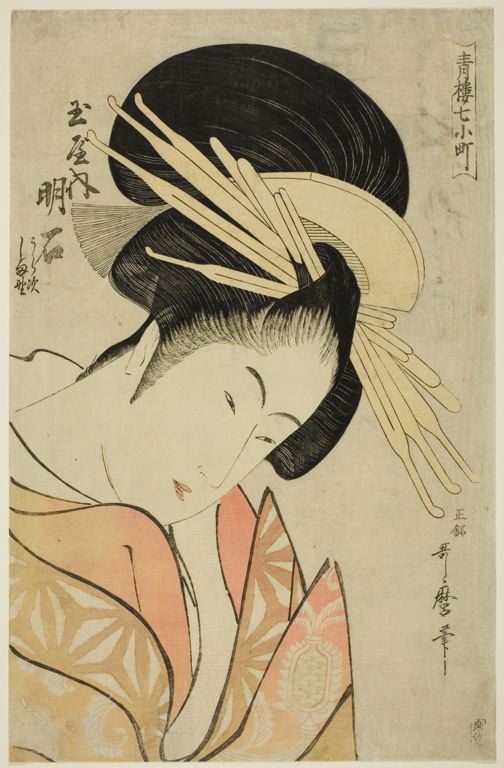
Akashi of the Tamaya, from the series Seven Komachis of Yoshiwara (Seiro nana Komachi) (Tamaya uchi Akashi, Uraji, Shimano)
Woodblock print
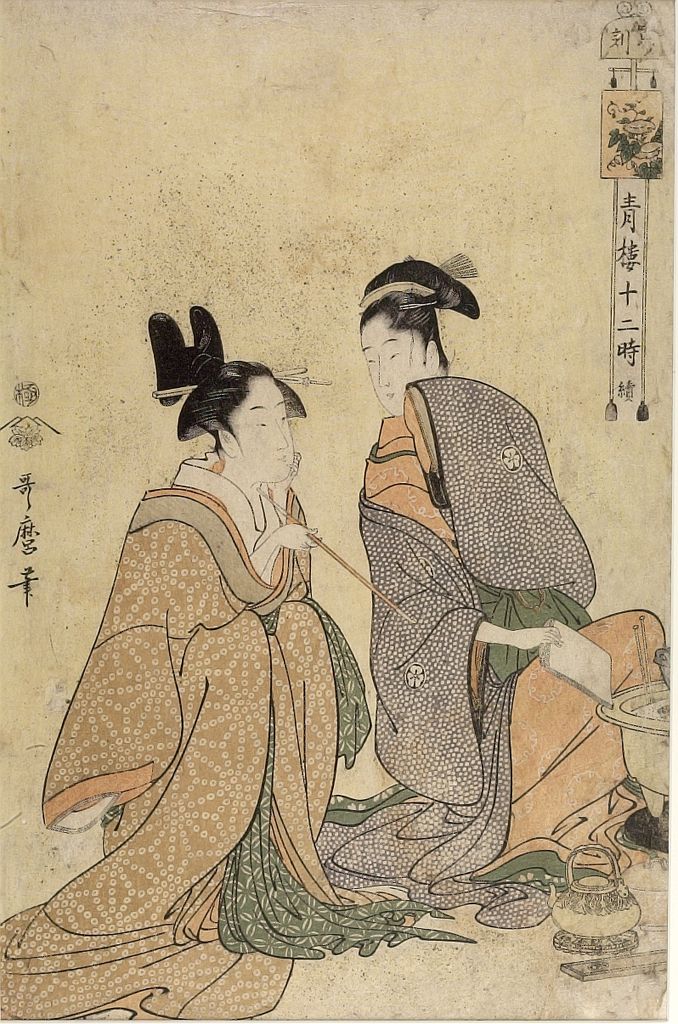
Hour of the Tiger (Tora no koku = 4 AM) from the series Twelve Hours in Yoshiwara (Seirô jûni toki tsuzuki), Late Edo period, circa 1794
Woodblock print
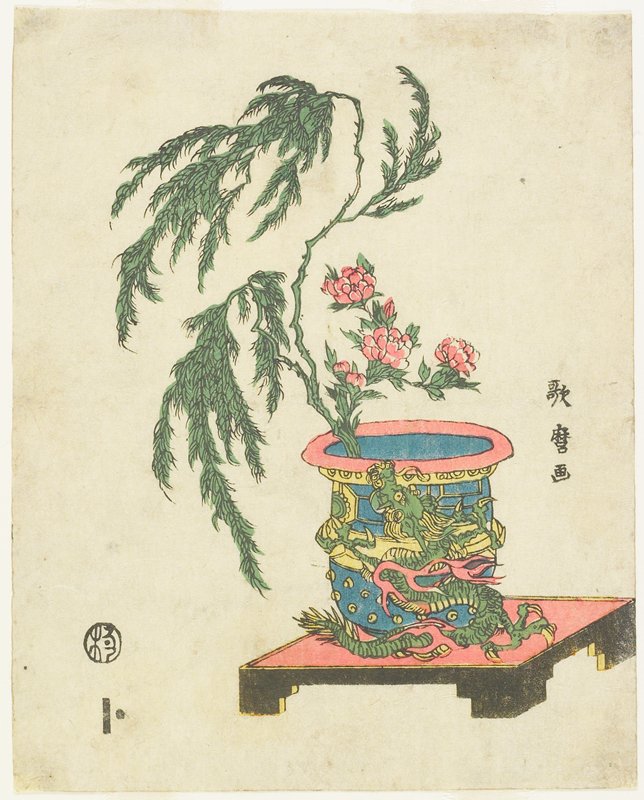
Ikebana arrangement of Peony and Willow in Dragon Pot
1781–1806
Woodblock print (nishiki-e), ink and color on paper
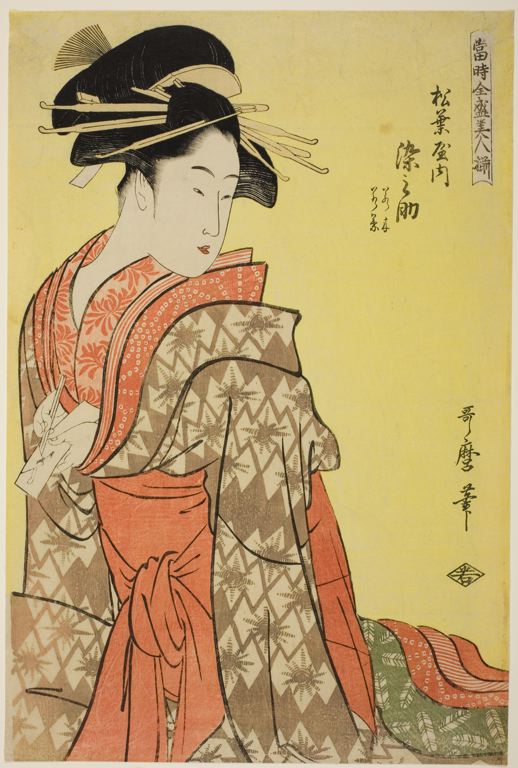
The Greatest Beauties of Our Time (Toji zensei bijin zoroe): Somenosuke of the Matsubaya with Attendants Wakagi and Wakaba
Woodblock print
Frequently Asked Questions
Women Playing a Prank on a Sleeping Man was created by Kitagawa Utamaro (喜多川歌麿) in Late Edo period, circa 1790s.