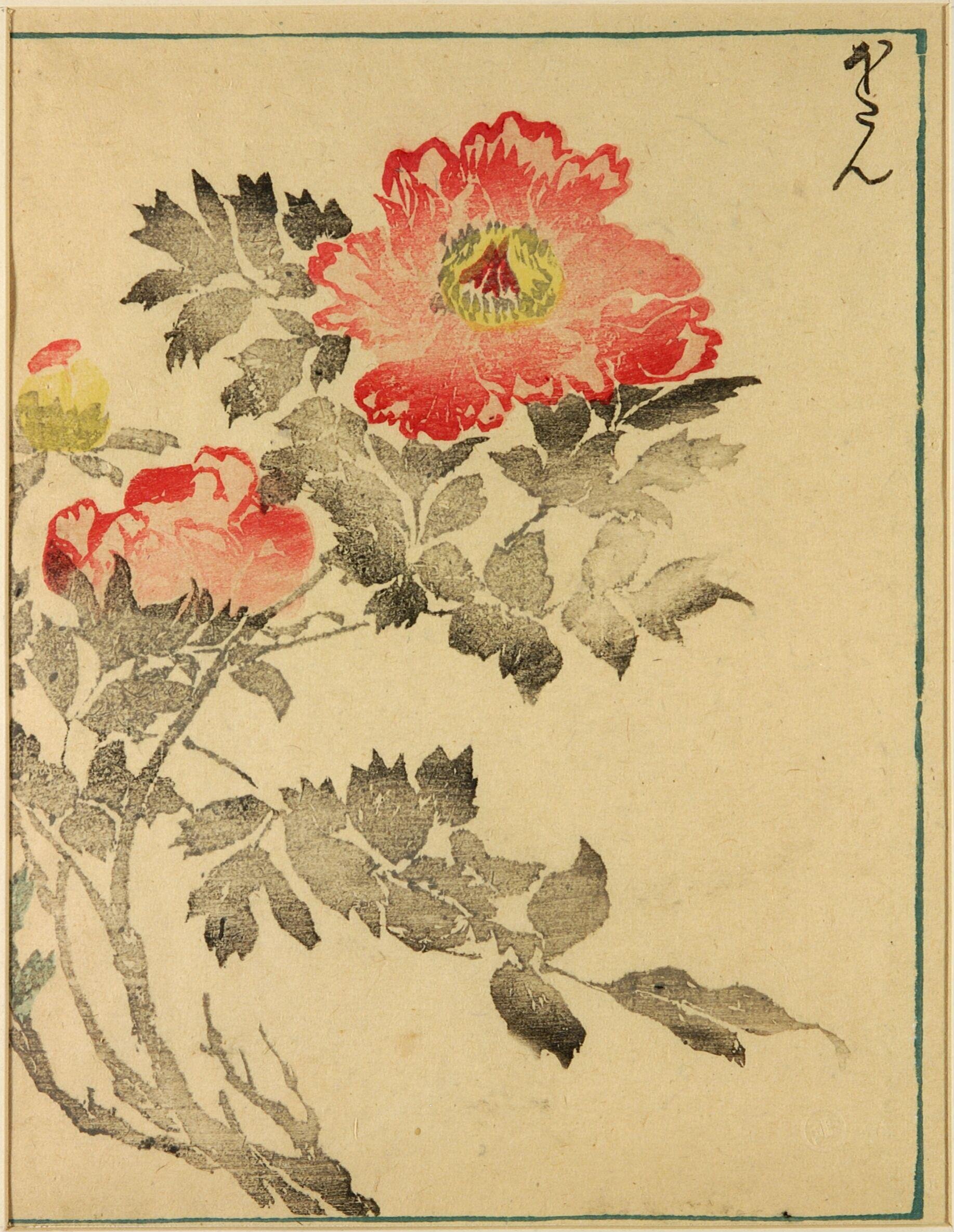
<i>Keisai gafu</i> (Album of Drawings by Keisai)
- Medium:
- Source:
- Victoria and Albert Museum
Description
Keisai gafu, or "Album of Drawings by Keisai," is one of the canonical printed albums associated with Kitao Masayoshi, the late Edo ukiyo-e artist who signed his mature work under the art name Keisai. This copy, held by the Victoria and Albert Museum (item O424034), preserves an example of the gafu tradition Masayoshi did so much to define: printed collections of abbreviated, instructive drawings that served as both aesthetic objects and practical references for painters, craftsmen, and amateurs. Trained in the Kitao school by its founder, Kitao Shigemasa, Masayoshi (1764-1824) became official painter to the daimyo of Tsuyama, a position that distinguished him within Edo ukiyo-e and shaped the more refined, pedagogical character of his later work. Keisai gafu and its companion albums, including Keisai ryaku gashiki, codified the ryaku-ga, or abbreviated drawing style, in which figures, animals, landscapes, and ornament are reduced to a few decisive lines. This technique is widely recognized as a forerunner to Hokusai's manga and informed generations of subsequent Japanese illustrators. The V&A's record supplies the authoritative bibliographic, dimensional, and provenance information for the album, anchoring it within international scholarship on Edo ukiyo-e. As a holding in a major public collection, Keisai gafu represents the Kitao school's enduring contribution to Japanese print culture: an insistence that ukiyo-e was not only about famous actors and beauties, but also about teaching the eye and hand to construct an entire visual world from line and tone.
More Prints by Kitao Masayoshi
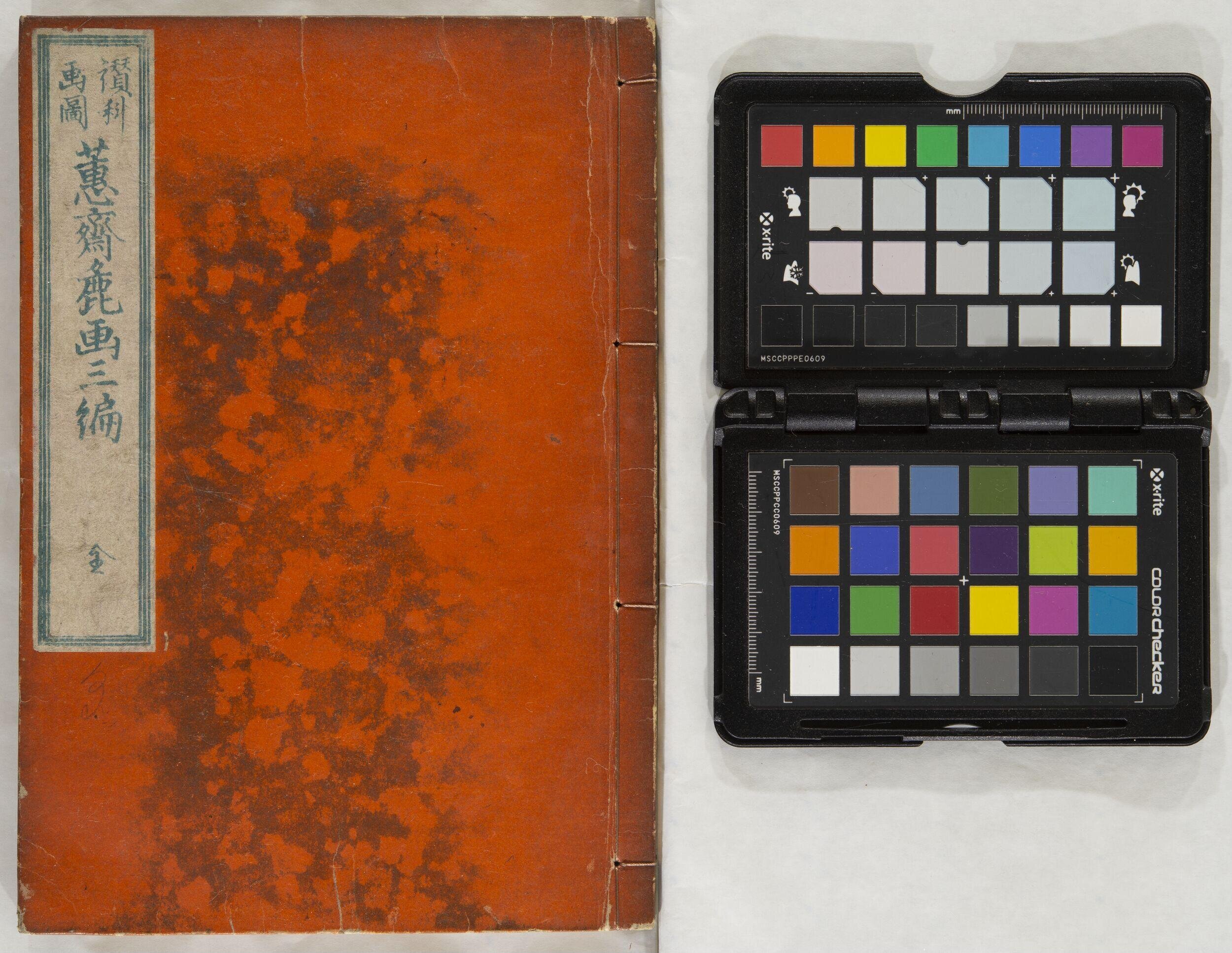
Keisai Sketches (Sanryōri gazu Keisai soga), vol.3
1839
Mr Lawrence
1989

Imayo shokunin zukushi uta awase
Unkown
Woodblock printed book

Act II (Nidanme), from the series "Perspective Pictures of the Storehouse of Loyal Retainers (Uki-e kanadehon Chushingura)"
c. 1791/94
Color woodblock print; horizontal o-oban
Frequently Asked Questions
<i>Keisai gafu</i> (Album of Drawings by Keisai) was created by Kitao Masayoshi (北尾政美).