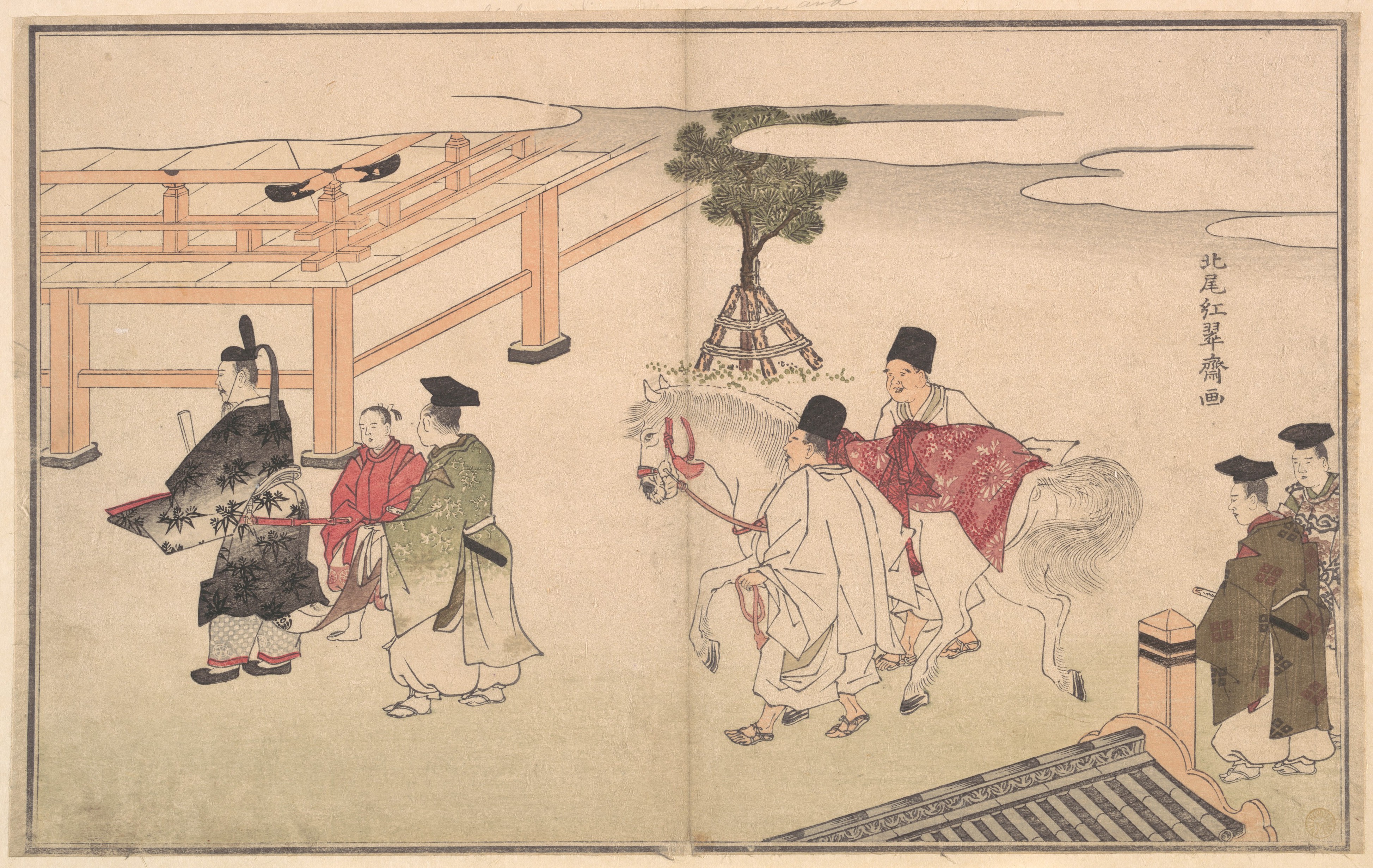
Hakuba no Sechie
- Medium:
- Woodblock print; ink and color on paper
- Source:
- Metropolitan Museum of Art
Description
Hakuba no Sechie, attributed to Kitao Shigemasa in the Metropolitan Museum of Art, depicts the imperial Hakuba no Sechie ceremony, the annual New Year ritual in which white horses were led before the emperor as a symbol of purity, vigor, and the renewal of the year. The museum's date of 1739 should be read as a general cataloging convention rather than a precise design year, but the work belongs within Shigemasa's career-long engagement with classical Japanese subjects in Edo ukiyo-e. The ceremony, with roots in continental ritual practice, became one of the great annual events of the Heian and later Kyoto courts and was richly described in court diaries, poetry, and historical texts. By depicting it in a print, Shigemasa connects the urban, populist tradition of ukiyo-e to the more elite, classical world of court ceremony, suggesting that Edo audiences enjoyed pictorial access to scenes far removed from their own daily lives. The Metropolitan Museum of Art preserves the work as part of its broader Japanese collection. As founder of the Kitao school, Shigemasa was particularly well suited to such subjects, with his confident understanding of figure types, court costume, and architectural setting. His version of Hakuba no Sechie is likely to have served both as an educational image, reminding viewers of the ceremony's symbolic associations, and as a decorative print that flattered the cultural literacy of its owner. The work confirms the Kitao school's reach into the classical and ceremonial domains of Japanese visual culture alongside its better-known engagement with the pleasure quarters and kabuki stage of contemporary Edo.
More Prints by Kitao Shigemasa

Women Holding Boy who is Reaching Out to Young Man Below
c. 1776
Color woodblock print; hashira-e

Priest Saigyo Contemplating Mount Fuji
c. 1770s
Color woodblock print; hashira-e

Autumn Moon over Sumida River (Sumida aki zuki), from the series "Eight Views of the Sumida River (Sumidagawa hakkei)"
early 1760s
Color woodblock print; hosoban, mizu-e

Crossing the Bridge at Sano
c. 1774
Color woodblock print; koban
Frequently Asked Questions
Hakuba no Sechie was created by Kitao Shigemasa (北尾重政).