
Woman Gathering Herbs
by Kuroda Seiki
- Date:
- 1892
- Medium:
- Oil on canvas
- Source:
- Tokyo Fuji Art Museum
Description
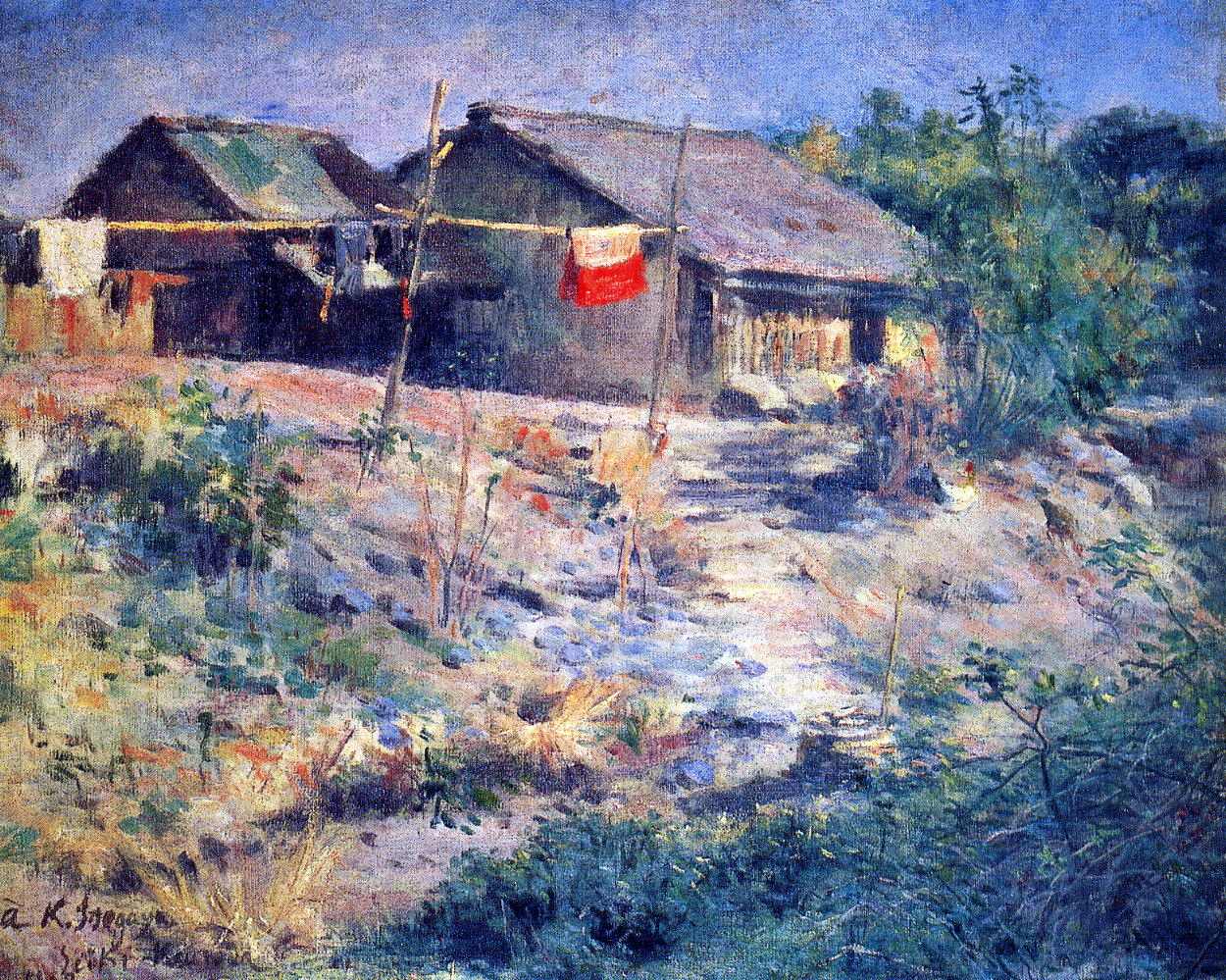
Held by the Tokyo Fuji Art Museum in Hachiōji, Woman Gathering Herbs (1892) is a late Paris-period painting from Kuroda Seiki's final years in France, produced in the immediate aftermath of his celebrated Reading (Dokushō, 1890-1891) and within the same Brittany and Île-de-France circuit that yielded his other major French works. The composition depicts a single female figure in a rural landscape engaged in the gathering of wild herbs, a subject directly continuous with the established academic French tradition of rural laboring figures developed by Jean-François Millet at Barbizon and refined by Jules Bastien-Lepage and the naturalists of the 1880s. Kuroda's treatment, mediated through his teacher Raphaël Collin, softens the social and class register of the Barbizon tradition into a more lyrical and decorative idiom — broad outdoor light, careful figure drawing, a chromatic palette of muted greens and warm umbers. The painting belongs to the small body of fully developed French rural figure paintings that Kuroda completed before his summer 1893 return to Japan, works that demonstrated to a Japanese audience the possibility of monumental figure-in-landscape composition in oils and that established the chromatic and compositional vocabulary of the Hakubakai project.
More Prints by Kuroda Seiki


Frequently Asked Questions
Woman Gathering Herbs was created by Kuroda Seiki (黒田清輝) in 1892.