Art Institute of Chicago
- Medium:
- Woodblock print
- Source:
- ukiyo-e.org
Description
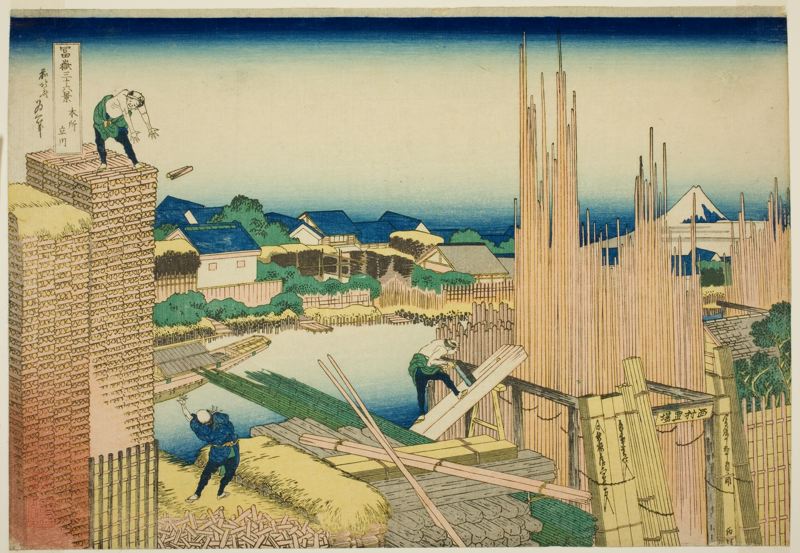
This Japanese woodblock print by Masahiko Honjo is preserved in the collection of the Art Institute of Chicago, an institution that has long served as one of the most important repositories of mokuhanga outside Japan. The work was documented through ukiyo-e.org, which aggregates museum holdings of Japanese prints and provides scholars and collectors with a way to study otherwise dispersed examples of contemporary mokuhanga across institutions. The print represents Masahiko Honjo's engagement with the woodblock tradition, a practice that descends from centuries of Japanese printmaking yet continues to evolve in the hands of modern and contemporary artists. Like other practitioners of contemporary mokuhanga, Honjo works within the technical vocabulary established by Edo-period publishers and refined through the shin-hanga and sosaku-hanga movements of the twentieth century: hand-carved cherry or shina plywood blocks, water-based pigments, dampened washi paper, and impressions taken with a baren rather than a mechanical press. The presence of the work in a museum collection of the Art Institute of Chicago's stature signals the ongoing critical regard for Japanese woodblock printmaking as a contemporary art form. The Art Institute's holdings of Japanese prints span the full historical arc from early ukiyo-e through the Meiji transitional period, the shin-hanga revival, the sosaku-hanga creative print movement, and contemporary practitioners, situating Honjo's work within a continuum that allows viewers to trace both technical inheritance and individual artistic voice. Without a recorded title or date in the available documentation, the print is best appreciated as a representative example of Honjo's contribution to the living mokuhanga tradition. For collectors and researchers seeking to understand contemporary Japanese woodblock practice, examples preserved in major institutional collections such as this one offer authoritative reference points, with provenance and condition documented through museum standards. The work invites further study through the Art Institute of Chicago's publicly accessible collection records and through ukiyo-e.org's cross-institutional image database.
More Prints by Honjo Masahiko

Frequently Asked Questions
Art Institute of Chicago was created by Honjo Masahiko (本庄正彦).